

Bahrain e-Visa Requirements and Online Application for Australian Citizens
If you’re an Australian citizen thinking about a trip to the Gulf, you may have heard of the Bahrain e-Visa Requirements and Online Application for Australian Citizens. It’s a mouthful — but it’s really your golden ticket to an easier, smoother entry into the Kingdom of Bahrain. An e‑Visa means you can apply online from the comfort of your home, no long queues. For Australians, this has become one of the most hassle-free ways to visit Bahrain for tourism, business, or family visits. In this guide, I’ll walk you through everything you need to know: from eligibility and required documents to processing times, arrival rules and handy travel tips.
Whether you’re planning a quick city break in Manama, attending a business meeting, or visiting friends, by the time you finish reading, you’ll have a clear roadmap for your Bahrain trip.
Do Australian Citizens Need a Visa for Bahrain?
Yes — if you’re an Australian passport holder, you’ll need a visa to enter Bahrain. That said, Bahrain makes it easy by offering both a digital e‑Visa and visa on arrival for many nationalities, including Australians.
The e‑Visa is often the preferred option because you get pre‑approval before you travel. But if you prefer a more spontaneous trip, Bahrain also allows visa on arrival for many — although e‑Visa remains the more streamlined route.
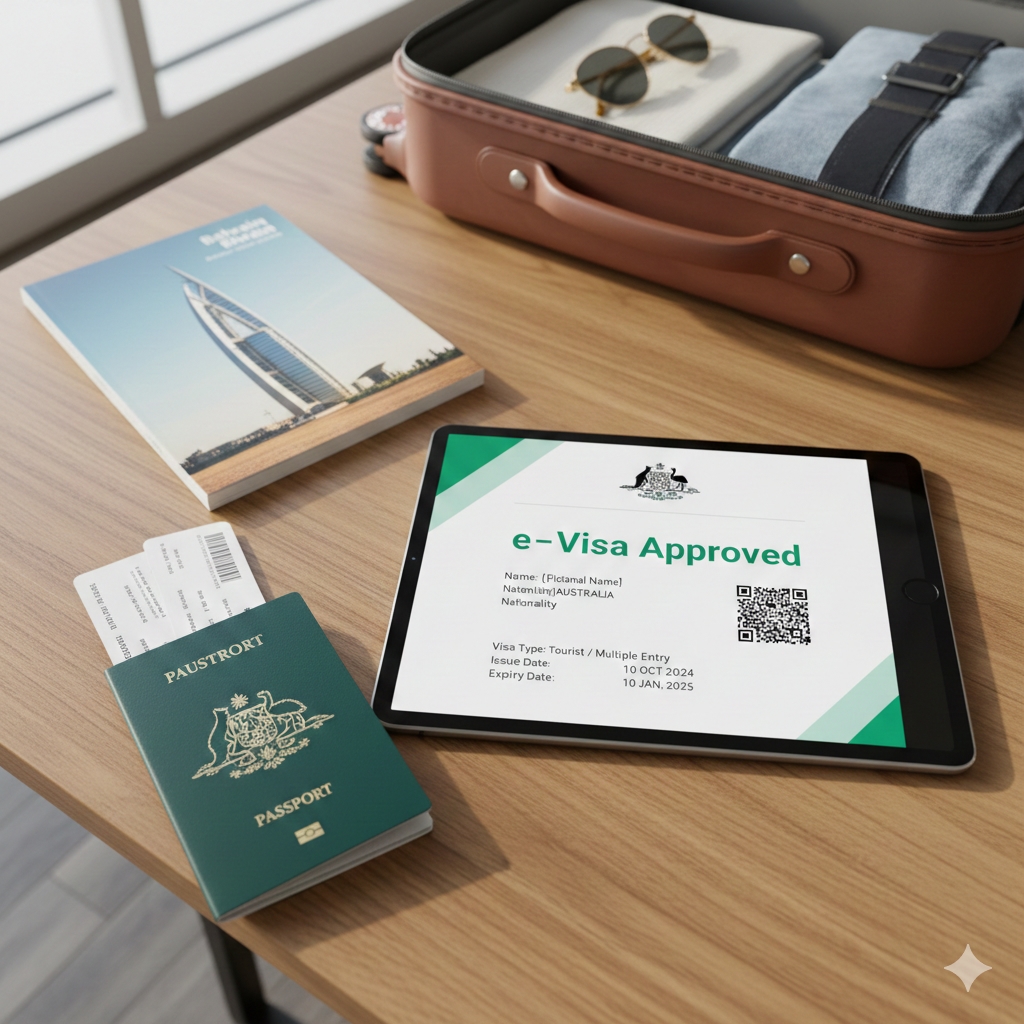
What Are the Requirements for a Bahrain eVisa?
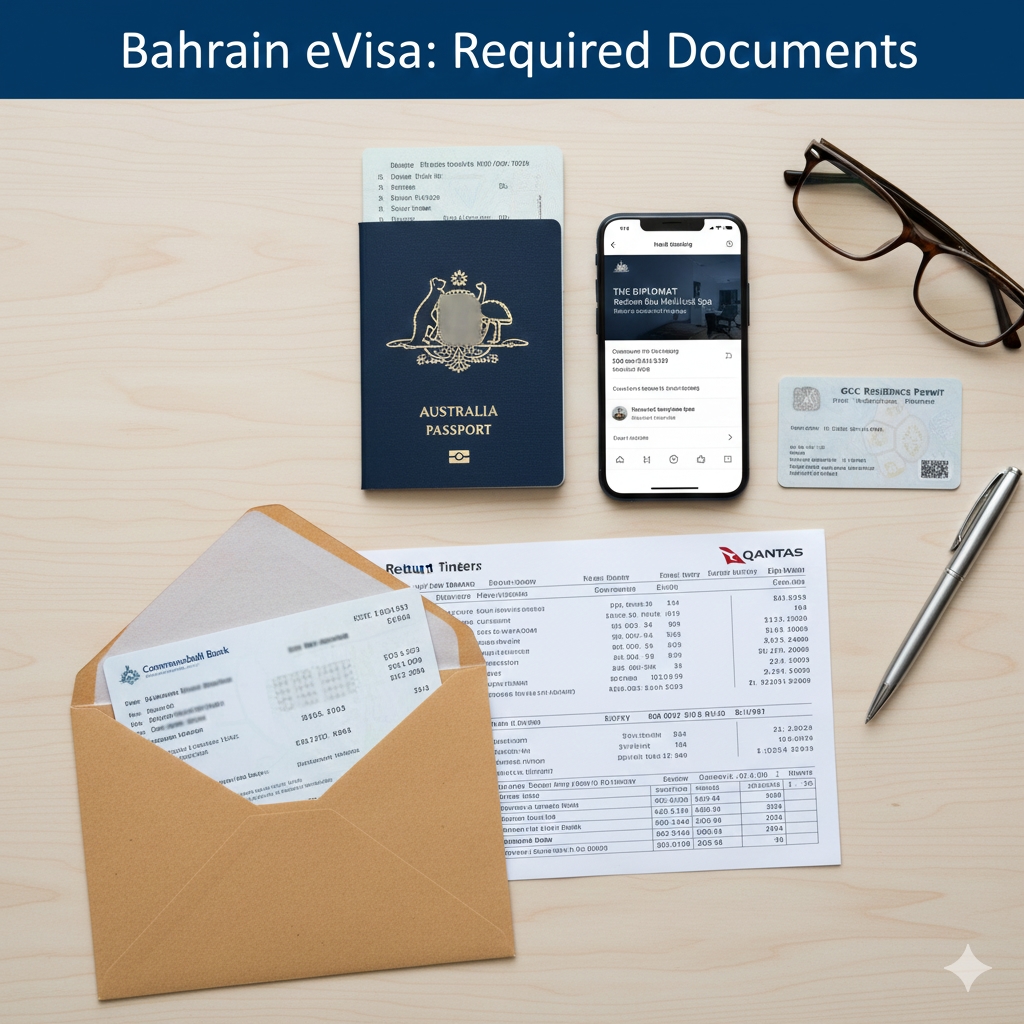
Before you begin your application, make sure you have all the required documents for Bahrain visa, including:
-
A valid passport — Your passport must be valid for at least six months from your planned date of entry into Bahrain. The bio page (the page with your personal details) must be clearly legible, and the passport should be undamaged with blank pages available.
-
Proof of accommodation — This can be a confirmed hotel booking (with name, address and stay dates) or, if you’re staying with a friend or relative in Bahrain, a copy of their Bahrain-resident ID or residency proof. This helps show where you’ll be staying during your visit.
-
Onward or return flight ticket — A confirmed flight ticket showing your arrival in and departure from Bahrain demonstrates your travel itinerary and intention to leave after your visit.
-
(If applicable) GCC Residence Permit or valid residency/visa from certain countries — For travellers residing in a GCC country (or sometimes holding certain valid visas from specified countries), a scanned copy of the residence/visa permit may be required. This usually involves uploading both front and back sides, with validity clearly visible.
-
Recent bank statement (or proof of funds) — You may need to submit a bank statement under your name, showing sufficient funds for your stay. Typically this covers the last few months and demonstrates financial capacity to support your travel and stay in Bahrain.
These are standard requirements. Double‑check your documents for accuracy (names, passport numbers, dates), as even small mistakes can cause delays.
What types of Bahrain visas are available?
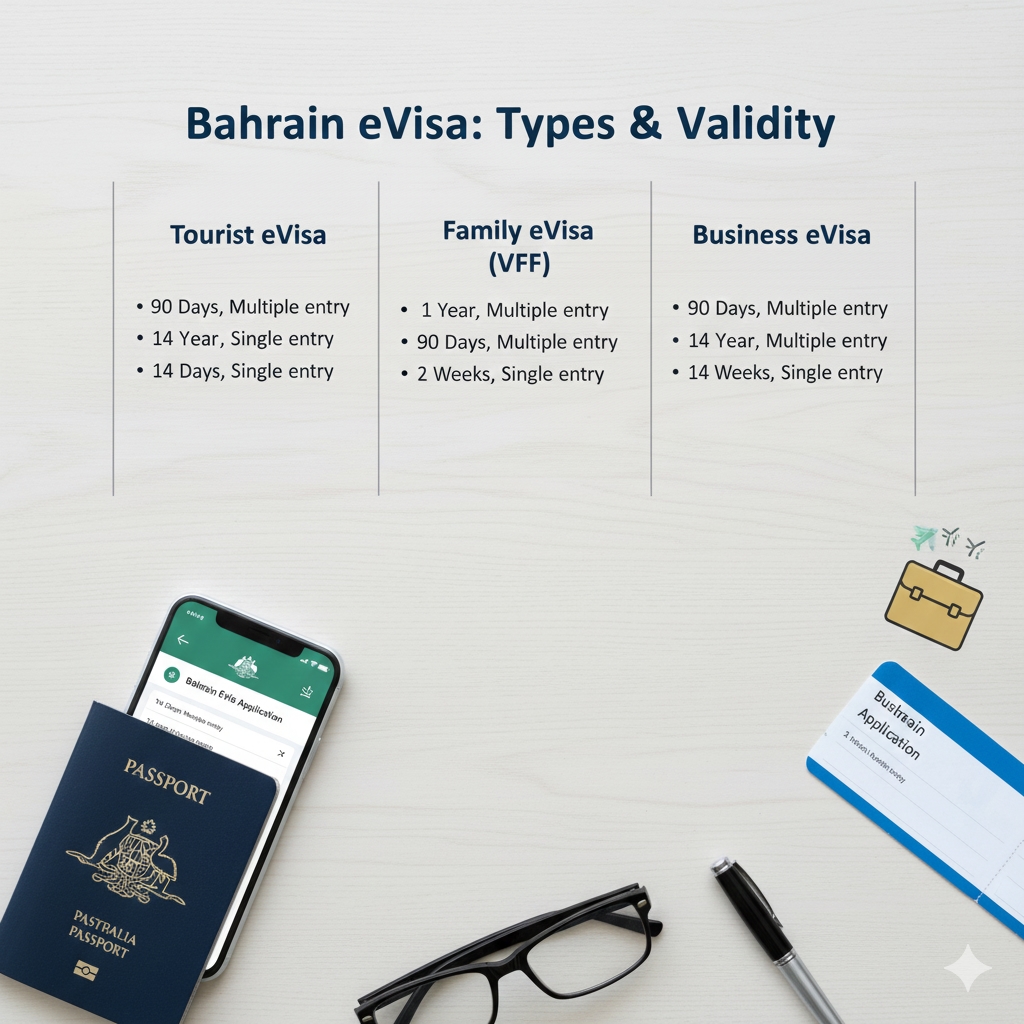
If you’re exploring options, Bahrain caters to a variety of travel purposes. Below are the common Bahrain visa types you might consider (keeping in mind the checklist you provided):
Tourist eVisa
-
90 Days, Multiple entry — great for frequent travellers or if you plan to enter and exit Bahrain multiple times.
-
1 Year, Multiple entry — for those who anticipate multiple trips over a year.
-
14 Days, Single entry — ideal for a short vacation or a quick visit.
Family eVisa (for visiting friends/relatives)
-
1 Year, Multiple entry
-
90 Days, Multiple entry
-
2 Weeks, Single entry
Business eVisa
-
90 Days, Multiple entry
-
1 Year, Multiple entry
-
14 Days, Single entry
This array of visa types offers flexibility depending on your travel plan — whether short, extended, single-trip or multiple trips within a year.
How long is a Bahrain visa valid for?
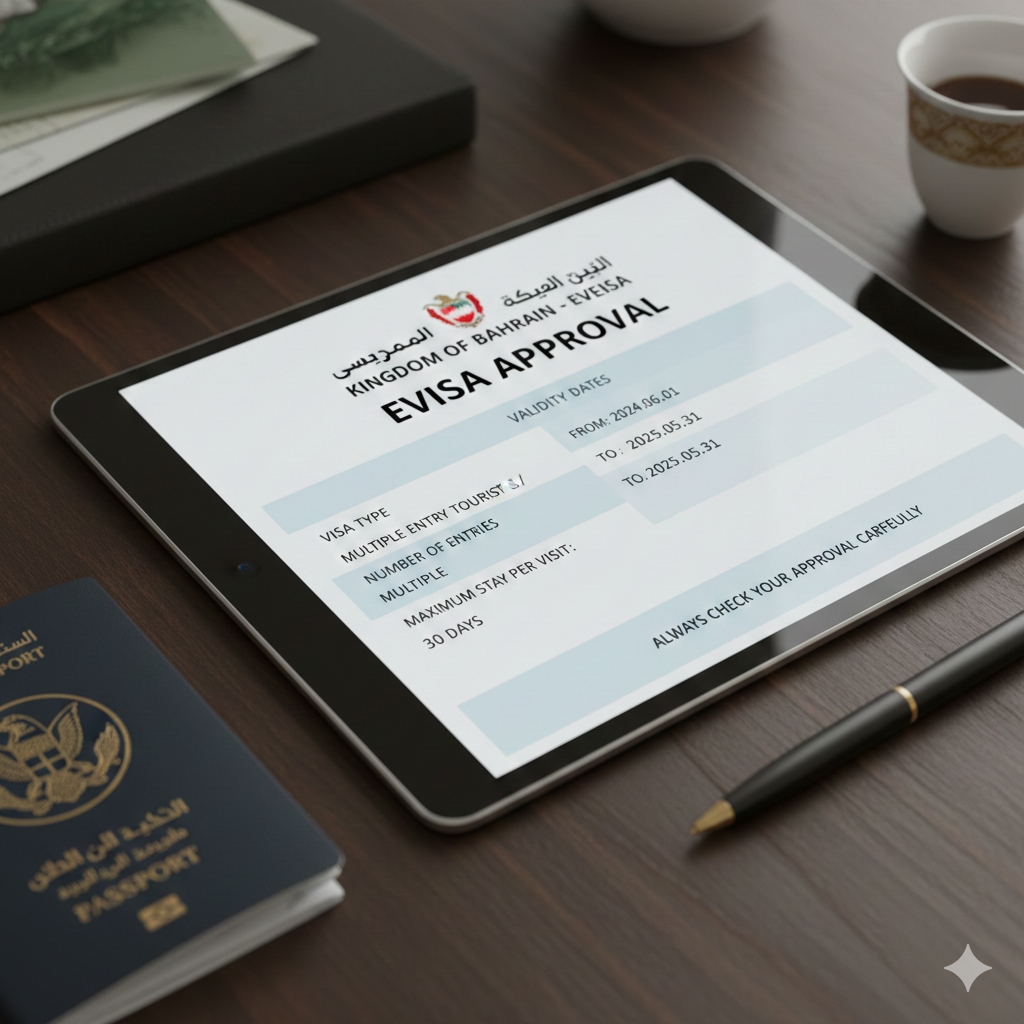
Here’s a breakdown of how validity, entries and maximum stay durations commonly work (depending on visa type). This aligns with what you told me and what’s found in recent sources:
-
For many eVisas, stay duration per visit tends to be up to 30 days (for example, multiple entry tourist/business visas).
-
For family‑visit or longer‑term visas, multiple entries and longer validity (often up to one year) may apply.
-
The exact allowance depends on what visa type you select — some visas allow only a short stay (approximately 2 weeks), while others offer the possibility to stay significantly longer.
Because visa rules can vary depending on timing, nationality and category — always check your approval carefully to verify the validity dates, number of entries and the maximum stay allowed per visit.
How Early Can I Apply for an eVisa?
It’s wise to apply ahead of time — but when exactly?
-
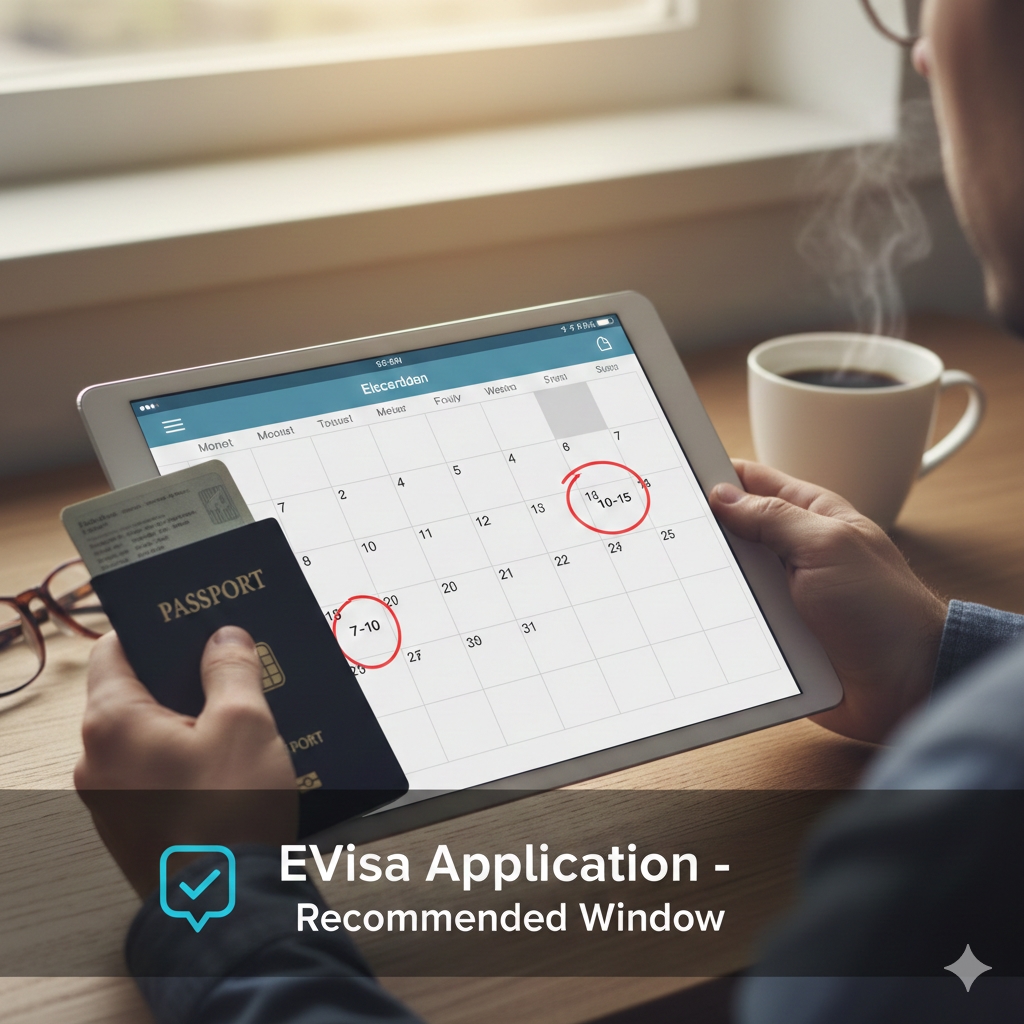
Most sources recommend applying at least 7–10 days before your planned travel date to allow buffer for processing or any unexpected delays.
-
For peace of mind — especially in busy seasons or if you’re travelling with family — applying 10–15 days before is a good rule of thumb.
This gives enough time for document checks, potential clarifications, and ensures you get your approval in time for travel.
How long does a Bahrain visa take to process?
Processing times can vary depending on demand, documentation clarity, and the chosen processing speed. If you opt for a Bahrain urgent visa — the fastest processing option — you may receive approval sooner than the standard pace, which is useful when you’re travelling on short notice.
-
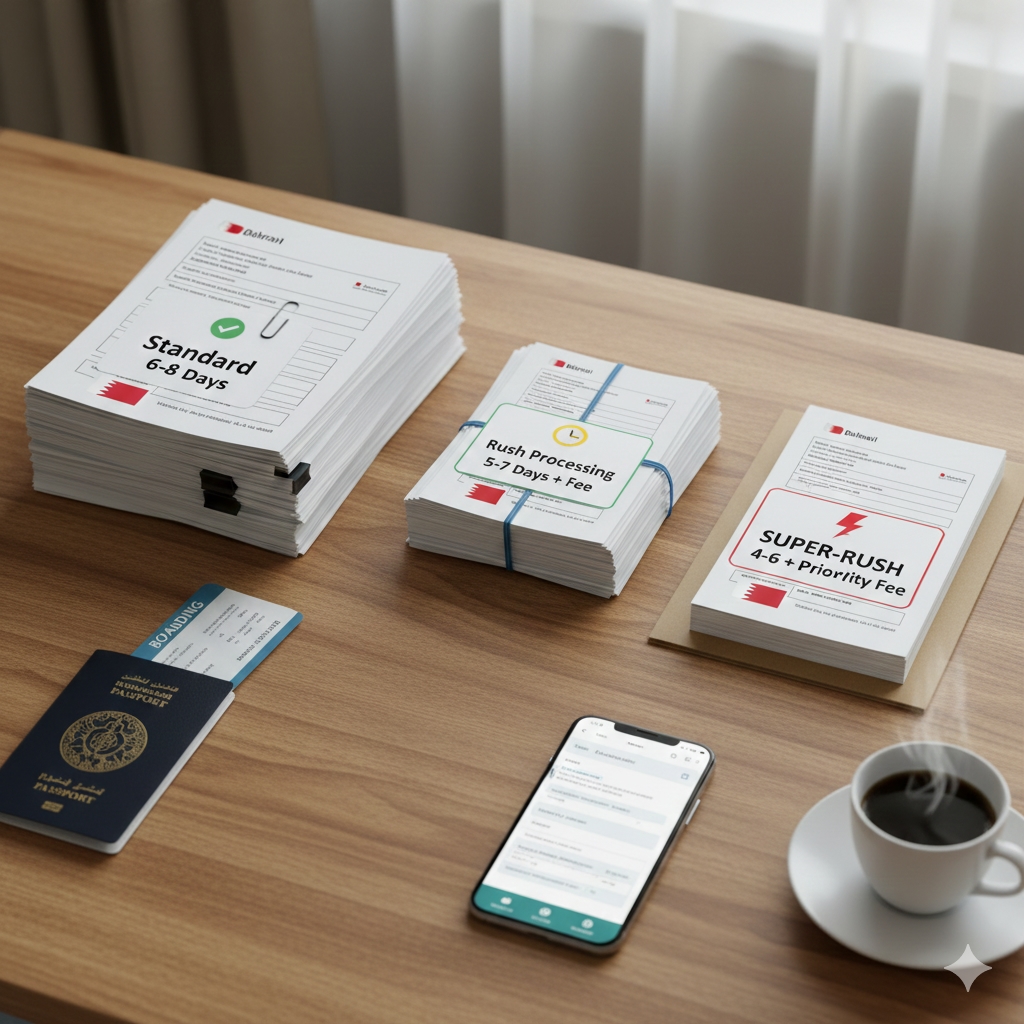
Standard Processing — 6 to 8 working days: This is the regular or “default” processing speed. If you apply well before your travel dates and don’t need to rush, this option usually works fine. It gives the authorities normal time to review your application and documents, with no extra charges beyond the base fee.
-
Rush Processing — 5 to 7 working days: If you’re somewhat pressed for time but not urgently — or if your travel schedule is near — this accelerated option speeds things up modestly. It often requires an additional fee, but can help you get approval faster than standard processing when time is a little tight.
-
Super‑Rush Processing — 4 to 6 working days: This is the fastest processing lane: designed for travellers with urgent or last‑minute travel plans. With super‑rush, the application receives priority handling so you get a decision sooner. Again, choosing this option typically comes with extra service costs.
Because of this variance, it’s best to apply with plenty of lead time, especially if you have fixed flight dates or tight schedules.
How to get a Bahrain visa?
Here’s a traveler-friendly step‑by‑step walkthrough for how you (as an Australian) might complete the process:
-
Gather your documents — passport scan, photo, hotel/host details, flight tickets, and any extra documents like bank statement.
-
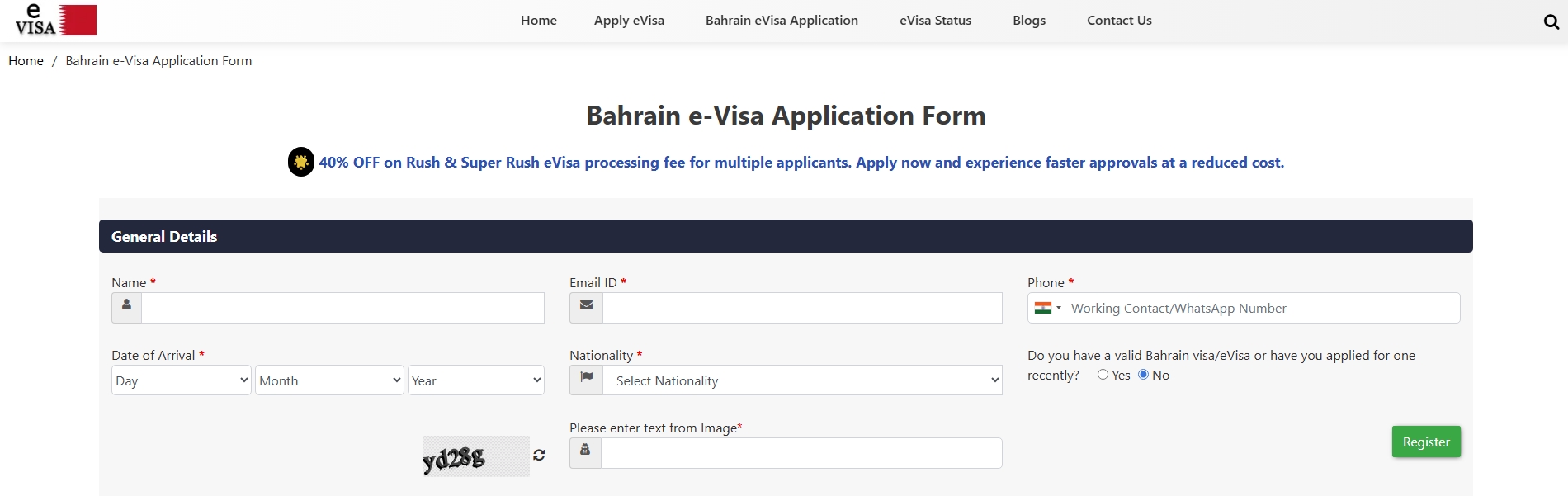
Fill in the online application form — choose the visa type based on your purpose (tourism, business, family visit). Enter details exactly as in your passport.
-
Upload supporting documents — clear scans/photos; avoid blurry or incomplete files.
-
Pay the application fee: Pay the application fee: Use a valid credit or debit card (Visa, Mastercard, AmEx, etc.) to submit the Bahrain visa fee after filling out the eVisa form — once payment is processed, your application proceeds for review.
-
Submit and wait for processing — select your preferred processing option (standard, rush, super‑rush) depending on how soon you need the eVisa.
-
Receive approval via email — eVisa is electronically linked to your passport. Print a copy or save a downloaded version as back‑up for your travels.
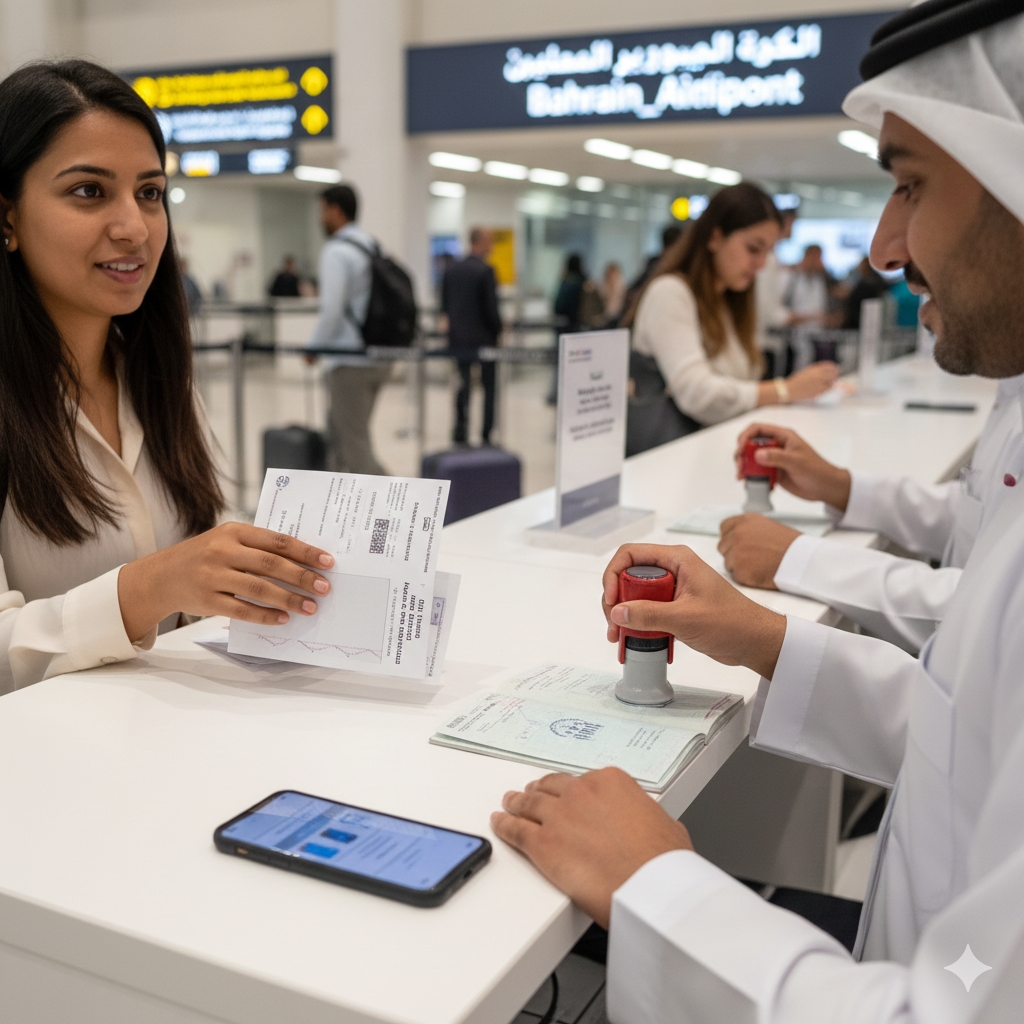
What Should I Do Upon Arrival with a Bahrain eVisa?
Upon arriving in Bahrain (e.g., at Bahrain International Airport), do the following to ensure smooth entry:
-
Be prepared to show confirmation of accommodation (hotel booking or host address/ID), and possibly your return/onward ticket.
-
Remember that even though you have an eVisa, your passport may still be stamped — or you might receive an arrival slip. Carrying all supporting proof is a good idea.
If authorities ask, be ready to show documents as requested. Most travellers with complete documentation have no troubles.
What is better, eVisa or visa on arrival?
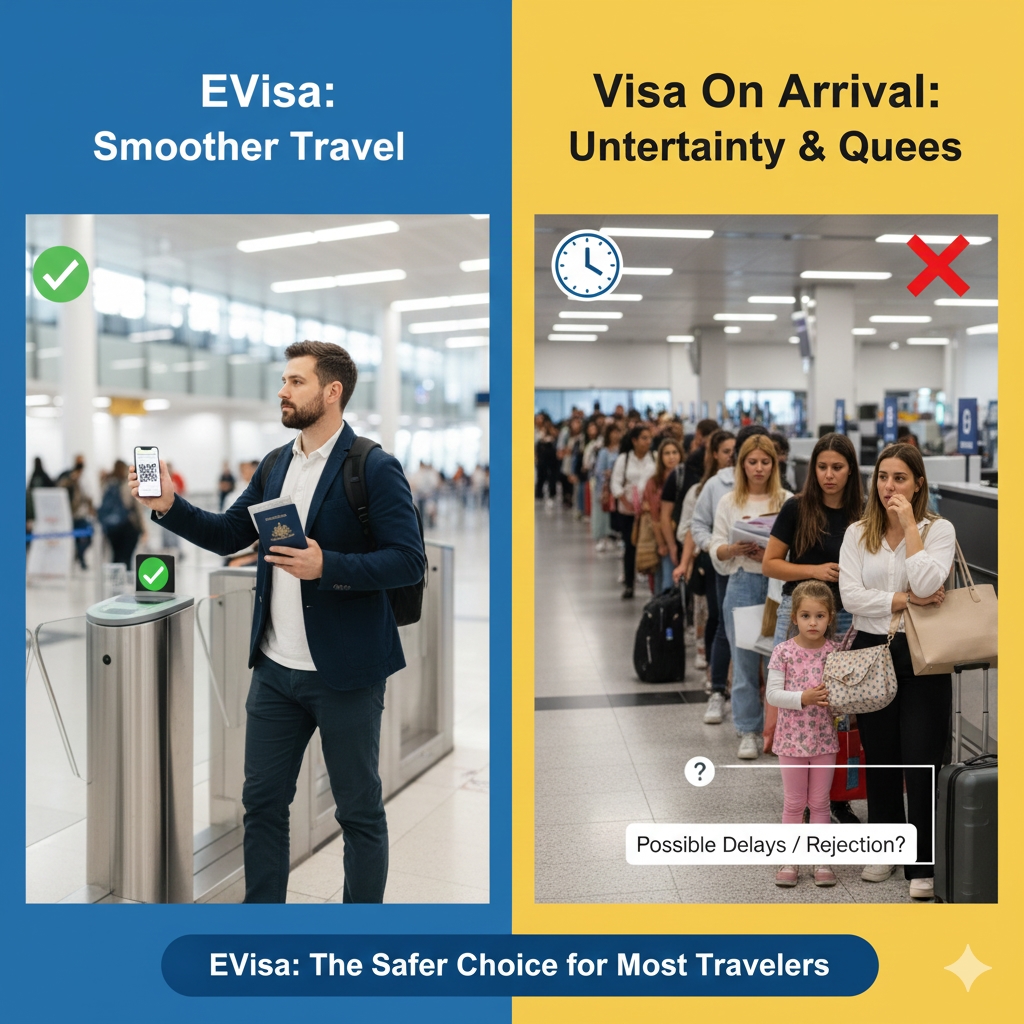
For Australian citizens, here’s how eVisa and visa on arrival compare:
Advantages of eVisa
-
You get pre‑approval before you travel — reduces uncertainty.
-
You avoid queues at the airport visa counter; entry is usually quicker.
-
Everything is handled online from home — no need to long wait.
Visa on Arrival — When It Makes Sense
-
Useful if you decide last-minute to travel and don’t have time for eVisa processing.
-
Sometimes convenient if you have all your documents ready (passport, return ticket, accommodation proof, etc.)
-
But there’s unpredictability — waiting at the airport, possible delays, or even rejection if documents aren’t in order.
Overall, for most travelers (especially first-timers), eVisa tends to be a safer, smoother, and more reliable option.
How Do I Know If My eVisa Is Approved?
Once you submit your application and documents:
-
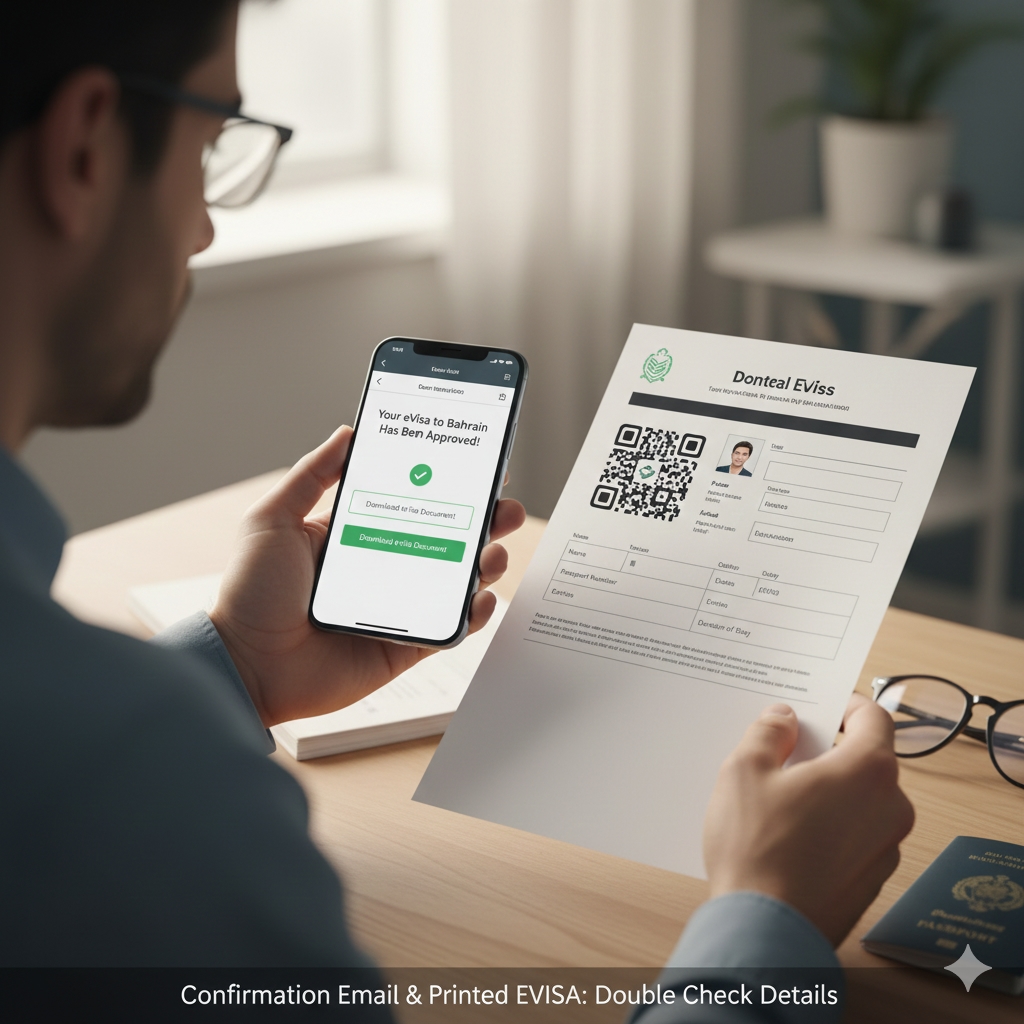
You’ll receive a confirmation email once approval is granted. This email typically includes an eVisa document (often a PDF) linked to your passport.
-
It’s wise to save a copy digitally (on your phone or cloud) and also print a physical copy — just in case there’s limited internet access on arrival, or officers request a printed version.
Check the email carefully — ensure your name, passport number, validity dates, entries and stay duration all match what you requested.
What If My eVisa Application Is Rejected?
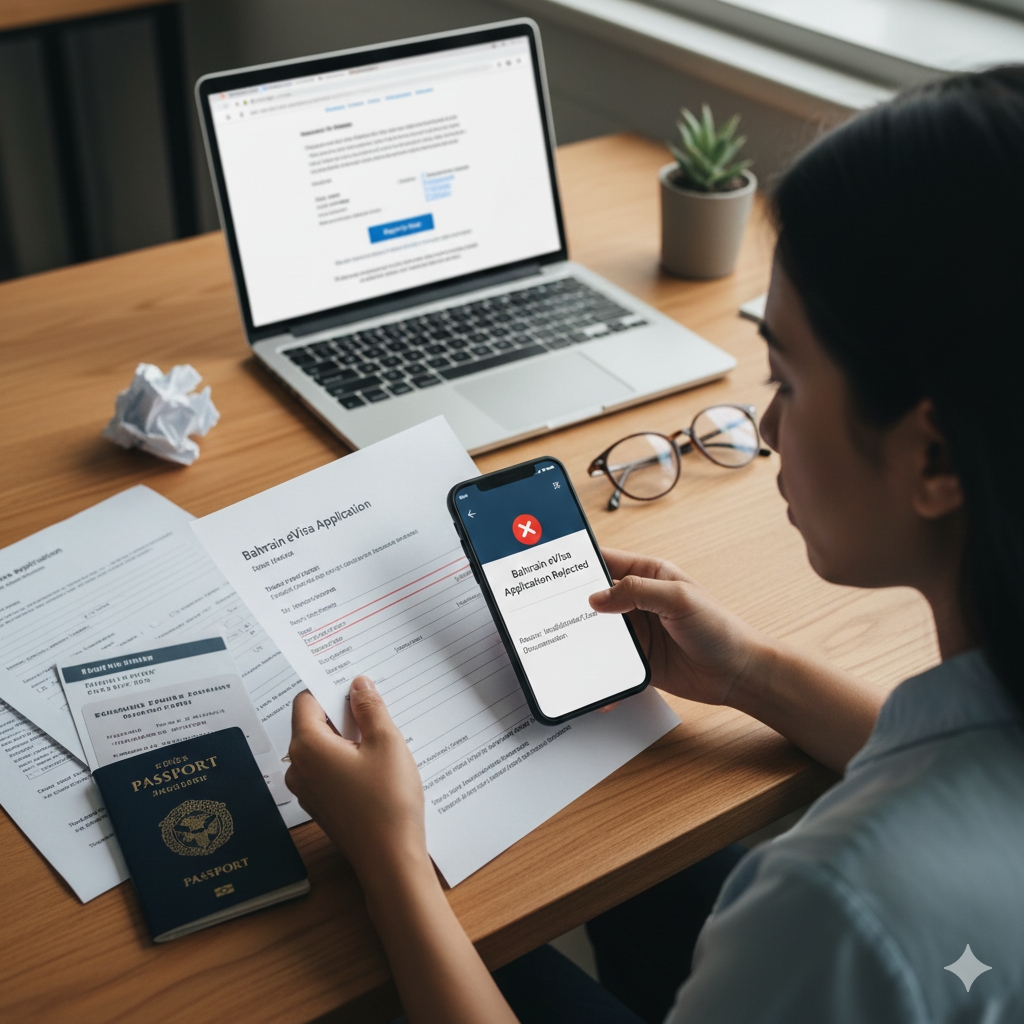
Rejections are not super common, but they happen. If your application is turned down:
-
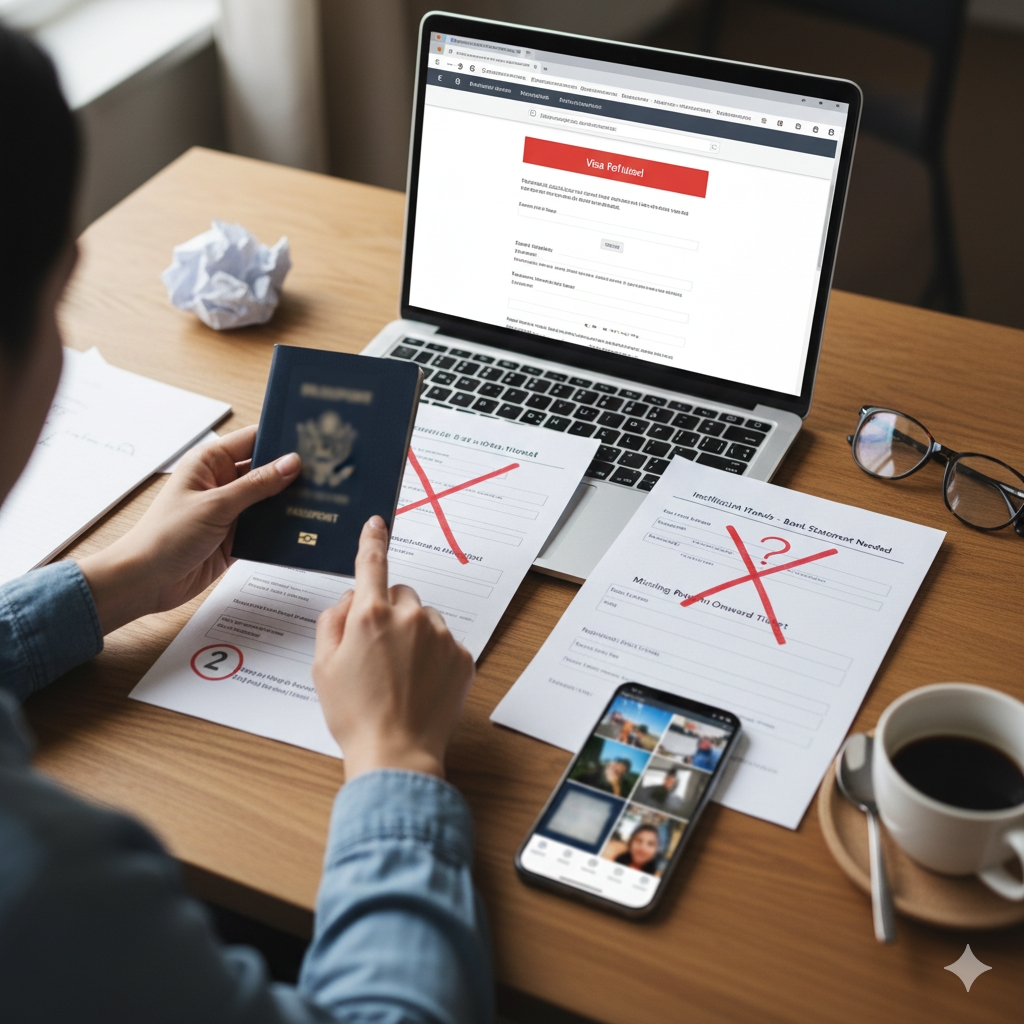
Review carefully the reason cited (if provided). Often, it’s due to missing/unclear documents, mismatch in passport details, or insufficient documentation (e.g., no proof of return flight or accommodation).
-
Correct any errors or missing info and reapply. Make sure scans/photos are clear, and all required data is accurate.
-
Sometimes — especially if you’re applying close to your travel date — delays or high volume might cause problems. So applying well in advance gives you buffer time.
If your application continues to fail repeatedly, you might consider contacting the relevant Bahraini authorities or reconsidering visa on arrival if eligible — but always heed the rules for your nationality.
What is the most common reason for visa refusal?
Based on recent sources and traveler feedback, common reasons include:
-
Mistakes or mismatches in personal details (name spelling, passport number, dates) between passport and application.
-
Documents uploaded are blurry, incomplete, or insufficient — e.g., poor photo quality, unclear passport scan, missing accommodation or flight details.
-
Lack of proof of funds (bank statements) or return/onward ticket — causing doubts about intent to leave.
-
Choosing the wrong visa type (e.g., applying for single‑entry when you need multiple, or vice versa).
-
Submitting application too close to travel date — leaving little time for verification or for correcting mistakes.
Do I Need a Sponsor for a Bahrain Visit Visa?
For many short visits, no sponsor is needed — especially if you have hotel bookings, return flight ticket, and required documents. That’s the whole point of eVisa.
However, if you intend to stay with family/friends in Bahrain rather than a hotel, you may need host details (including their Bahrain ID) as part of your accommodation proof.
For family‑visit eVisas (if offered under your nationality and relationship), a sponsor — or at least a host — may help. But for standard tourist or business eVisas, a sponsor usually isn’t mandatory.
Do I Need to Show My eVisa at the Airport?
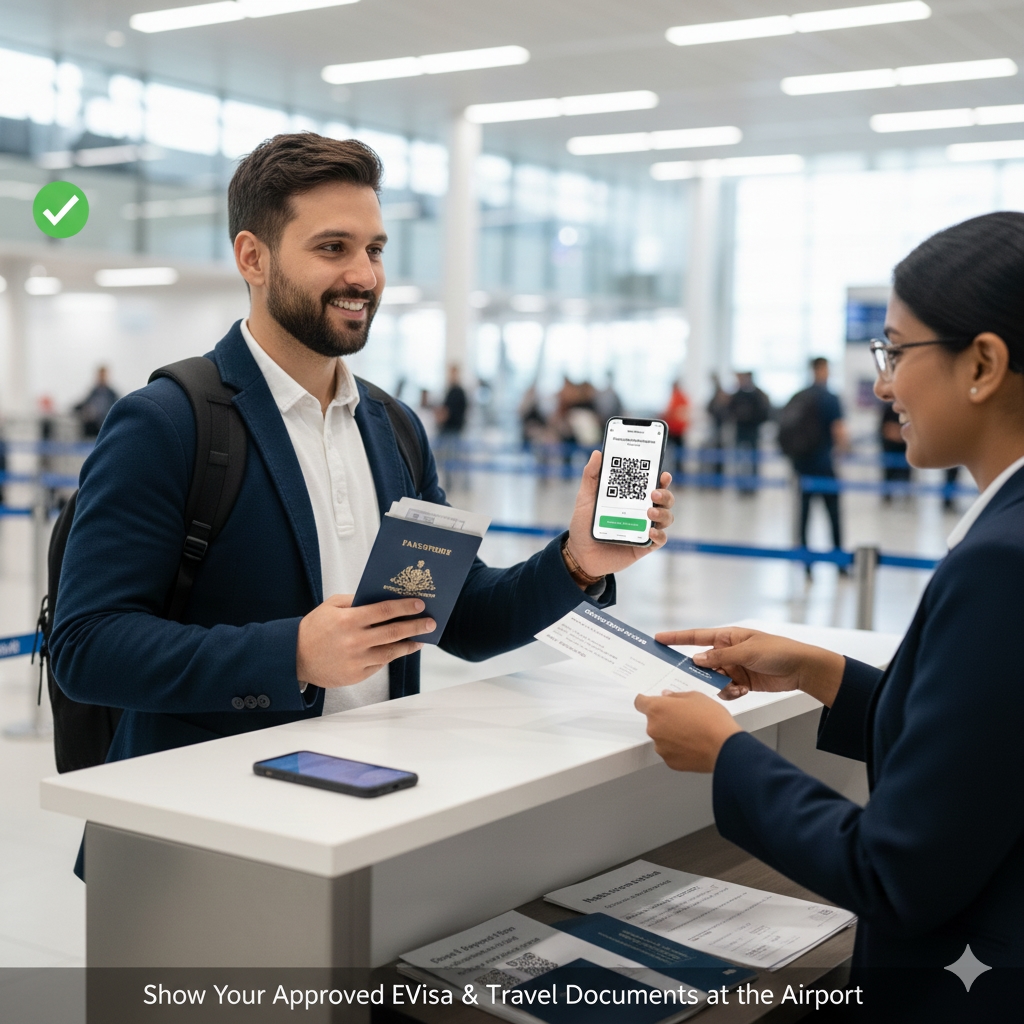
Yes — when you arrive, you should carry your passport and a copy (digital or printed) of your approved eVisa. Many travellers also keep their accommodation confirmation and return ticket handy.
Although the eVisa is electronically linked to your passport, having a printed or saved copy makes life easier — especially if there are connectivity issues at the airport, or if officers ask for proof.
Which method reduces the likelihood of application rejection—agents or direct government submission?
When you’re applying for a visa for the first time — or simply want the smoothest experience — the question naturally arises:
Using the Government site
using the direct government submission method (i.e., applying yourself) for a Bahrain e‑Visa — each point is separate to help understand where risks lie if you don’t use an agent:
-
Small mistakes or missing information lead to immediate rejection: When you submit directly, you’re completely responsible for entering all details correctly. Even minor typos in name, passport number, or birthdate, or missing a required field, can trigger rejection.
-
If supporting documents are incomplete or unclear, the application may be denied: Government submissions require accurate, valid documents — passport validity, clear scans/photos, proof of accommodation or flight tickets, etc. If any document is missing or insufficient (e.g., unclear scan, expired passport), your application could be rejected.
-
You get no external review or “second pair of eyes” before submission: Without agent help, there is no one to cross‑check your application or flag possible errors. The burden of verifying that all requirements are met, and files are correctly uploaded, remains entirely on you. This increases the chance of human error — especially for first-time applicants.
-
Limited time to correct errors if you apply too close to travel date: If you submit via the government method close to your travel, and the application gets rejected (because of any mistake or missing doc), you may not have enough time to gather correct documents and reapply — risking missed travel plans.
What the “bahrain‑evisa.info” site says — and why it may appeal
Here are the main details and claims from the agent‑site bahrain‑evisa.info, which make it look attractive (and may influence someone to choose it). I also highlight what to be cautious about.

-
Clear overview of e‑Visa types and eligibility groups: The site explains that there are different visa categories — Tourist, Family, Business — and that eligibility depends on nationality, divided into “Group A,” “Group B,” and “Group C.” According to them, Group A needs minimal documents, whereas other groups may need extra proof like bank statements or a GCC permit.
-
Three-step application process: They outline a simple process: (1) fill online application form, (2) upload required documents, (3) receive approved e‑Visa via email.
-
Document checklist: They mention you generally need passport bio‑page scan (valid at least six months beyond arrival), proof of travel (round‑trip ticket), accommodation proof (hotel booking or host’s Bahrain ID), and — for some nationalities — additional support like bank statements or a GCC permit.
-
Processing time tiers: According to them, standard processing takes about 6–8 working days; there are faster options (rush/super‑rush) that promise 5–7 or 4–6 working days respectively.
-
Support services: The site offers assistance in filling out the form, reviewing documents to catch errors, and 24/7 support if there are issues.
-
Re‑application and urgent re‑apply option: If your application gets rejected, they claim you can reapply — and even choose super‑rush processing for urgent travel plans.
-
User‑friendly tone: The way the site presents itself — step‑by‑step process, support, simple language and claims of convenience — can make it feel reassuring for travellers who are not comfortable with bureaucratic processes.
Travel Advice for a Smooth Experience
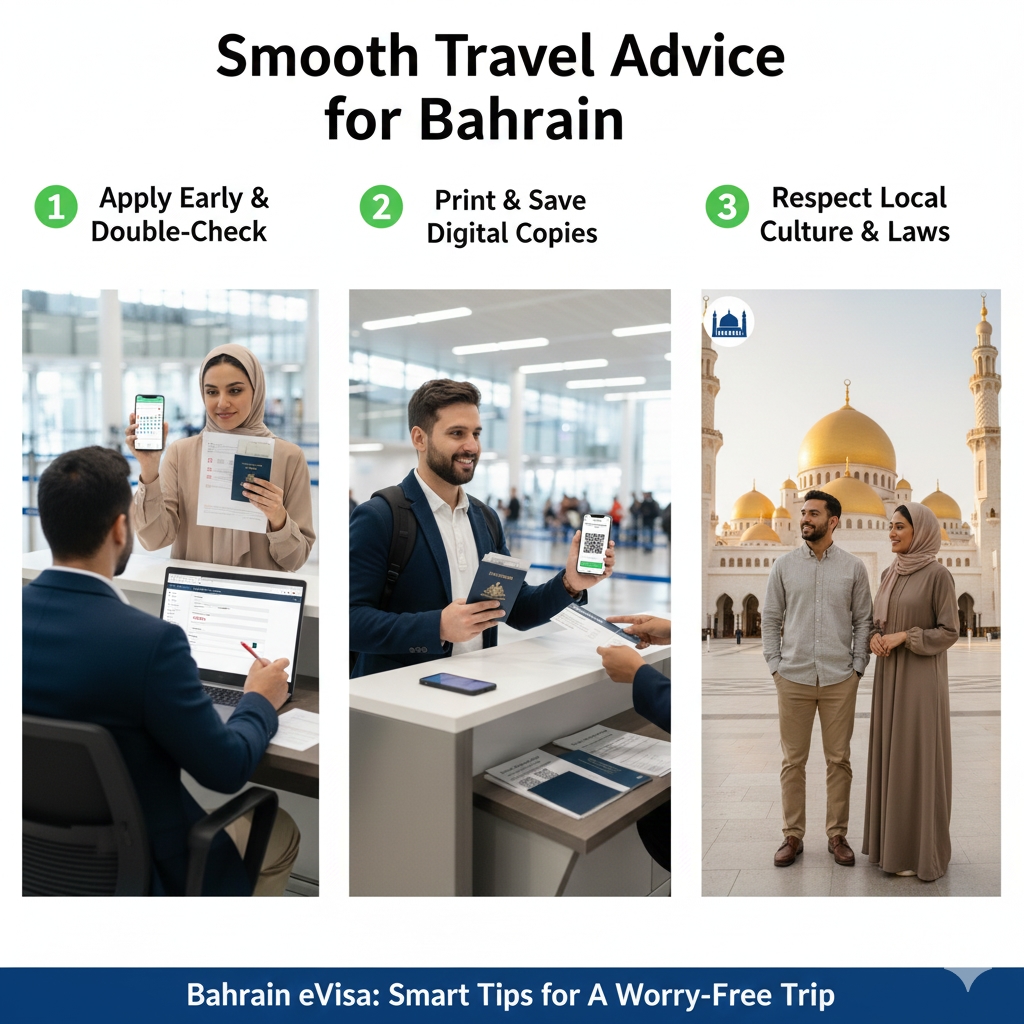
Here are some practical tips and travel‑blogger style advice to ensure your Bahrain trip goes off without a hitch:
-
Apply early. Give yourself at least 10–15 days buffer before your travel date to avoid last-minute stress.
-
Double-check details. Passport number, name spellings, birth date — make them exactly match your passport. Even small typos can cause rejection.
-
Use clear, high-resolution scans/photos. Blurry images or dark lighting can lead to delays or rejection.
-
Print and save your eVisa approval. Even if you’re travelling with digital copies, having a printed version acts as backup.
-
Dress modestly on arrival. Bahrain is conservative; modest attire helps show respect for local culture (especially when visiting mosques or traditional areas).
-
Respect local laws and culture. Bahrain authorities take local customs seriously — what’s normal elsewhere may be interpreted differently.
-
Be cautious and aware. External travel advisories for Bahrain suggest staying alert and respecting laws on expressions, behaviour and public decency.
Conclusion
Planning a trip to Bahrain from Australia? Going with Bahrain e‑Visa Requirements and Online Application for Australian Citizens is almost always the smartest move. It simplifies things, gives you certainty before you board your flight, and helps avoid airport hassles. With proper preparation — valid passport, clear scans, confirmed accommodation and flight tickets — you can secure your eVisa in a matter of days and make your travel plans with peace of mind.
Whether you’re headed for sightseeing around Manama, meeting friends, enjoying a business trip, or just looking for a quick getaway — the eVisa path makes it all much easier. So start gathering your documents now, apply with care, and get ready for an exciting Bahrain adventure!
FAQs
-
Do Australian citizens always need to apply for an eVisa for Bahrain?
Yes — Australians need a visa for Bahrain. The eVisa is currently one of the easiest options available, though visa on arrival is also possible under certain conditions. -
How long is a Bahrain eVisa valid for, and how many entries does it allow?
It depends on the type of eVisa you select: some offer single entry with 2‑week stay, others offer multiple entries with up to a month stay, or even longer depending on visa type. -
How early should I apply for the eVisa before my travel?
It’s best to apply at least 7–10 days before travel, but ideally 10–15 days to leave enough time for processing or unexpected delays. -
What documents do I need to submit with the eVisa application?
Passport scan (with at least six months validity), passport‑style photo, proof of accommodation (hotel booking or host’s ID if staying with family/friends), return/onward flight ticket, and sometimes a bank statement. -
What happens if my eVisa application is rejected?
You can usually correct any mistakes (for example, document issues or typos) and reapply — just ensure everything is clear, correct and complete to avoid repeated rejection.
Location


Leave a Comment