

Cameroon eVisa Guide for the Travellers of Jamaica
If you’re scrolling, looking for a friendly, thorough breakdown — welcome! This is your Cameroon eVisa Guide for the Travellers of Jamaica. Whether you’re dreaming of exploring lush rainforests, vibrant markets, or the cultural mosaic of Central Africa, this guide is designed especially for travellers from Jamaica. I’ll walk you through everything you need to know about getting an e‑Visa for Cameroon — from what types exist, to what papers you should gather, how long it might take, and practical travel advice to make your journey smooth and stress‑free.
Do Jamaicans Need a Visa for Cameroon?
Yes — Jamaican nationals require a visa to enter Cameroon. The good news: Cameroon offers an electronic visa (e‑Visa) system that simplifies the process.
That means, as a Jamaican traveller, you’ll apply online, upload your documents, wait for approval, and then travel — provided you meet all entry conditions like a valid passport and proof of vaccination.
What Is the Best Time to Visit Cameroon?
If you want good weather and easier travel conditions, plan a visit between November and February. This period corresponds to the dry season in many parts of the country (especially around the capital).
It’s a great time for sightseeing, outdoor adventures, wildlife viewing, and generally easier transportation — especially if you plan to explore both urban and rural areas.
How Many Types of e‑Visas Are There?
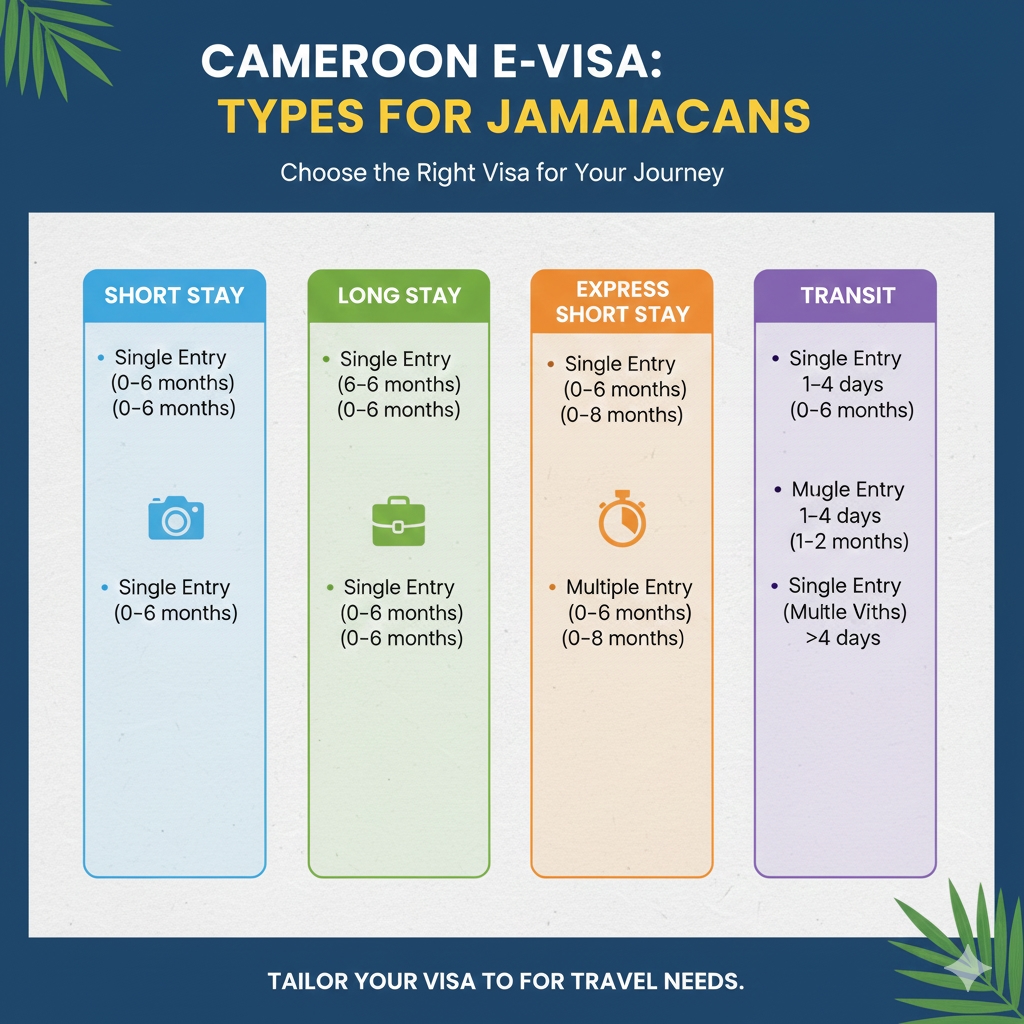
In this Cameroon e-Visa Guide for the Travellers of Jamaica, it’s helpful to understand that there are several types of Cameroon Visas depending on the purpose and duration of your stay. Here’s a breakdown:
-
Short Stay – 0 to 6 months, Single entry
-
Short Stay – 0 to 6 months, Multiple entry
-
Long Stay – from 6 months to 1 year, Single entry
-
Long Stay – from 6 months to 1 year, Multiple entry
-
Express Visa for Short Stay – 0 to 6 months, Single entry
-
Express Visa for Short Stay – 0 to 6 months, Multiple entry
-
Transit – 1 to 4 days, Single entry
-
Transit – 1 to 4 days, Multiple entry
-
Transit – Over 4 days, Single entry
-
Transit – Over 4 days, Multiple entry
Each type has different validity and stay‑duration parameters, so depending on whether you are visiting as a tourist, business traveller, student, or simply transiting, you’d choose accordingly.
How Do I Apply for a Cameroon eVisa Online?
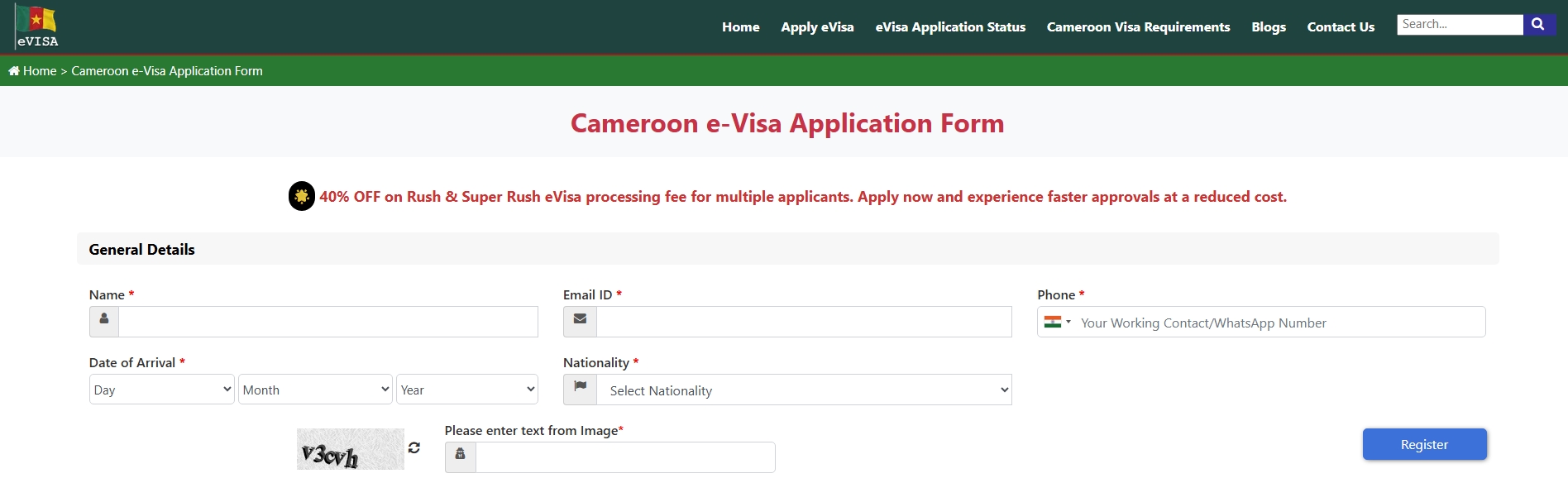
Here’s a step-by-step approach to applying for your e‑Visa — easy to follow, even if it’s your first time:
-
Fill out the online application: Provide your personal information, passport details, and travel plan. Make sure everything matches your passport exactly.
-
Upload required supporting documents: includes scans or photos of passport, flight itinerary, proof of accommodation or invitation letter / hotel booking, vaccination certificate (especially for yellow fever), proof of residence, and — in some cases — evidence of purpose of visit or financial backing.
-
Select your visa type and preferred processing speed: Choose whether you want standard processing, rush, or super‑rush depending on how soon you’re travelling.
-
Pay the application fee: Then, you must pay the application fee online, based on the selected visa type — this Cameroon visa fee covers and processing charges required to proceed.
-
Submit the application and wait for approval: Once approved, you’ll usually receive an electronic authorization. Print it out and carry it with you when you travel. Entry will typically involve biometric checks and a visa sticker or stamp on arrival.
What Documents Do I Need for a Cameroon Visa?
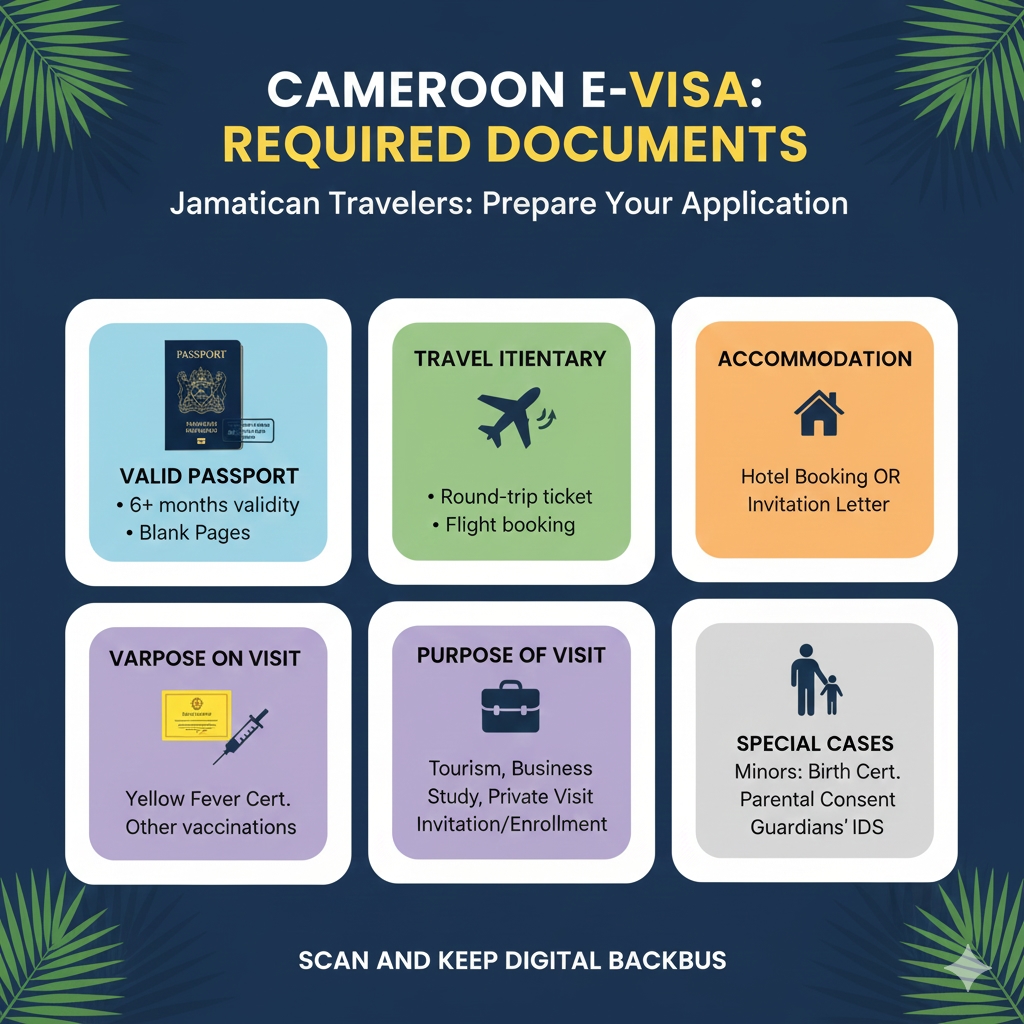
Here’s a breakdown of what Jamaican travelers should prepare when applying, including all the required documents for Cameroon visa —
-
A valid passport (valid for at least six months from your planned departure date, with blank pages).
-
Round‑trip air ticket or flight itinerary.
-
Proof of accommodation — hotel booking confirmation or an invitation letter from a host in Cameroon (if staying with someone).
-
International vaccination certificate, especially showing proof of yellow fever vaccination (for travellers 9 months and older).
-
Sometimes, evidence of purpose of visit (tourism, business, study, private visit) — such as invitation letter, enrollment letter, or business/meeting details.
-
For minors or special cases: birth certificate, parental consent (if travelling without parents), and identity documents of guardians.
It’s wise to scan or photograph these documents clearly, ensure they’re legible, and keep backups in case you’re asked for them again.
How Long Does a Cameroon eVisa Take?
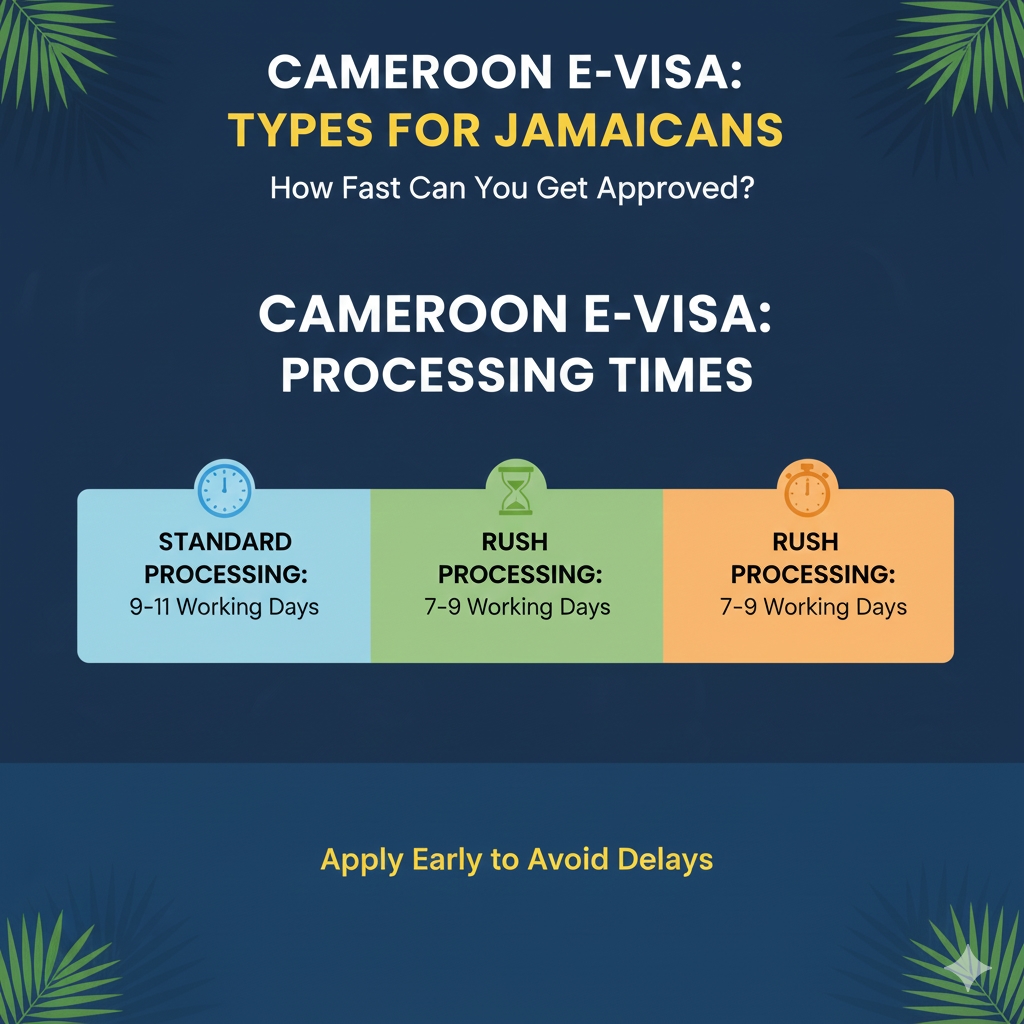
Processing time depends on the service level you choose. For many travellers, the options are:
-
Standard Processing — usually 9 to 11 working days.
-
Rush Processing — around 7 to 9 working days.
-
Super Rush / Express Processing — if you’re in a hurry, you may receive approval in around 5 to 7 working days.
Because processing can vary depending on document quality or demand, it’s always wise to apply well ahead of your intended travel date.
Can I Get a Visa on Arrival in Cameroon?
As per the current e‑Visa system for Cameroon, travellers (including those from Jamaica) generally cannot rely on getting a visa on arrival. Entry requires an approved e‑Visa prior to travel.
So, don’t leave your application until the last minute — make sure you have your e‑Visa sorted before booking flights or making other travel plans.
How Long Is a Cameroon eVisa Valid?
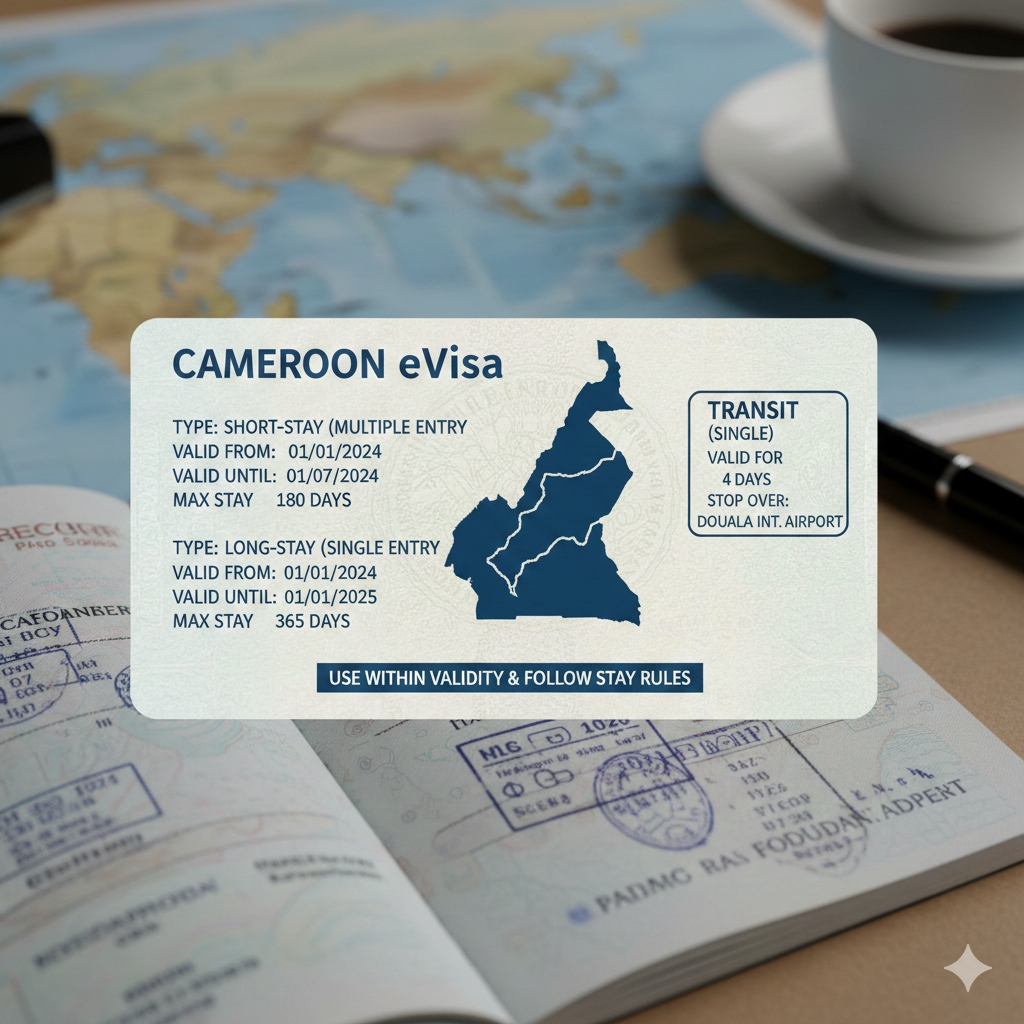
Depending on the type of e‑Visa:
-
Short‑stay e‑Visas typically allow stays from 0 to 6 months, either as single entry or multiple entry.
-
Long‑stay e‑Visas can be valid for up to 1 year, with options for single or multiple entries.
-
For transit visas: validity and stay‑duration depend on the length of stopover (e.g., 1–4 days, or longer), and whether it’s single or multiple entry.
Just be sure to use the visa within its validity window and follow any rules about maximum continuous stay.
What Happens If My Cameroon eVisa Is Rejected?
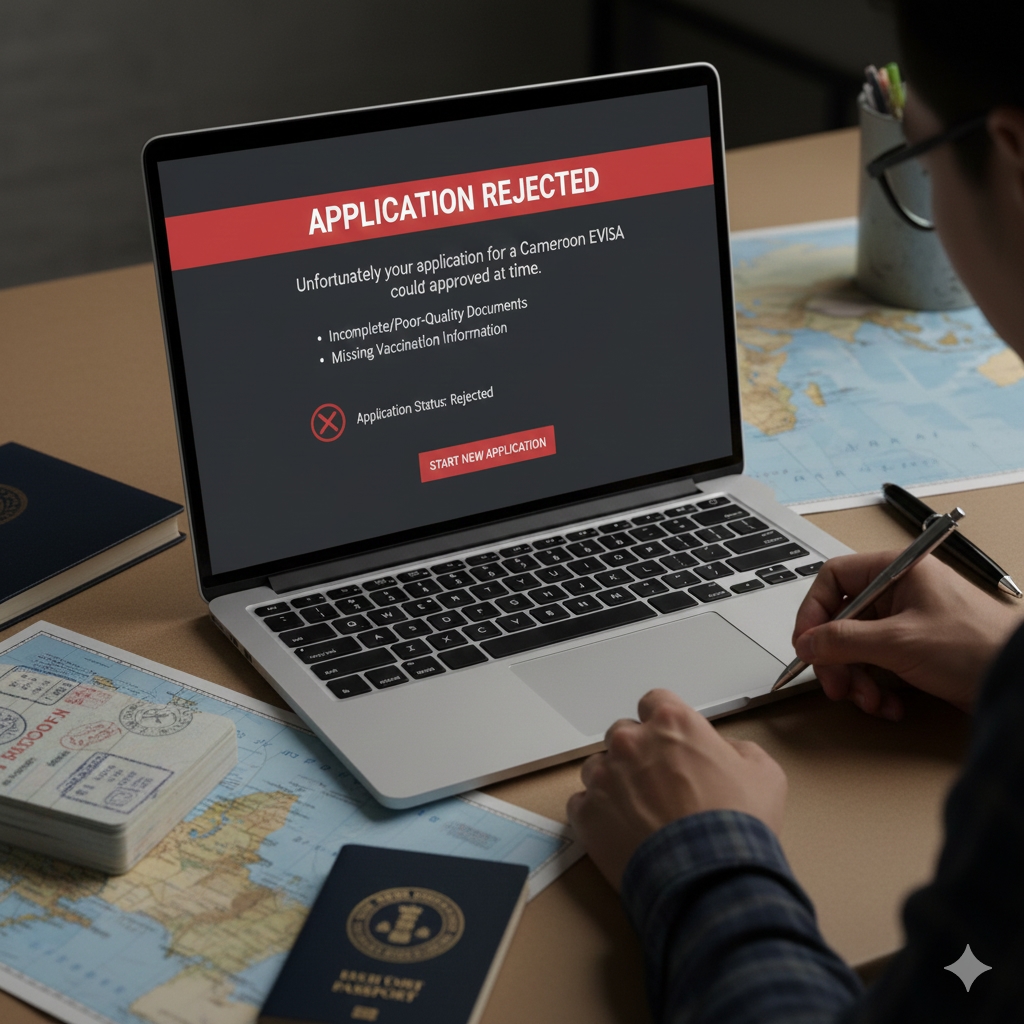
If your application is rejected, unfortunately you’re not able to travel to Cameroon until you reapply and get approval. According to guidance for applicants:
-
Once a visa decision is made, you cannot simply edit your existing application — you’ll need to submit a new one.
-
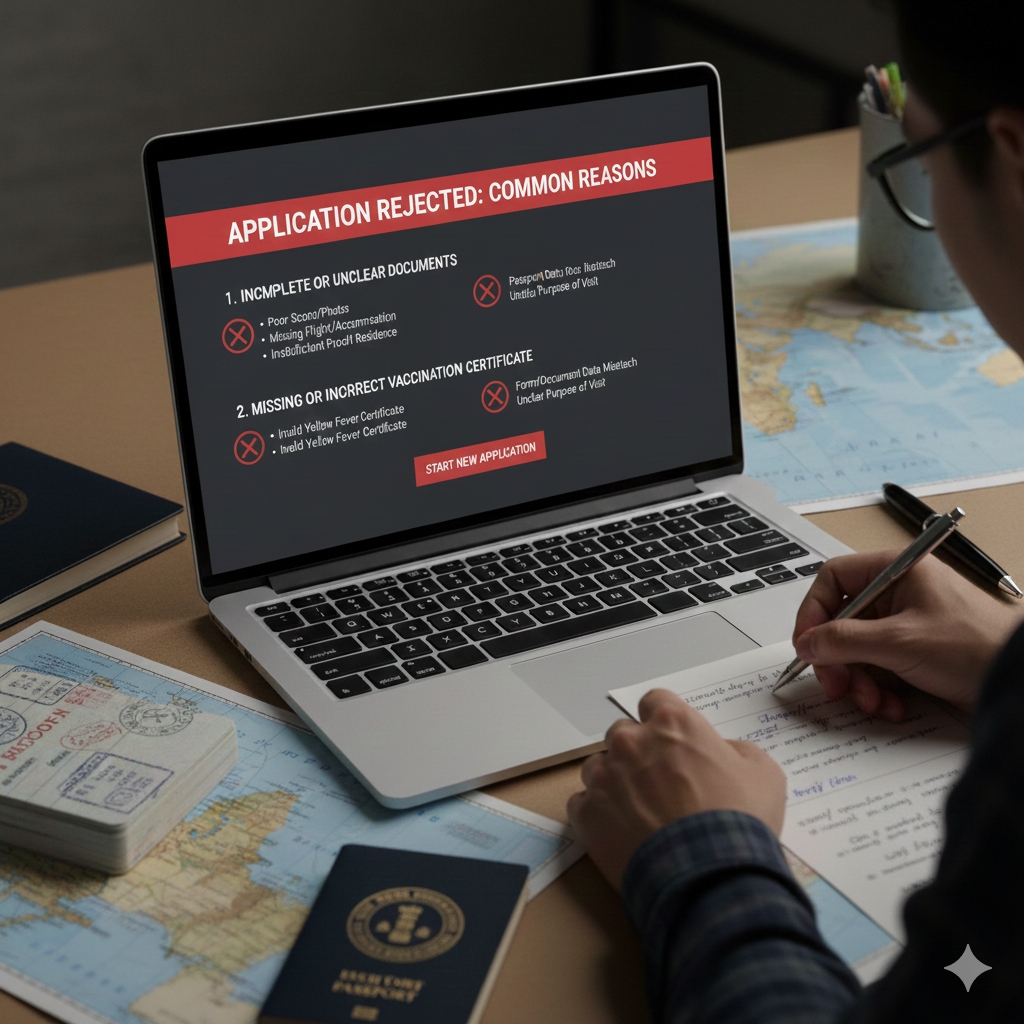
A rejection can happen for many reasons. Commonly, it’s due to incomplete or poor-quality documents, missing vaccination proof, or inconsistencies between documents and the information provided.
If rejected, carefully review what went wrong — maybe a scan was unreadable, or you missed a required document — then reapply after correcting the issue.
What Are the Three Common Reasons for Visa Rejection?
Based on travellers’ experiences and e‑Visa guidance, here are three frequent causes for rejection:
-
Incomplete or unclear documents — poor scans/photos, missing flight or accommodation evidence, or insufficient proof of residence.
-
Missing or incorrect vaccination certificate — especially failure to provide a valid yellow fever vaccination certificate.
-
Inconsistencies or discrepancies — between passport data, application form, supportive documents (e.g. name mismatches), or unclear purpose of visit.
Avoiding these pitfalls by double-checking your application packet greatly improves your chances.
What Vaccinations Do I Need for Cameroon?
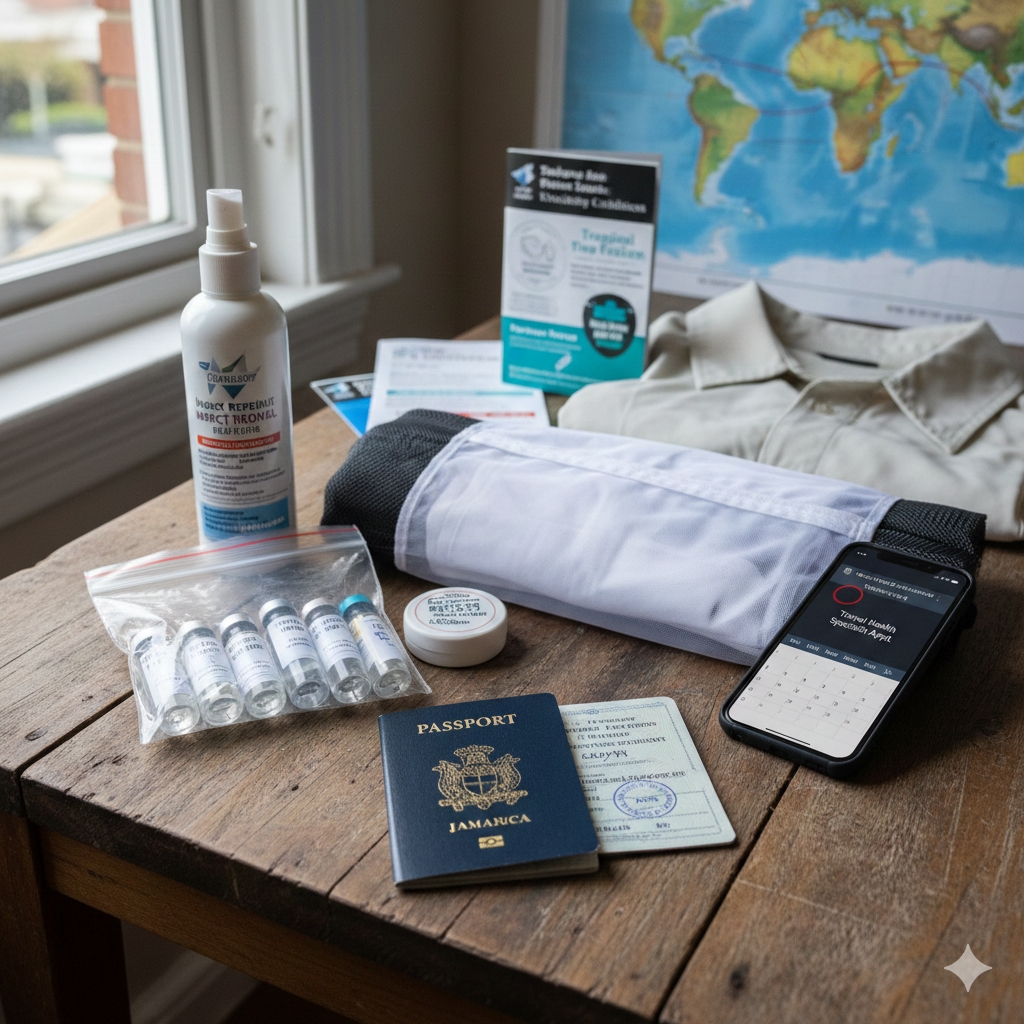
Health requirements for entering Cameroon should not be taken lightly. As someone travelling from Jamaica, you’ll particularly need:
-
A valid yellow fever vaccination certificate (for travellers older than 9 months).
-
It’s also strongly recommended — depending on your travel plans — to be up to date on other routine vaccinations like polio, MMR, tetanus, etc.
-
For longer stays or rural/adventurous travel: consider vaccinations or preventive measures for hepatitis A & B, typhoid, rabies, meningitis, possibly cholera (depending on regions and sanitary conditions).
-
Since mosquito‑borne diseases (like malaria, dengue, yellow fever) are known risks, carry insect repellent, mosquito nets or treated clothing, and perhaps antimalarial prophylaxis if recommended by your doctor.
Tip: Talk to a travel‑health specialist 4–6 weeks before departure to ensure you get vaccinations in time and plan for ongoing preventive care like malaria protection.
Which method gives you more control over your personal information—agent or government website?
When you apply for a visa to Cameroon from abroad (say, from Jamaica), you often face a choice: apply through the government portal, or use an agent site like cameroon-evisa.org. That choice can affect how much control you have over your personal information, how transparent the process is, and how comfortable you feel about security and legitimacy. Understanding the trade‑offs helps you make a safer decision for yourself.
When using the Government site
-
Frequent payment problems — Many applicants report failed transactions, error messages, or their bank cards debited without the visa being issued.
-
Delays beyond advertised processing times — Despite promises (e.g. 72‑hour or 24‑hour for express), some users wait far longer, sometimes weeks, for visa approval.
-
User‑experience issues (unfriendly interface, confusing form or instructions) — The portal has been criticized for a clunky layout, unclear fields or error messages, making the application harder than expected.
-
Limited or inconvenient payment/payment‑gateway restrictions — The platform reportedly requires payment in certain currencies (e.g. euros) or accepts only certain international bank cards, which can be a problem for some travellers.
What cameroon-evisa.org (the agent site) claims — and what you should know
Based on what the site itself claims — and what some travellers report — here are reasons why someone might choose to go via an agent like cameroon-evisa.org rather than directly through channels:
-
Ease and convenience: apply from anywhere, anytime: Cameroon-evisa.org advertises that you can start your visa application from wherever you are — home, work, or abroad.
-
Helpful, guided support — especially if first time applying: many travellers, the paperwork for a visa can be confusing: passport data, flight details, vaccination proof, accommodation proof, residence proof, purpose‑of‑visit evidence, etc. The agent claims to provide support through the whole process: helping you fill out the form correctly, advising on acceptable document formats, uploading documents, and answering questions through email, live chat, or helpline. That reduces the risk of mistakes — which are among the most common reasons applications get delayed or rejected.
-
Faster or more flexible processing, including “assisted” handling: The agent site suggests that they offer “expedited support,” or at least more personalized attention (e.g. if your travel date is soon). Their “contact us” page says they can provide help with urgent applications or follow‑ups if there are delays. For travellers with tight schedules — like students, business trips, or last‑minute plans — this convenience can feel worth the extra service.
-
Reduced friction and fewer personal hassles: You don’t have to navigate technical glitches, complicated payment gateways, or poorly designed forms by yourself. For people who are not very comfortable with online bureaucracy — or whose internet access is not reliable — having an agent manage the process can save time, stress, and confusion. This “door‑to‑door” assistance is often what travel‑agents promise when you don’t trust your own ability to manage the process smoothly.
-
Support in case of issues or rejections — at least in theory: site claims to offer personal support if there are delays, questions, or even rejections — theoretically helping you reapply or fix problems. For someone travelling internationally from a distant country (for example, from Jamaica), this kind of support could feel reassuring, especially if they are unfamiliar with Cameroon’s visa rules.
-
Helpful for complex cases: If your situation is complicated — e.g. long stay, multiple entries, transit‑over‑several days, business purposes, special documentation requirements — an agent may be more experienced in dealing with the nuances than a first‑time traveller. A “one‑stop shop” approach might help avoid errors. Some online guides for other nationalities mention that “agents guide you through entire process, making it easier to prepare passport scans, vaccination certificates, and travel documents correctly.”
In short: the main advantage of cameroon-evisa.org is convenience + support + guidance, especially for travelers who don’t want to deal with technicalities, or who fear making mistakes in the procedure.
Travel Advice for a Smooth Experience
Here are a few extra pointers — seasoned traveller to seasoned traveller — to ensure your trip goes well:
-
Apply for your e‑Visa well ahead of time. Don’t wait until the last minute; delays and document issues can pop up unexpectedly.
-
Double‑check all scans and uploads. Make sure photos of your passport, bookings, vaccination card, etc., are clear and legible.
-
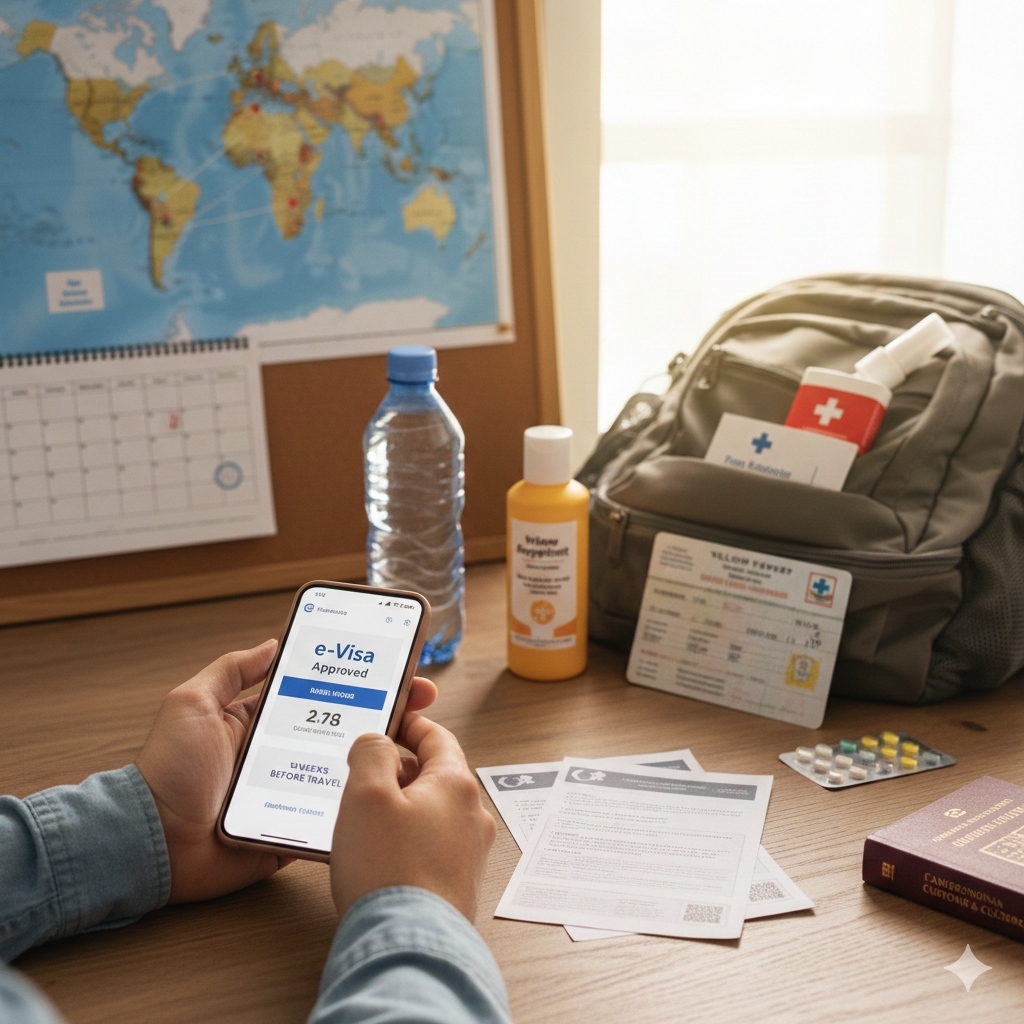
Print and carry hard copies. Once your e‑Visa is approved, keep a printed copy, as you may need to present it at the airport or border.
-
Have backup documents ready. A saved copy on your phone or cloud, plus printed copies — especially your passport data page, yellow fever certificate, flight itinerary, hotel booking or invitation.
-
Health first. Given Cameroon’s tropical climate and some health risks, pack mosquito repellent, consider prophylactic medicines, drink safe water (bottled or treated), and follow basic hygiene care.
-
Plan your itinerary with buffer time. Since travel, flights, and e‑Visa issuance can be unpredictable, give yourself a few extra days buffer in case there are delays.
-
Respect local customs and laws. Research the regions you’ll visit — especially if you’re traveling to remote or rural areas — and stay informed about safety, weather, and cultural norms.
Conclusion
Travelling to Cameroon from Jamaica is absolutely possible — and with the digital e‑Visa system in place, the process is more straightforward than ever. This “Cameroon e-Visa Guide for the Travellers of Jamaica” aims to demystify every step: from visa types, document checklists, processing times, to health requirements and smart travel tips.
With proper preparation — valid passport, flight bookings, accommodation proof, yellow fever vaccination certificate, and a correctly filled application — you can look forward to exploring Cameroon’s vibrant cities, lush landscapes, and rich cultural heritage with confidence.
Whether you’re visiting for tourism, business, family, or transit, just follow this guide, plan ahead, and you’ll be set for an unforgettable journey. Wishing you safe travels and amazing experiences in Cameroon!
FAQs (For Travellers — Note: slight naming inconsistency but still useful)
Q: Is there an e‑Visa available for first-time travellers to Cameroon from Jamaica?
Yes — the e‑Visa system applies to travellers of all nationalities (except a few exemptions), including Jamaican passport holders.
Q: Can I use a short‑stay e‑Visa for more than one entry into Cameroon?
Yes — if you choose the short‑stay, multiple‑entry option (0–6 months), you can enter more than once during the validity period.
Q: What if I’m transiting through Cameroon only for a few days?
There are transit visa options (single or multiple entry) for shorter stays — for 1–4 days, or longer, depending on your itinerary.
Q: What if my e‑Visa application is rejected — can I reapply?
Yes — you can submit a new application, but make sure to fix whatever caused the rejection (incomplete docs, vaccination proof missing, mismatches, etc.).
Q: Do I need to get vaccinated specifically for Cameroon?
Yes — at minimum, a valid yellow fever vaccination certificate is mandatory. Additional vaccines may be strongly recommended depending on your travel plans.
Location


Leave a Comment