

E-Commerce Marketing Services to Grow Your Online Business
E-Commerce Marketing

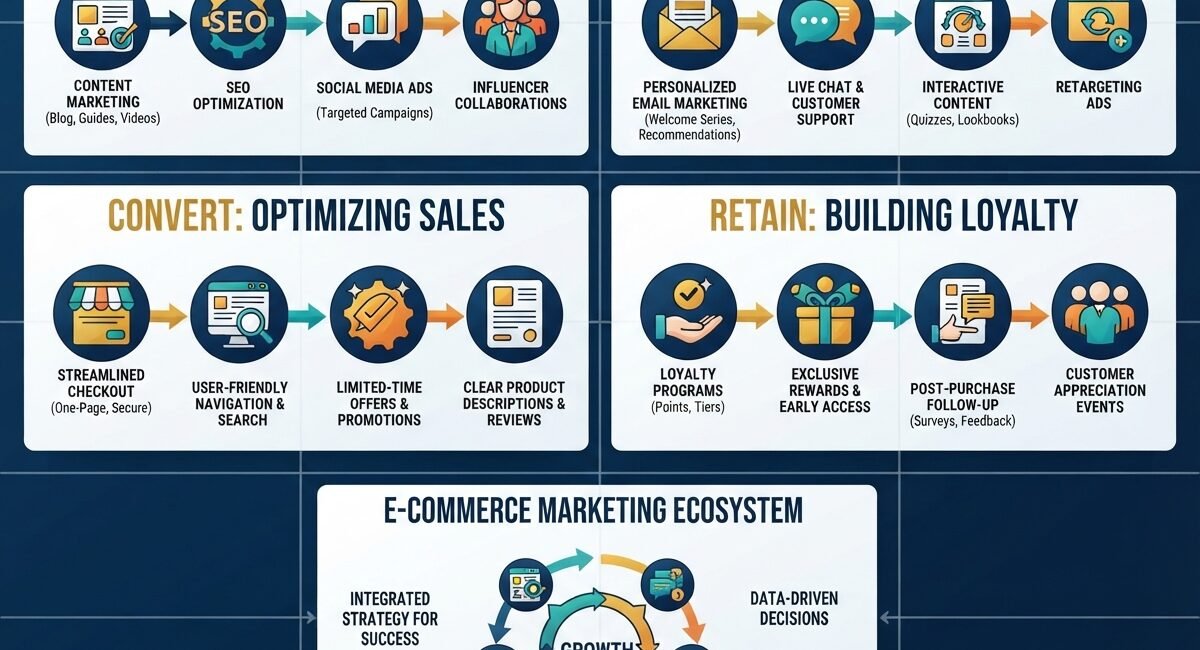
In today’s digital marketplace, having an online store is only the beginning. Your products need to reach the right audience, appear where customers are searching, and create a shopping experience that encourages purchases. E-Commerce Marketing brings together SEO, social media, advertising, content, email campaigns, and conversion strategies to help online businesses attract and retain customers.
Whether you are launching a new store or expanding an established e-commerce brand, the right marketing strategy can increase visibility, generate qualified traffic, and support sustainable business growth.
Complete E-Commerce Marketing Solutions

Every online store has different products, customers, and business goals. A customized marketing strategy helps ensure that your promotional activities are focused on the right audience.
Our e-commerce marketing solutions can include:
- E-commerce SEO
- Product page optimization
- Social media marketing
- Paid advertising
- Content marketing
- Email marketing
- Product promotion
- Conversion optimization
- Brand awareness campaigns
- Online store growth strategies
Combining these services creates a stronger digital presence and gives customers multiple ways to discover your products.
E-Commerce SEO That Builds Visibility

Search engines are an important source of potential customers for online stores. E-commerce SEO helps your product and category pages become more visible when people search for relevant products.
An effective SEO strategy can focus on:
- Product keywords
- Category optimization
- SEO-friendly product descriptions
- Meta titles and descriptions
- Image optimization
- Internal linking
- Website structure
- Mobile usability
- Page speed
- Helpful content
By optimizing your online store for search engines and users, you can create a stronger foundation for long-term organic traffic.
Product Marketing That Gets Attention

Great products need great presentation. Customers often make purchasing decisions based on product images, descriptions, pricing, reviews, and overall presentation.
Product marketing can help highlight the features and benefits that matter most to your target customers. Professional product descriptions, attractive visuals, promotional content, and clear calls to action can make product pages more informative and engaging.
A well-presented product gives visitors the information they need before making a purchasing decision.
Social Media for Online Stores

Social media is an effective way to showcase products and build relationships with potential customers. Your business can use social platforms to introduce new products, share promotions, educate customers, and display your brand personality.
A strong social media strategy may include:
Product Showcases: Present products through attractive posts and videos.
Promotional Content: Highlight discounts, seasonal campaigns, and special offers.
Educational Content: Explain product features, benefits, and uses.
Customer Content: Share reviews, experiences, and user-generated content.
Video Marketing: Demonstrate products through short and engaging videos.
Consistent social media marketing can help keep your store connected with its target audience.
Paid E-Commerce Advertising

Paid advertising allows businesses to promote products to carefully selected audiences. Search ads, display campaigns, shopping advertisements, and social media advertising can all be used as part of an e-commerce campaign.
Effective advertising starts with understanding your customers. Audience targeting, compelling creative, strong product pages, and clear messaging can help create more relevant campaigns.
Performance should also be monitored regularly so that campaigns can be adjusted based on measurable results.
Content Marketing for E-Commerce Brands

Customers often research products before purchasing them. Useful content can answer their questions and help them understand which products are suitable for their needs.
Content ideas for an online store include:
- Buying guides
- Product comparisons
- How-to articles
- Product tutorials
- Frequently asked questions
- Industry guides
- Product tips
- Seasonal shopping guides
Helpful content can attract search visitors while providing additional value to potential customers.
Email Marketing That Keeps Customers Connected

Email marketing gives e-commerce businesses a direct communication channel with customers. It can be used to introduce products, announce offers, share helpful information, and encourage repeat purchases.
Common email campaigns include welcome messages, promotional emails, new product announcements, abandoned-cart reminders, seasonal campaigns, and customer follow-ups.
Relevant communication can help turn one-time buyers into returning customers.
Improve Your Online Store Experience
Marketing brings visitors to your website, but your website needs to make it easy for them to purchase.
A user-friendly e-commerce store should provide:
- Simple navigation
- Clear product information
- High-quality images
- Easy product selection
- Visible pricing
- Trust signals
- Convenient checkout
- Mobile-friendly design
- Clear shipping information
- Easy-to-find support options
A smooth customer journey can reduce unnecessary obstacles between product discovery and purchase.
Mobile-First E-Commerce Strategy
Smartphones play an important role in modern online shopping. Customers may discover products through social media, search engines, advertisements, or email while using mobile devices.
For this reason, your e-commerce website should work smoothly across smartphones and tablets. Fast-loading pages, readable content, responsive layouts, simple menus, and easy checkout options can improve the mobile shopping experience.
Build a Strong E-Commerce Brand
Successful online stores are not built only around products. They are also built around recognizable brands.
Consistent colors, graphics, messaging, product photography, website design, and social media content can create a unified brand identity.
A strong brand can help customers recognize your business and develop familiarity over time.
Track What Matters
E-commerce marketing should be measurable. Analytics can provide valuable information about how customers discover and interact with your store.
Important metrics may include:
- Website traffic
- Product views
- Conversion rate
- Sales revenue
- Average order value
- Customer acquisition cost
- Repeat purchases
- Advertising performance
- Email engagement
Reviewing these measurements can help identify opportunities and guide future marketing decisions.
Why Invest in E-Commerce Marketing?
Competition in online shopping continues to make visibility and customer experience important for businesses of all sizes. A structured marketing strategy helps your store reach potential customers through multiple channels instead of depending on one source of traffic.
From e-commerce SEO and product promotion to social media, content marketing, paid advertising, and email campaigns, each marketing channel can support the overall customer journey.
Grow Your Online Store With a Smart Strategy
E-commerce marketing connects your products with people who are looking for what you offer. With the right combination of SEO, advertising, social media, content, email marketing, and conversion optimization, your online store can create a stronger digital presence and improve the customer journey.
Whether you are promoting a few products or managing a large online catalog, a customized E-Commerce Marketing strategy can help you attract attention, build customer relationships, and support long-term online business growth.
Leave a Comment