


Influencer Marketing

Influencer Marketing is a powerful digital marketing strategy that helps businesses connect with their target audience through trusted content creators and social media personalities. Instead of communicating with customers only through traditional advertisements, brands can collaborate with influencers who already have an engaged audience and strong credibility within a specific niche.
From small businesses and startups to established companies, influencer marketing can help increase brand awareness, promote products and services, generate engagement, and drive potential customers to a website or online store.
What Is Influencer Marketing?
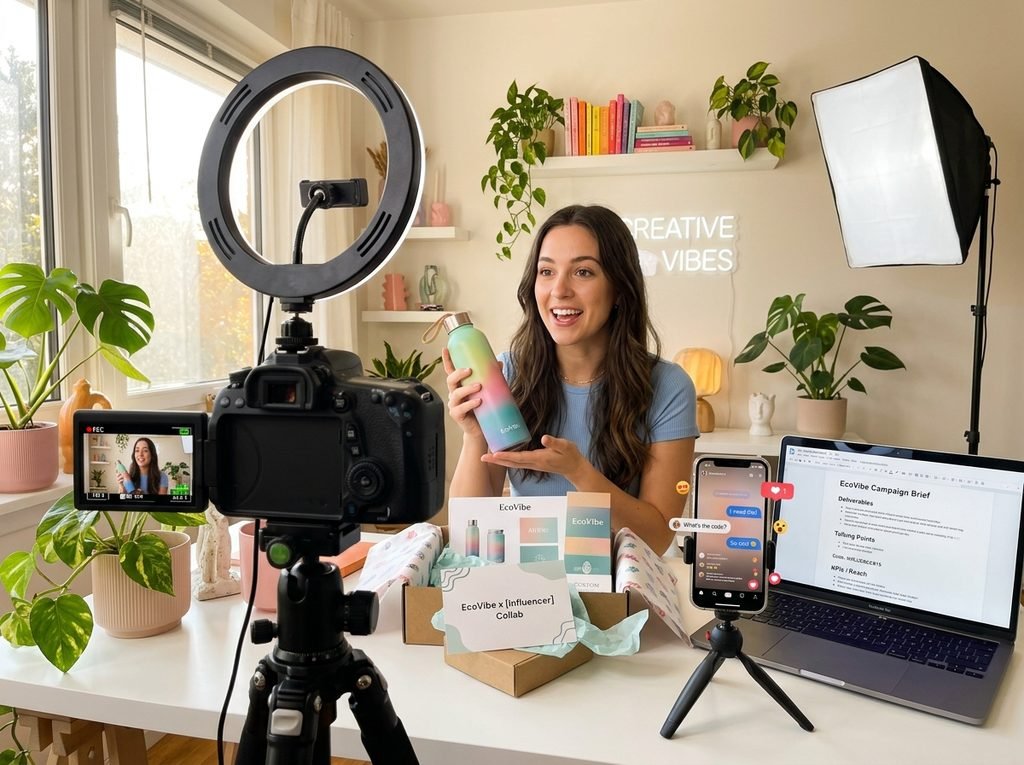
Influencer marketing involves partnering with individuals who have an active and relevant audience on platforms such as Instagram, TikTok, YouTube, Facebook, and other social networks. These influencers create content featuring a brand, product, or service and share it with their followers.
A successful campaign focuses on finding the right influencer rather than simply choosing someone with a large follower count. Audience relevance, engagement, content quality, credibility, and niche expertise can all play an important role in campaign performance.
Why Influencer Marketing Matters
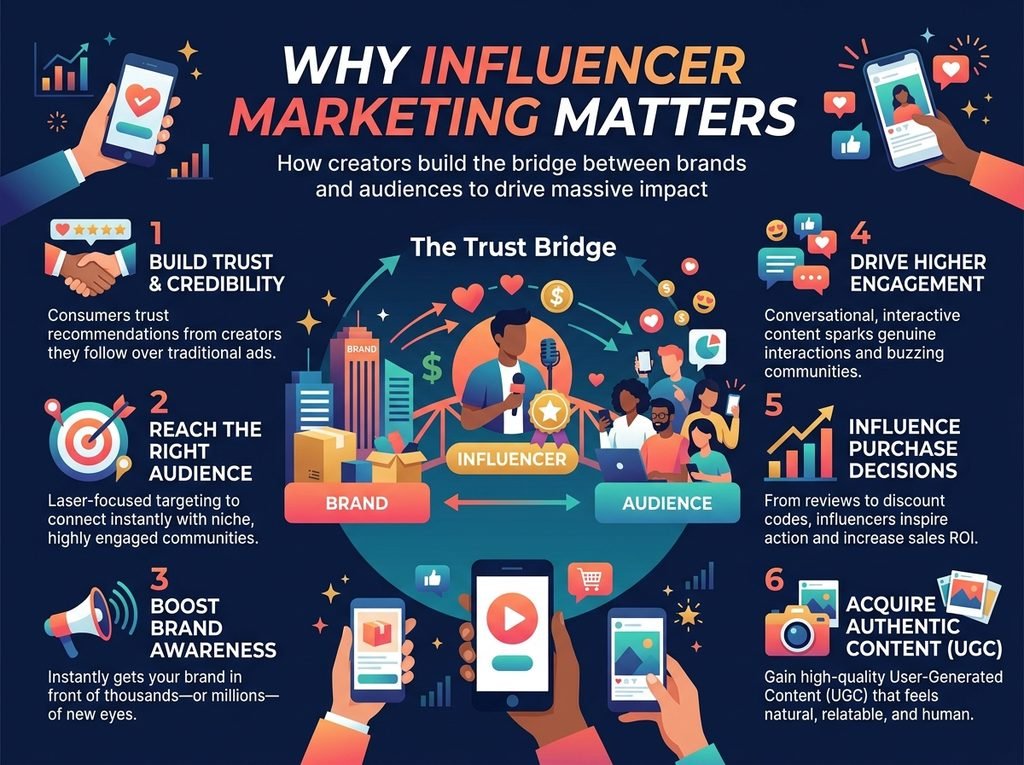
Consumers often respond positively to recommendations from creators they follow and trust. A well-planned influencer campaign can introduce your business to potential customers in an authentic and engaging way.
Some important benefits include:
- Increased brand awareness
- Better social media engagement
- Improved online visibility
- Targeted audience reach
- Product and service promotion
- Increased website traffic
- Potential sales and conversions
- Stronger brand credibility
- High-quality user-generated content
Influencer marketing can also complement other digital marketing strategies, including social media marketing, content marketing, search engine optimization, and paid advertising.
Choosing the Right Influencer
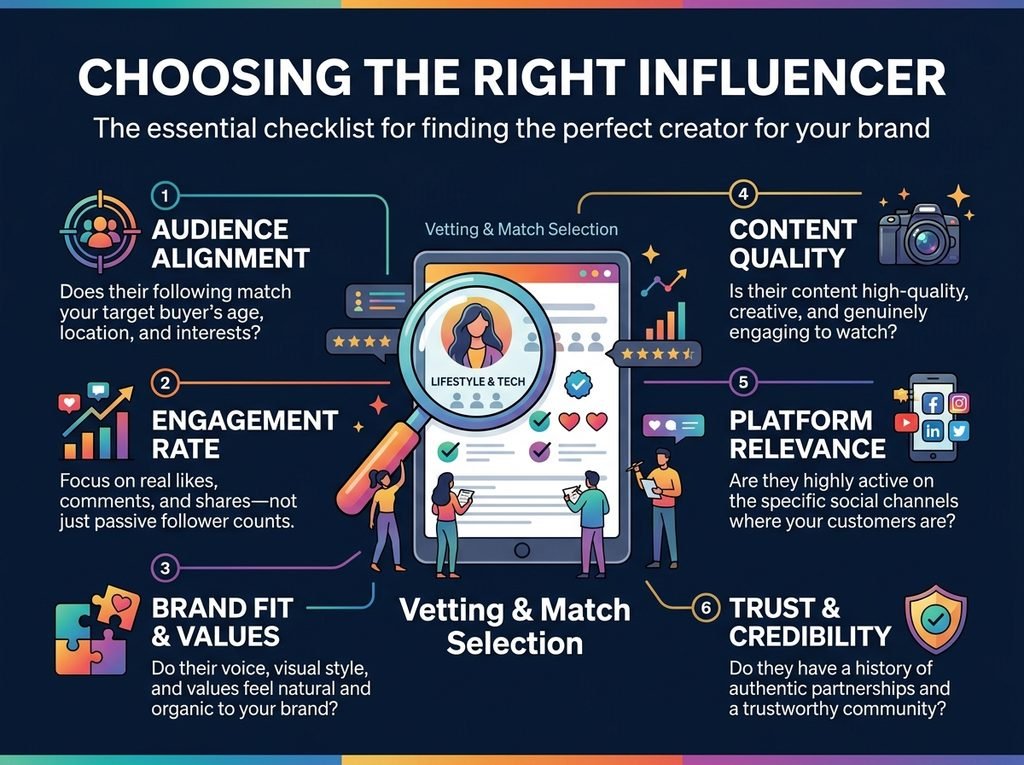
The right influencer can make a significant difference in campaign results. Businesses should consider more than follower numbers when selecting a creator.
Important factors include:
Audience: The influencer should reach people who are likely to be interested in your product or service.
Engagement: Comments, likes, shares, and other interactions can provide insight into how actively followers respond to the creator.
Niche: A creator specializing in fashion, technology, food, travel, fitness, business, or another relevant industry may provide better targeting.
Content Quality: Professional, creative, and consistent content can improve how your brand is presented.
Authenticity: Influencers who maintain genuine relationships with their audiences can make promotional content feel more natural.

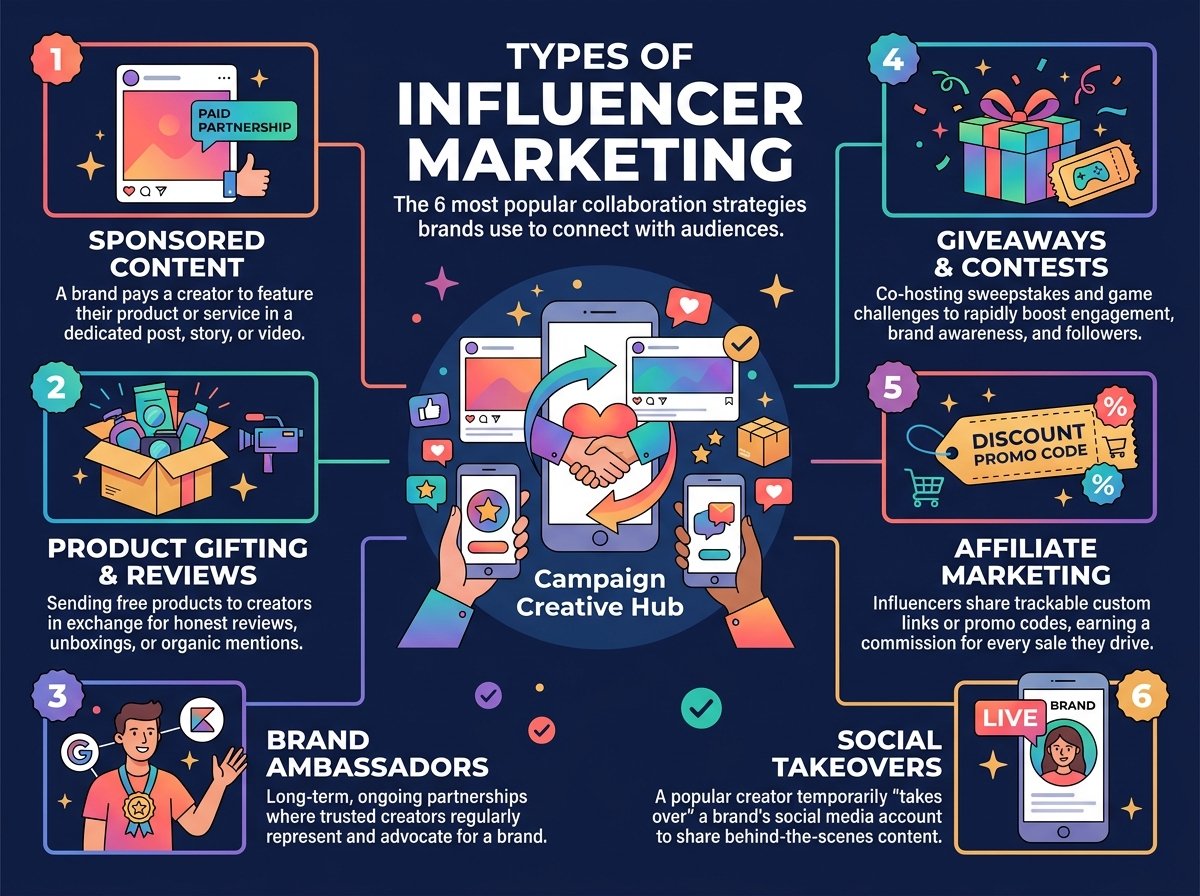
There are several approaches businesses can use depending on their goals and budget.
Sponsored Content: An influencer creates promotional content specifically for your brand.
Product Reviews: Creators review or demonstrate your product and share their experience with their audience.
Giveaway Campaigns: Brands partner with influencers to organize giveaways that increase engagement and visibility.
Affiliate Marketing: Influencers promote products using trackable links or codes and may earn a commission from successful sales.
Brand Ambassadors: Long-term partnerships allow influencers to consistently represent a brand across multiple campaigns.
User-Generated Content: Creators produce original photos, videos, or testimonials that businesses can potentially use across their marketing channels, subject to appropriate usage rights.
Influencer Marketing for Small Businesses
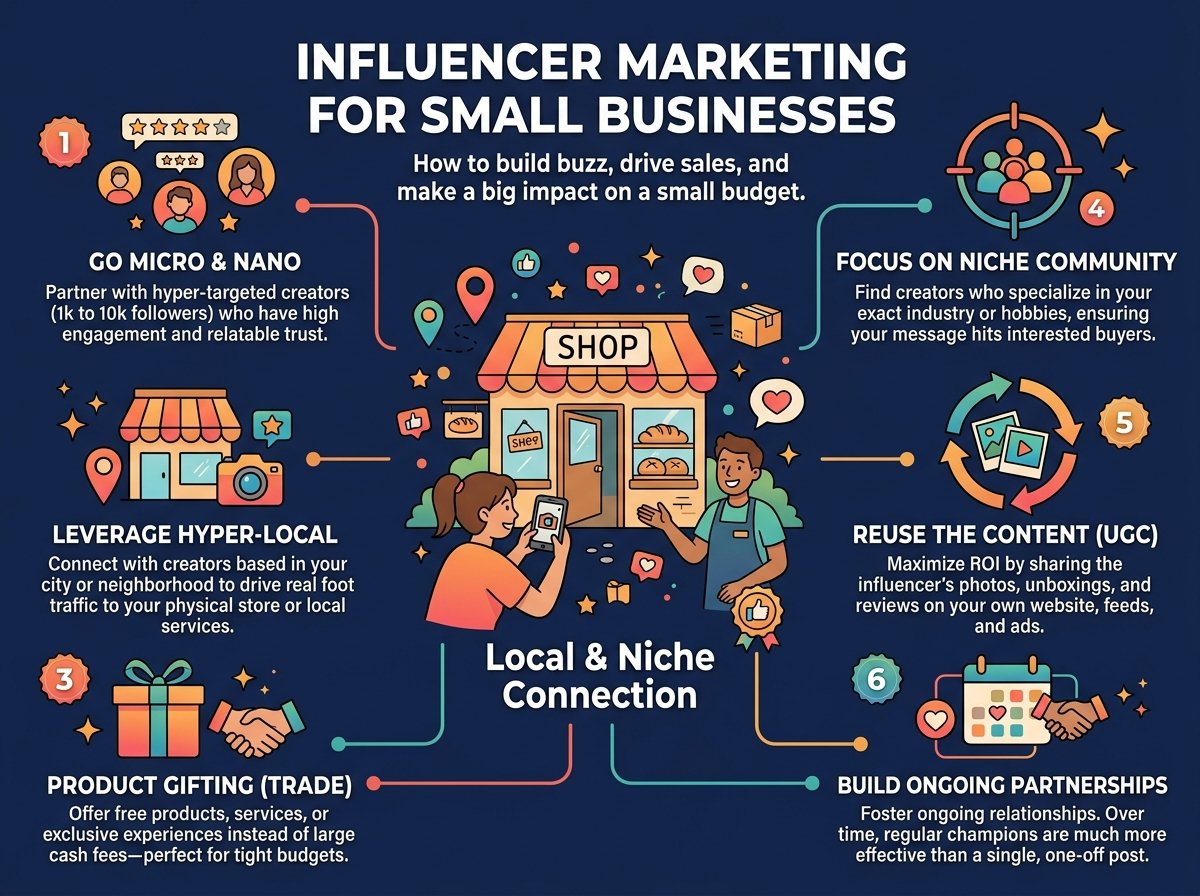
Influencer marketing is not limited to large companies. Small businesses can benefit by working with micro-influencers and niche creators whose audiences may be highly targeted.
A smaller creator with an engaged local or niche audience can sometimes provide more relevant exposure than a large influencer with a broad audience. Businesses can start with a focused campaign, measure the results, and expand successful partnerships over time.
Creating an Effective Influencer Campaign
A successful campaign begins with a clear objective. Decide whether you want to increase awareness, generate website visits, promote a new product, collect leads, or support sales.
Next, identify your target audience and find influencers who match your customer profile. Establish campaign requirements, content formats, deadlines, compensation, promotional messages, and measurement methods before the campaign begins.
After publishing, monitor important performance indicators such as reach, impressions, engagement, clicks, conversions, and overall return on investment.
Build Your Brand With Influencer Marketing
Influencer Marketing provides businesses with an opportunity to reach targeted audiences through creative and engaging content. When the right creator, audience, message, and campaign strategy come together, influencer marketing can become an effective part of a modern digital marketing plan.
Whether you are launching a new product, growing your social media presence, or building greater brand awareness, a carefully planned influencer campaign can help your business connect with potential customers and strengthen its online presence.