

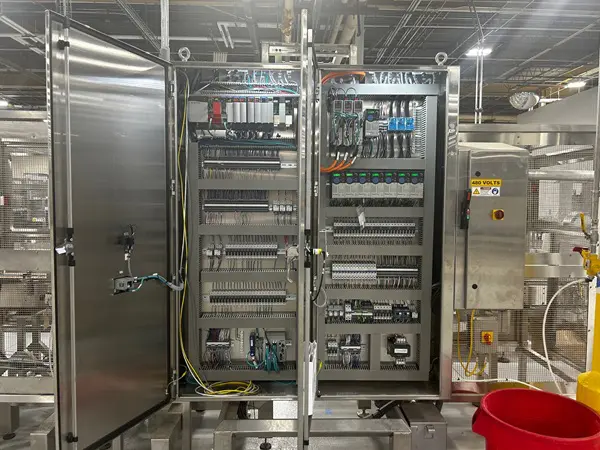
Automation Technology Companies
Automation technology companies are at the forefront of redefining how businesses operate in today’s fast-paced world. With advancements in artificial intelligence, robotics, and software automation, these companies are enabling organizations to achieve unprecedented efficiency, accuracy, and scalability. From streamlining supply chains to personalizing customer experiences, automation technology is no longer just a competitive edge – it’s a necessity for businesses looking to thrive in the digital age.
The Rise of Automation Technology Companies
Over the past decade, automation has shifted from being a buzzword to a central pillar of digital transformation strategies. Companies in this space develop tools and systems to automate repetitive tasks, enhance data-driven decision-making, and reduce human error. This technology affects virtually every industry, from manufacturing and healthcare to retail and finance. The global automation market is growing rapidly, driven by the need for cost optimization, process acceleration, and improved customer satisfaction.
Some leading names in automation technology include UiPath, Blue Prism, and Automation Anywhere. These companies specialize in Robotic Process Automation (RPA), which automates time-consuming and rule-based processes like data entry, invoice generation, and compliance reporting. Meanwhile, companies like ABB and Fanuc focus on industrial automation, delivering robotic arms and factory systems that revolutionize production lines.
Key Trends in Automation Technology
Automation technology companies continue to evolve with emerging trends and innovations that push the boundaries of what’s possible:
-
AI-Driven Automation
The integration of artificial intelligence (AI) with automation systems is creating smarter solutions. AI-enabled chatbots now provide 24/7 customer support, while machine learning algorithms can predict maintenance issues in equipment before they lead to downtime. Companies like IBM and Salesforce are combining automation with advanced AI to deliver hyper-personalized customer interactions across industries. -
Hyperautomation
Hyperautomation takes automation to the next level by orchestrating various technologies such as RPA, AI, and intelligent document processing. It focuses on automating every possible process inside an organization. Gartner lists hyperautomation as one of the most impactful technology trends, enabling businesses to achieve end-to-end process automation. -
Cloud-Based Automation
Cloud technology is revolutionizing automation by providing seamless scalability and flexibility. Automation technology companies are increasingly offering Software-as-a-Service (SaaS) solutions, eliminating the need for heavy infrastructure investments. For instance, companies like Zapier and Workato provide no-code platforms that empower users to create automated workflows directly in the cloud. -
IoT Integration
Automation is converging with the Internet of Things (IoT), opening up new possibilities in industries like logistics and manufacturing. With devices interconnected via IoT, businesses can automate real-time data collection, asset tracking, and even predictive analytics. For example, companies like Siemens and Honeywell are revolutionizing smart factories with IoT-enabled automation solutions.
Location
















Leave a Comment