

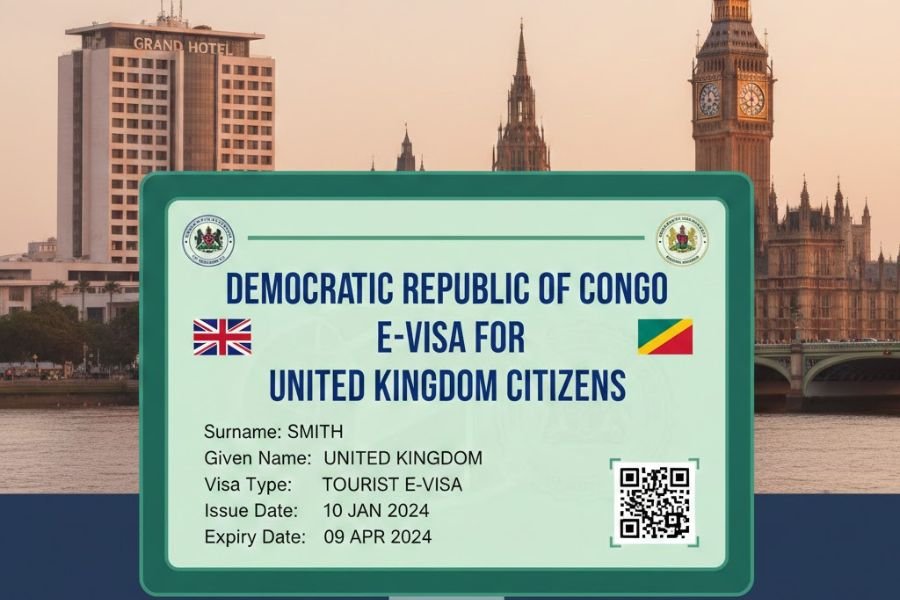
Democratic Republic of Congo E-visa for United Kingdom Citizens
If you’re a U.K. passport‑holder thinking about a trip to the heart of Africa, you may come across the phrase Democratic Republic of Congo E-visa for United Kingdom Citizens. Yes — the DRC has introduced an e‑visa system, and for many British travellers this can be a smoother way to get your travel paperwork sorted. But before you book that flight, it’s worth walking through the full picture: what visa options are out there, what health preparations you need, and what day‑to‑day realities await you in DRC. I’m here to guide you through everything step by step.
Do UK Citizens Need a Visa for Congo?
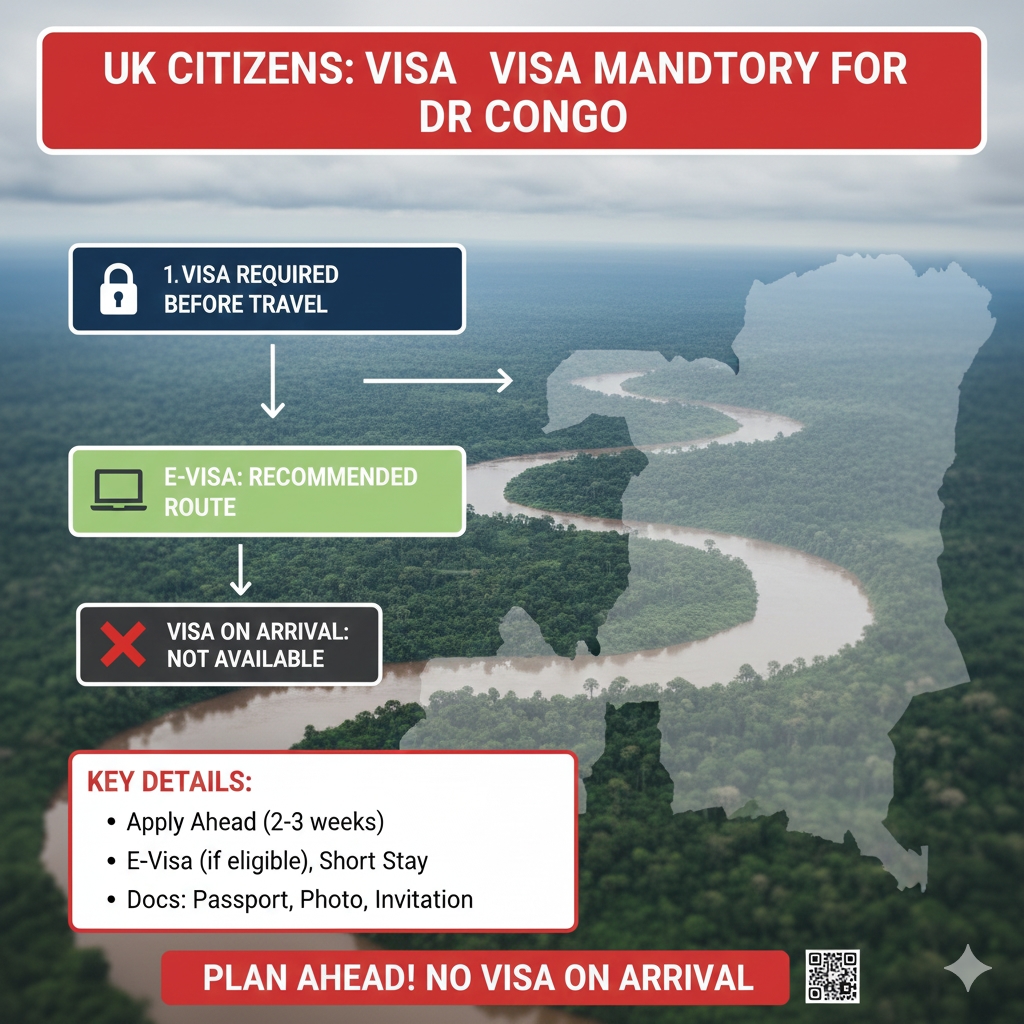
Yes — if you’re travelling to the Democratic Republic of the Congo (DRC), a visa is required.
The visa must be obtained before travel. You can’t just show up at the border expecting a free entry pass.
This means that whether you choose an e‑visa (if eligible) or go via the traditional application route, planning ahead is important.
Can I Get a Visa on Arrival in Congo?
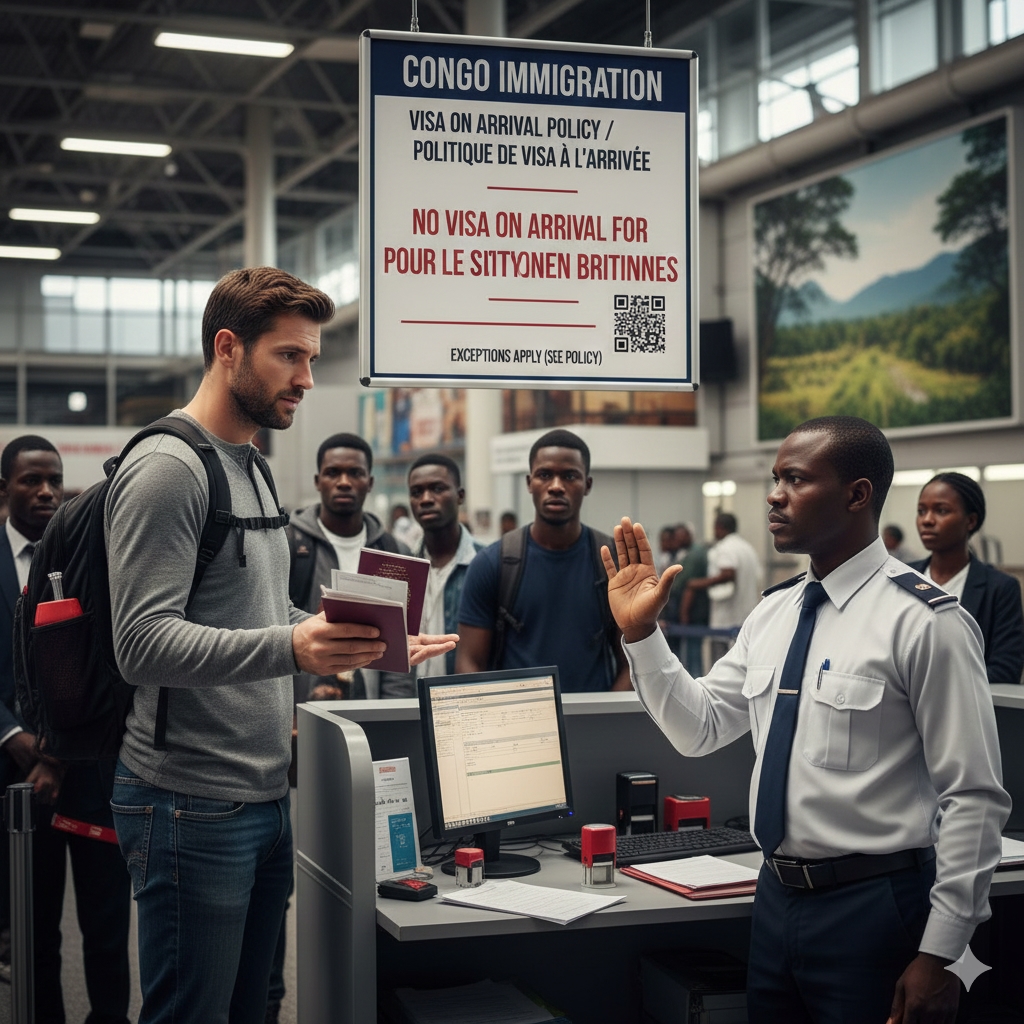
For most travellers — including British passport‑holders — a visa on arrival is generally not available.
There are some edge cases described in the general policy of DRC: for example, visitors who can prove Congolese heritage may sometimes get a type of visa on arrival for a short stay, but this is not the norm for regular UK‑based travellers.
Bottom line: Don’t count on sorting out your visa when you land — get it sorted well ahead of time.
How to apply for a visa for Congo?
To apply for a visa to Democratic Republic of the Congo (DRC):
-
Make sure your passport is valid for at least 6 months beyond your arrival date.
-
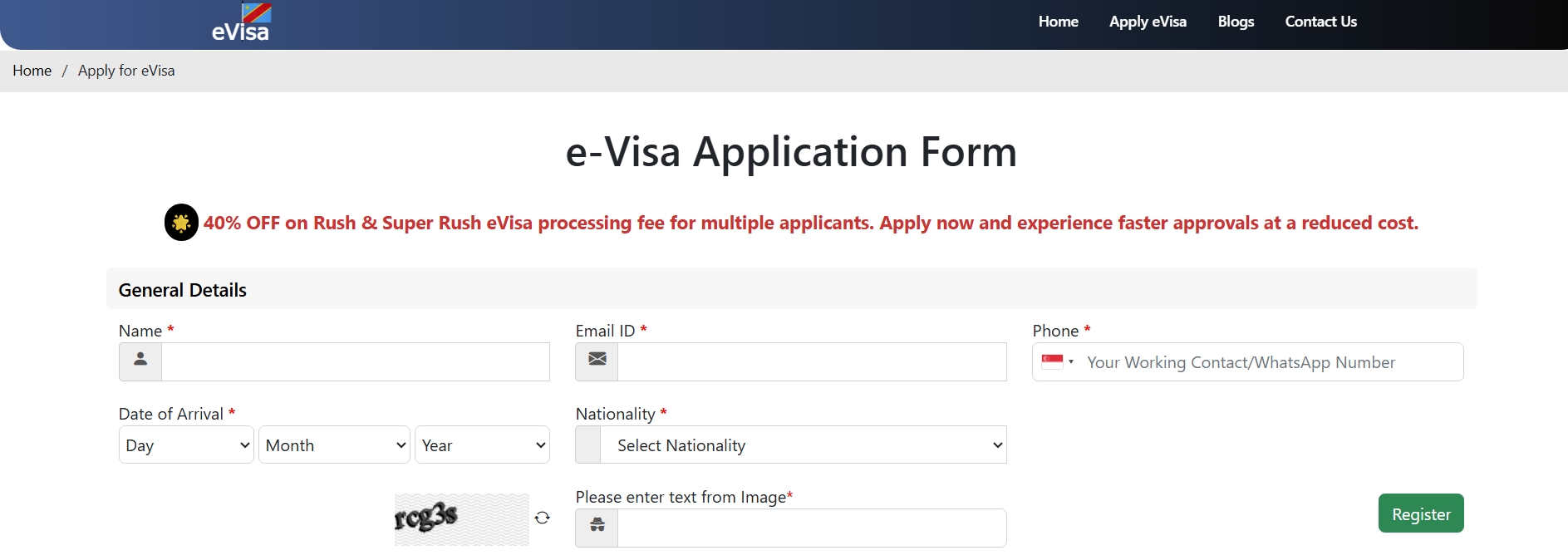
Fill in the visa application — if e‑Visa is available you can use the online e‑Visa portal; otherwise you may need to apply at the DRC (or a visa centre).
-
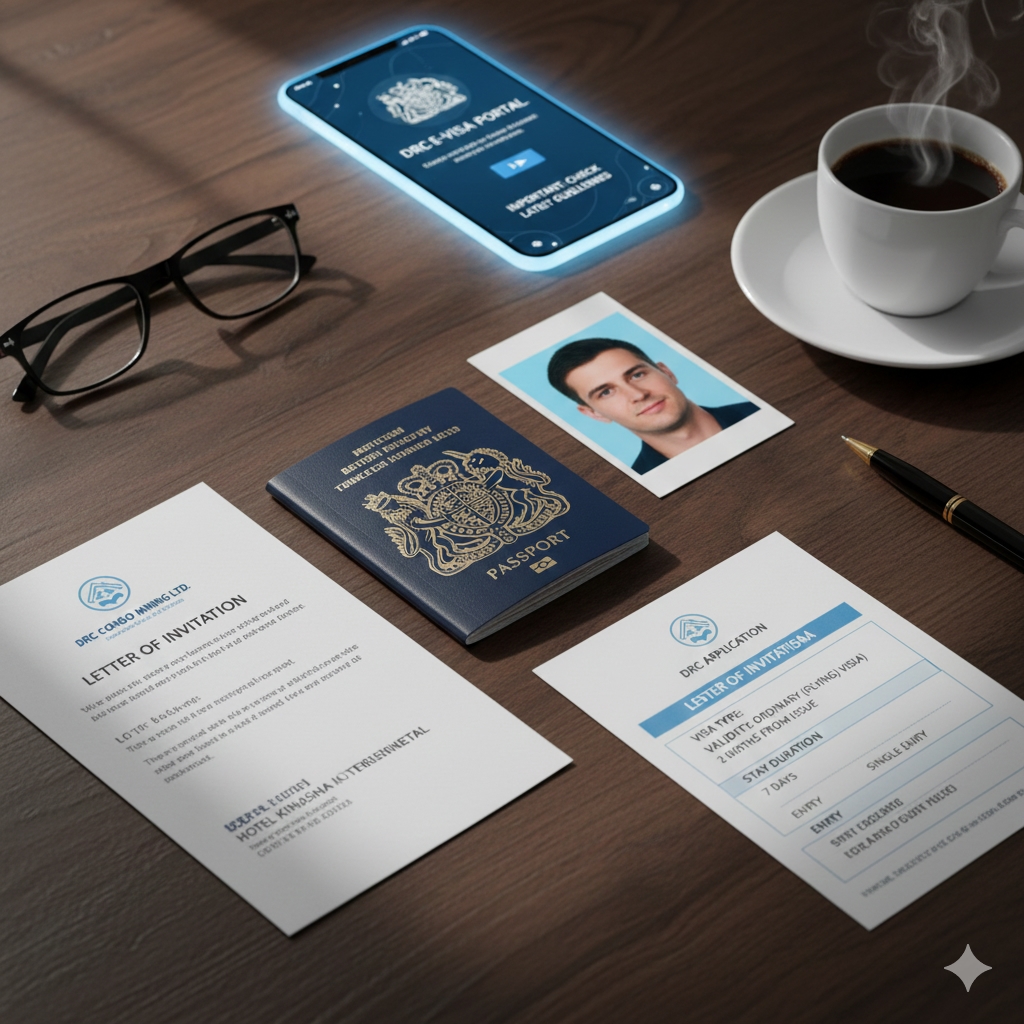
Upload required documents: passport bio‑page, a recent passport‑style photo, and depending on purpose of visit, perhaps a letter of invitation or proof of accommodation/travel arrangements.
-
Submit the form (and pay the Congo evisa fees if applicable), and then wait for approval. Once approved, receive the visa (or e‑Visa confirmation), then print it (if digital) and carry with you.
That’s essentially the process in short — passport check, application + documents, submission, approval.
Visa Types, Validity and Stay Duration
If you apply using the e‑visa path as a UK citizen, here’s what you should know (based on recent information tied to the e‑visa programme):
-
Visa Type: Ordinary (flying) visa, valid for a short stay.
-
Validity: The e‑visa must be used within 3 months of issue (at least under the generic “electronic visa” policy).
-
Stay Duration: For tourist/business visits, a 7‑day stay is often the standard under the e‑visa scheme.
-
Entry: Single entry (for the standard e‑visa).
Documents Typically Required
-
Passport bio‑data page (valid for 6 months beyond date of arrival)
-
Passport-style photo (recent)
-
Letter of invitation from a host or organization, or hotel booking/confirmation if you don’t have a host contact — especially if you are travelling as a tourist.
Be aware: because procedures and rules can shift, it’s wise to check directly with the DRC (London) before finalising your plans.
How Much Does a Visa to Congo Cost?
It’s tricky to give a single, accurate figure — partly because pricing depends on the visa type, processing speed, and whether it’s an e‑visa or application. Older references to DRC visa requirements suggest Congo evisa fees vary depending on duration, entry type, and urgency.
For e‑visa — one resource aimed at UK citizens simply states you must pay the “visa fee” as part of the application process, via acceptable electronic payment.
Because of this variability, it’s best to check the e‑visa system or contact the directly for the most up-to-date pricing before you apply.
Can I Travel to Congo Without a Passport?
No. A valid passport is essential. For DRC entry, your passport must have at least 6 months validity beyond the date of arrival.
Without that, airlines or border control will almost certainly stop you from boarding or entering.
How Long Does It Take to Get a Visa for the Congo?
If you apply using the e‑Visa service, processing times depend on how quickly you want the visa:
-
With normal processing, the e‑Visa typically takes about 11–13 working days.
-
If you choose a faster option (“rush processing”), it can be completed in 8–11 working days.
-
For travelers in a real hurry, the “super‑rush” option claims a turnaround of 5–8 working days.
So in short: expect around two weeks for standard service — but if you pick expedited processing, it’s possible to get the visa in under a week.
If you like — I can also share how often delays happen in real‑world cases (and why sometimes even “normal” takes longer).

Do You Need Yellow Fever Vaccine for Congo?
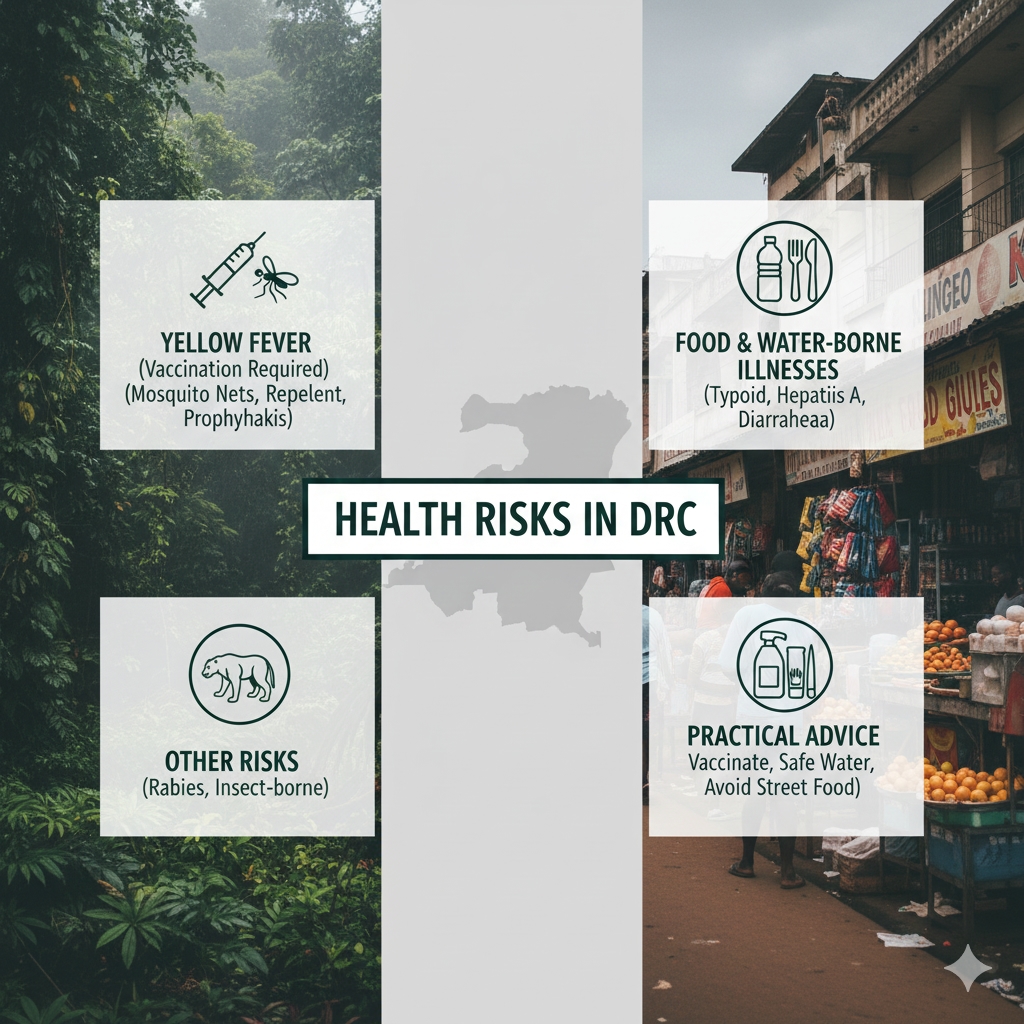
Yes — absolutely. The World Health Organization (WHO) and travel‑health authorities require a valid yellow fever vaccination certificate for all travellers aged 9 months or older arriving in the DRC.
This is non-negotiable — without the certificate you may be denied entry, or be required to receive the shot on arrival (if allowed), which can be stressful and expensive.
What Are the Most Common Diseases in Congo?
If you’re planning to travel to the DRC, being aware of some of the health risks is wise. According to health advisories:
-
Yellow fever — required to be vaccinated.
-
Malaria — the risk is present throughout much of the country year-round. Prevention (repellents, mosquito nets, prophylaxis if advised) is essential.
-
Food & water‑borne illnesses — including diarrhoeal diseases, hepatitis A, typhoid, especially if hygiene or water quality is questionable.
-
Other vector-borne or insect-related conditions — possibly including diseases like rabies (if you interact with animals), and other mosquito-borne infections.
Practical advice: take vaccine advice seriously, drink only safe/boiled or bottled water, avoid street food if hygiene is doubtful, use insect repellent, and consider anti‑malaria prophylaxis.
What Languages Are Spoken in Congo?
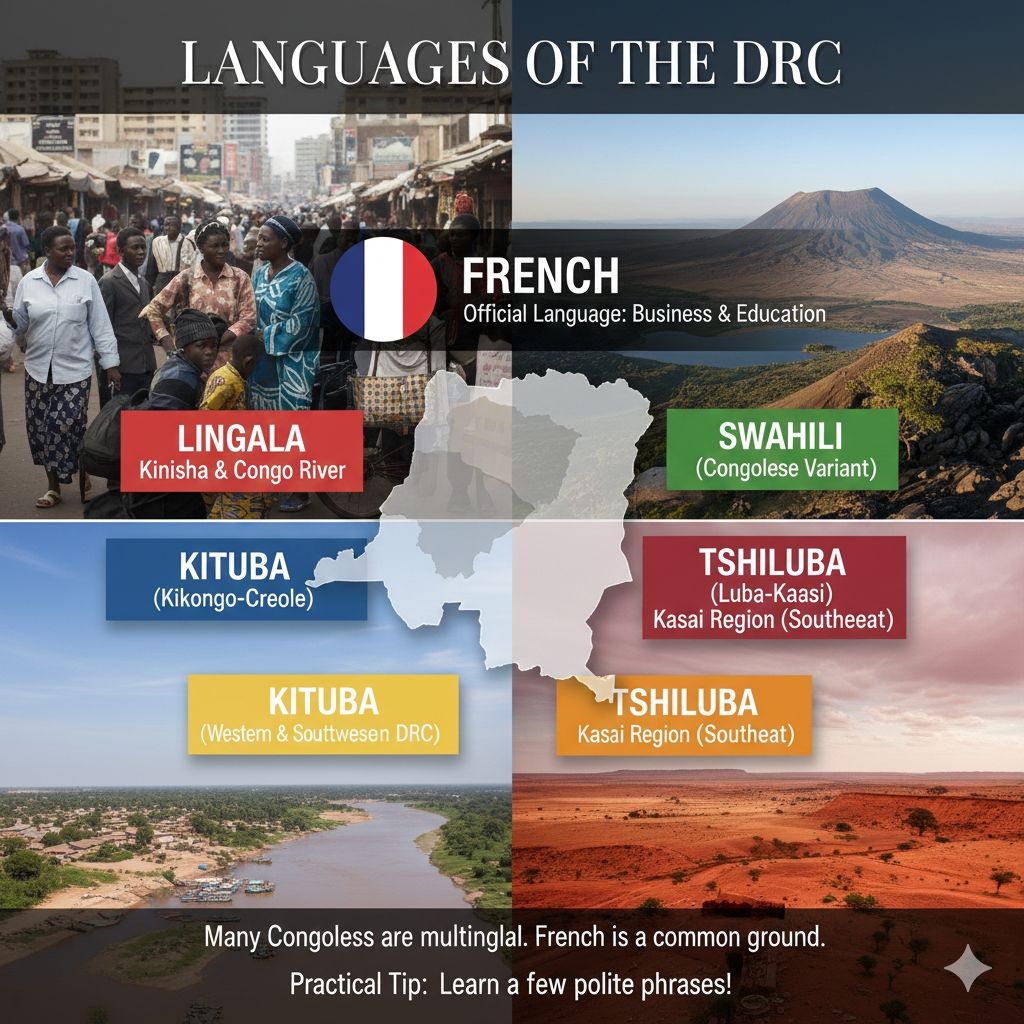
Language in DRC is beautifully diverse. The language is French, widely used in business, and education.
Beyond French, four “national” languages serve as lingua francas in various regions:
-
Lingala — especially common in the capital and along the Congo River.
-
Swahili (in its Congolese variant) — more common in the eastern provinces.
-
Kituba (Kikongo ya leta / Kikongo-based creole) — spoken in western and southwestern regions.
-
Tshiluba (Luba-Kasai) — spoken in parts of the southeast (Kasai region).
In practice, many Congolese are multilingual: French often serves as a common ground, but locals may use regional languages or dialects in daily life.
For a traveller, brushing up on a few polite phrases in French — or even some words in Lingala or Swahili depending on region — can go a long way in showing respect and warmth.
What Is the Visa Policy for the Congo?
Summing up the current visa policy for the DRC as it applies to UK citizens:
-
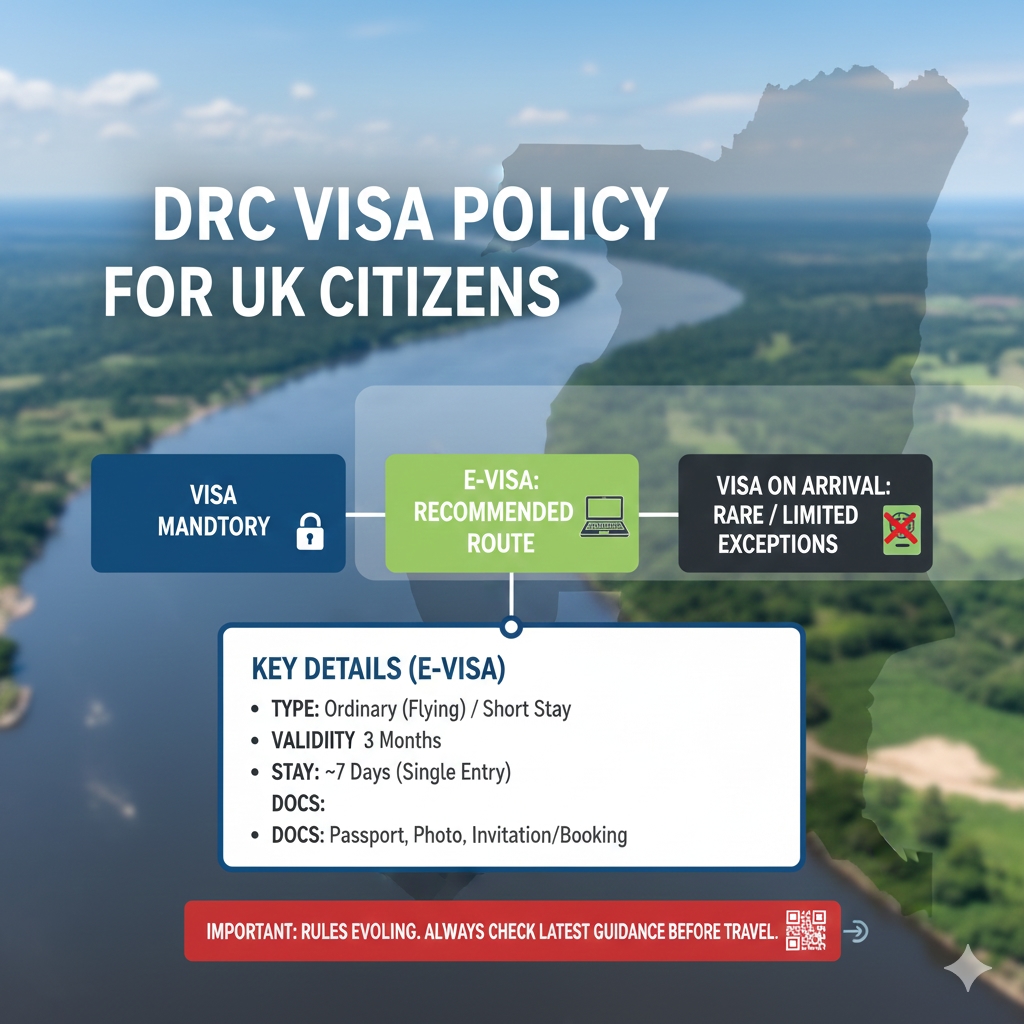
A visa is mandatory for all visitors; you cannot enter without one.
-
The preferred route is to apply for an e‑visa (when available), which simplifies and speeds up the process.
-
Visa on arrival is generally not an option, except in rare/limited cases (heritage-based entry or exceptional visa‑on‑arrival programmes).
-
Visa validity and stay duration depend on the visa type — for typical tourist/business e‑visas, expect a single-entry permit, valid for brief stays (e.g., 7 days under older guidance).
-
You’ll need standard supporting documents (passport, photo, possibly invitation or hotel booking) — and depending on rule changes, possibly a letter of invitation or itinerary.
Because the policy has been evolving in recent years (with the e‑visa system introduced fairly recently), it’s wise for travellers to double-check right before their application.
Can I Travel to Congo Right Now?
As of the most recent guidance: UK travellers can travel to DRC — provided they have a valid passport (6 months validity), a visa, and the required vaccination proofs (especially yellow fever).
That said — a sober note: parts of the country remain unstable. According to advisories by the Foreign, Commonwealth & Development Office (FCDO), some regions (for example, certain districts around Kinshasa) are flagged as high‑risk. Support from the UK in those zones may be limited.
If you do decide to go: make sure your travel plans are flexible, stay informed about local security conditions, and ideally register with relevant authorities or let someone back home know your itinerary.
Does the government website provide better instructions or guidance for e-Visa applicants than an agent?
What does congo‑evisa.com (the “agent site”) offer — full details
Agent‑type site (congo‑evisa.com) presents a packaged, seemingly user‑friendly version of Congo visa application. Here’s a breakdown of what it includes (or claims to include) — often more “hand‑holding” than a bare-bones portal:
What the site offers / tells you:
-
It describes the “Democratic Republic of Congo e‑Visa” as a 100% online process.
-
It claims the form only takes “3–5 minutes” to fill up.
-
It lists “required documents” clearly: passport bio‑page, a recent passport‑style photo, and an application letter (for certain categories), among others.
-
It gives a breakdown of different visa categories: ordinary flying visa, tourist visa, business visa, transit visa, family‑visit visa, etc.
-
It provides an explicit section for “visa-on-arrival/flying visa (visa on arrival)” under certain circumstances (e.g. if no DRC in your country, or if you have a prior invitation).
-
It gives users options to choose “processing time” (and implicitly pay more for faster processing: “Normal”, “Rush”, “Super Rush”).
-
It offers 24/7 support via “Live Chat, WhatsApp, Phone” for “immediate assistance.”
-
It markets convenience, speed, and simplicity — appealing especially to travellers who want their paperwork handled quickly and with guidance.

Limitations of relying only on the government e‑Visa portal
Using only the government e‑Visa system (or hoping to) also has downsides — especially for travellers who expect “smooth user experience” or need more guidance. Often these cons are exactly the reasons many people end up opting for agent‑mediated services. Some of the main drawbacks:
-
User‑friendliness can be poor. Government visa portals — especially from countries with limited digital infrastructure — are often difficult to navigate, with confusing layouts, unclear instructions, or language barriers. This can lead to mistakes when filling in the form (wrong date format, missing fields, incorrect file uploads). This is a common complaint in visa‑application discussions.
-
Lack of support or help if something goes wrong. If you make a mistake — e.g. photo is wrong size, passport scan fails, or email link gets lost — government portals usually don’t offer personalised customer support; you might be left to figure things out yourself.
-
Higher chance of rejection due to small errors. Because there’s no “intermediary check” or guidance, even minor errors or overlooked requirements might lead to application denial or delays. Some studies on visa‑application systems suggest that small mistakes (formatting, missing info) are common pitfalls for self‑applications.
-
No guarantee of fast response or clear timeline. systems may have single-speed processing and no “rush/priority” options; if demand is high, this could lead to delays, which is risky if your travel plans are tight.
-
You handle everything yourself — no “quality control.” From ensuring documents meet specs, to correct data entry, to following up — the burden is on you. For first‑time travellers, or those unfamiliar with visa bureaucracy, that can be intimidating.
In practice, many travellers who try using only the portal find the process “time‑consuming, confusing, and prone to error,” which pushes them toward agent‑mediated services.
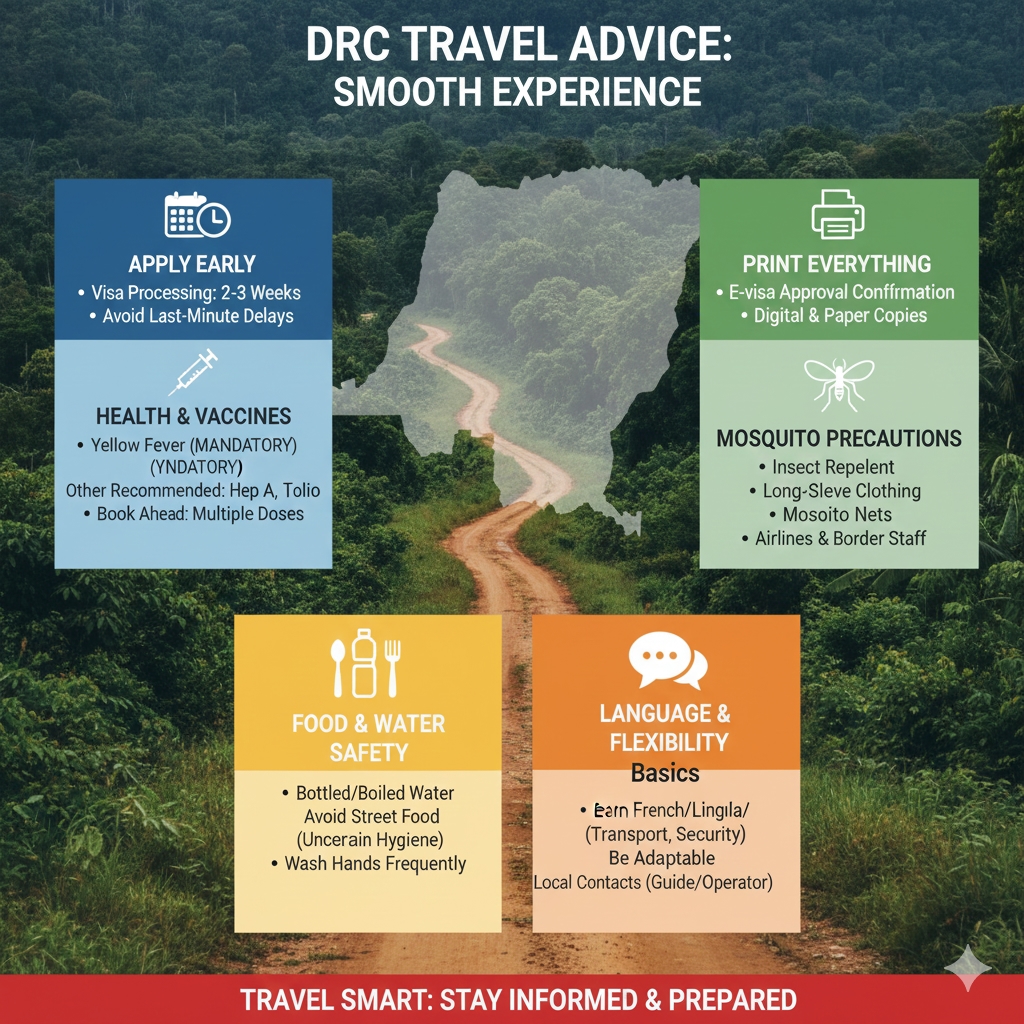
Useful Travel Advice for a Smooth Experience
Here are some practical tips that — from a travel‑lover rather than a bureaucrat — I’d recommend if I were you and planning a trip:
-
Apply early. Don’t wait until the last minute for your visa; e‑visa processing can take 2–3 weeks (or longer if demand is high).
-
Print everything. Once your e‑visa is approved, print a hard copy and keep both digital and paper copies. Airlines and border staff can be particular.
-
Vaccinations first. Book your yellow fever vaccination (and other recommended vaccinations like hepatitis A, typhoid, polio, etc.) well ahead. Many take time to schedule and may involve follow-up doses.
-
Mosquito precautions. Bring good insect repellent, long‑sleeve clothing, mosquito nets (if possible), especially if you travel outside major cities. Malaria and other vector-borne diseases are real risks.
-
Water & food safety. Drink bottled or boiled water; avoid street food if sanitation is uncertain; wash hands thoroughly before eating. Traveller’s diarrhoea is common.
-
Learn some basics in French or Lingala/Swahili. Having some common phrases in the French language or a local language can make a big difference — locals often appreciate the effort, and it can help in daily dealings.
-
Be flexible and travel-smart. Given changing conditions (transport delays, security, local regulations), keep your itinerary adaptable. Having contacts (local tour operator, experienced guide) can help.
Conclusion
The Democratic Republic of Congo E‑visa for United Kingdom Citizens offers a promising, traveller-friendly gateway into one of Africa’s most diverse and fascinating countries. Provided you plan ahead — secure your visa, get your vaccinations, and take sensible health and safety precautions — a journey to DRC can be rich with adventure, culture, and natural wonder.
At the same time, this is a place where uncertainties remain — so preparation, respect for local conditions, and flexibility are key. If you approach the trip with care and a spirit of curiosity, you could come away with stories that are unforgettable.
FAQs for Congo eVisa & Travel
Q: Is e‑visa the only way to enter DRC for UK travellers?
A: No, you can also use the traditional visa route — but the e‑visa tends to be faster and more convenient if available.
Q: How long does it take to get the e‑visa?
A: Typically around 11–13 working days with standard processing.
Q: What if my passport expires soon?
A: Your passport must be valid for at least six months beyond your date of arrival in the DRC.
Q: Do I need vaccinations?
A: Yes. A valid yellow fever vaccination certificate is mandatory. Other vaccinations (hepatitis A, typhoid, polio, etc.) are also strongly advised depending on where you travel within the country.
Q: Can I rely on getting a visa when I arrive?
A: Usually not. Visa on arrival is rarely available for UK travellers; apply in advance to avoid risk of being turned away.
Location















Leave a Comment