


Music Transcription Services
Music transcription services help musicians, composers, singers, producers, and music enthusiasts convert recorded music into written musical notation. Whether you need sheet music from an audio recording, piano notes from a song, guitar tabs, or a complete musical arrangement, professional music transcription can help you turn sound into an accurate and readable musical score.
Music transcription is useful for learning songs, performing music, arranging compositions, studying musical techniques, and preserving original recordings. Professional transcribers carefully listen to audio and identify melodies, harmonies, rhythms, chords, and individual instrumental parts.
From classical compositions and jazz performances to pop songs, rock music, and instrumental recordings, music transcription services provide customized solutions for different musical needs.
What Is Music Transcription?
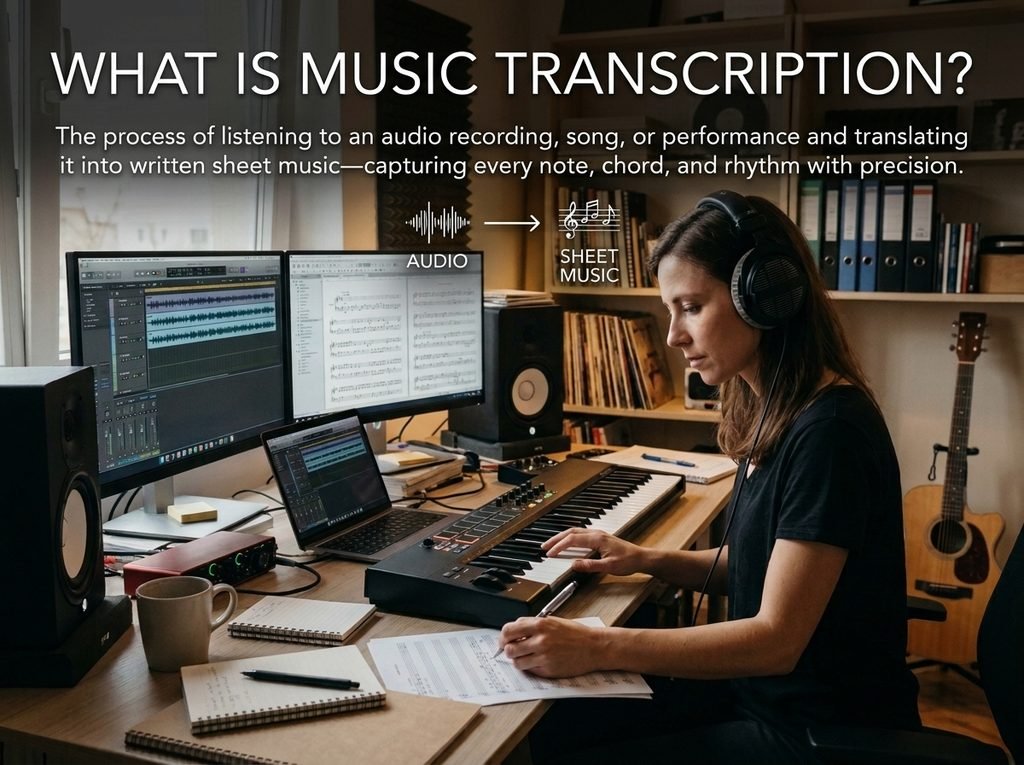
Music transcription is the process of converting music from an audio recording into written notation or another readable musical format. A transcriber listens closely to a recording and identifies the notes, timing, rhythm, tempo, key, chords, and musical structure.
Depending on your requirements, the final transcription may include traditional sheet music, piano notation, guitar tablature, chord charts, lead sheets, or MIDI files.
Music transcription can be completed manually by experienced musicians or supported by specialized audio and music notation software. Complex recordings may require detailed listening and repeated analysis to achieve an accurate result.
Professional Music Transcription Services
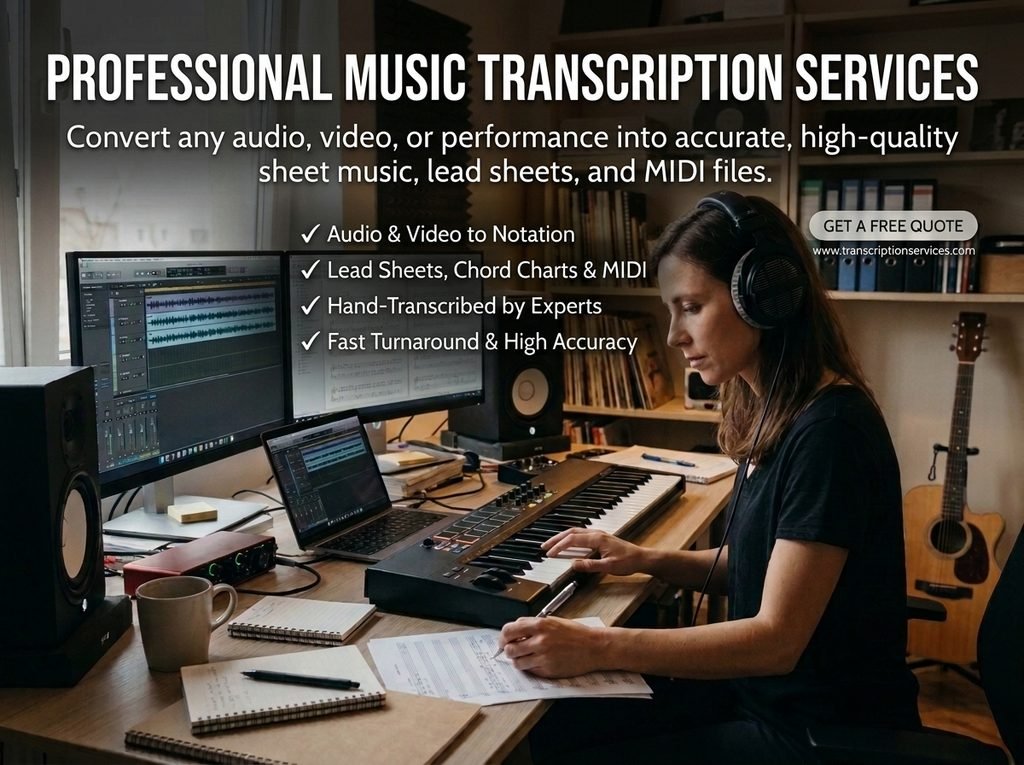
Professional music transcription services are suitable for musicians, music teachers, composers, students, bands, and content creators who need accurate written versions of recorded music.
Common services include:
- Audio to sheet music: Convert recorded melodies and musical passages into written notation.
- Piano transcription: Transcribe piano melodies, chords, and complete performances.
- Guitar transcription: Create guitar sheet music, riffs, solos, and tablature.
- Bass transcription: Identify bass lines, rhythms, and individual notes.
- Drum transcription: Write drum patterns, grooves, and rhythmic arrangements.
- Vocal melody transcription: Convert sung melodies into readable notation.
- Chord transcription: Identify and document the chords used in a song.
- Lead sheet creation: Prepare melodies, lyrics when appropriate, and chord symbols.
- MIDI transcription: Convert musical information into MIDI data for compatible music-production software.
The appropriate format depends on how you intend to use the transcription.
Why Choose Professional Music Transcription?


Accurate music transcription saves time and helps musicians understand recordings more clearly. Instead of repeatedly listening to a song to identify individual notes, you can work from written notation prepared for your instrument or musical skill level.
Professional transcribers can recognize musical details that automated tools may miss, especially in recordings with overlapping instruments, complex rhythms, or expressive performances.
Benefits include improved practice efficiency, easier collaboration, better music education, and the ability to reproduce musical passages more consistently.
Audio to Sheet Music Conversion
Audio-to-sheet-music transcription is one of the most popular music transcription services. It involves listening to a recording and converting its musical content into traditional notation.
Depending on the recording, the transcription may include the melody, harmony, rhythm, chord progression, or separate instrumental parts. The finished score can be prepared for piano, guitar, violin, flute, vocals, and many other instruments.
Clear recordings generally make transcription easier. If you have a specific section you want transcribed, providing timestamps can help the transcriber focus on the required passage.
Digital sheet music can also be delivered in formats such as PDF, MusicXML, or notation-software project files, depending on the service.
Music Transcription for Different Instruments
Every instrument has unique playing techniques, notation conventions, and performance characteristics. Professional transcription services can accommodate different instrumental requirements.
- Piano and keyboard: Melodies, chords, harmonies, and two-hand arrangements.
- Guitar: Chord shapes, riffs, solos, fingerstyle arrangements, and tablature.
- Bass guitar: Bass lines, rhythmic patterns, and note sequences.
- Drums and percussion: Rhythmic notation, grooves, fills, and percussion parts.
- Violin and strings: Melodic passages, bowing-related details when requested, and ensemble parts.
- Woodwind and brass: Instrumental melodies and written parts.
- Vocals: Lead melodies, harmonies, and vocal arrangements.
Choosing a transcriber familiar with your instrument can improve readability and practical accuracy.
Music Transcription for Musicians and Students
Music transcription is a valuable learning tool for beginners, experienced musicians, and music students. Written notation makes it easier to study melody, harmony, rhythm, and song structure.
Students can use transcriptions to practice difficult passages, develop their ear, and understand how musical ideas are constructed. Teachers can use customized scores to prepare lessons and create exercises suited to different skill levels.
Professional musicians may also use transcription to prepare for rehearsals, learn repertoire, document improvised solos, and communicate musical ideas with band members.