
Professional Character Modeling for Games, Animation, 3D Art and Media
Character Modeling for Games, Animation, 3D and Media
Professional Character Modeling for Creative Digital
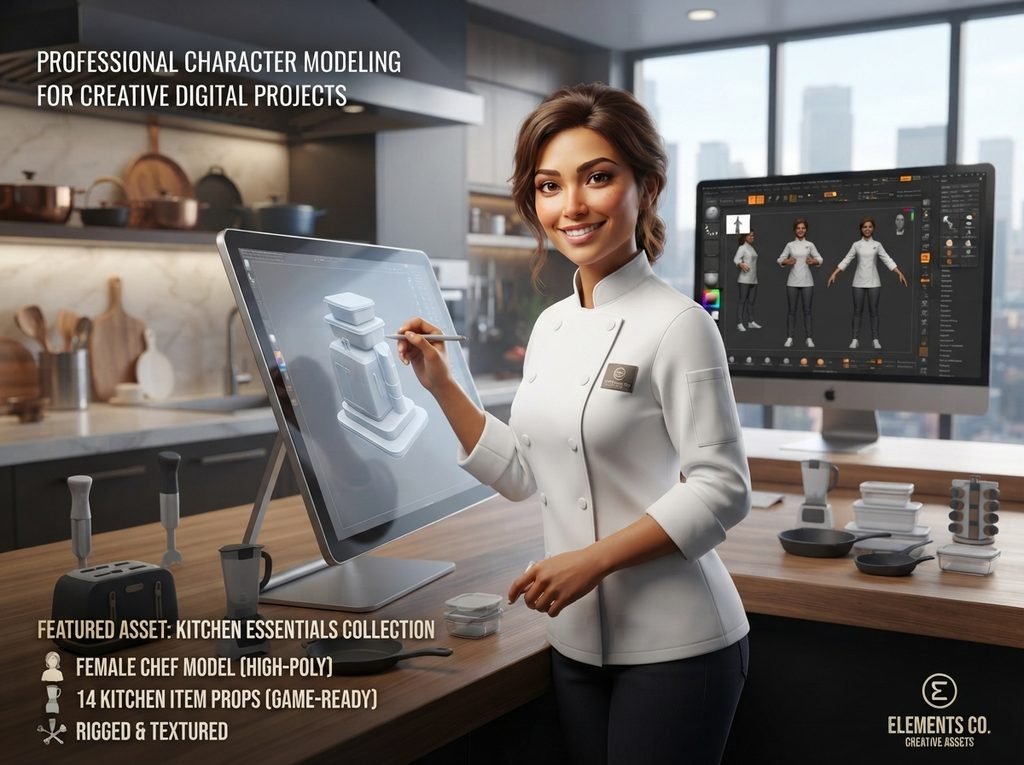
Character Modeling is the process of creating detailed three-dimensional characters for animation, games, films, advertising, digital art, virtual experiences, and other creative projects. A professionally modeled character combines artistic design with technical 3D skills to create a digital figure that looks realistic, expressive, and suitable for its intended purpose.
Characters can range from realistic humans and animals to fantasy creatures, robots, cartoon figures, superheroes, and completely original concepts. Each character requires careful attention to shape, proportions, facial features, clothing, accessories, textures, and overall visual identity.
With the growing popularity of 3D animation, gaming, virtual environments, and digital content, high-quality character modeling has become an important part of modern visual production.
Custom 3D Character Modeling
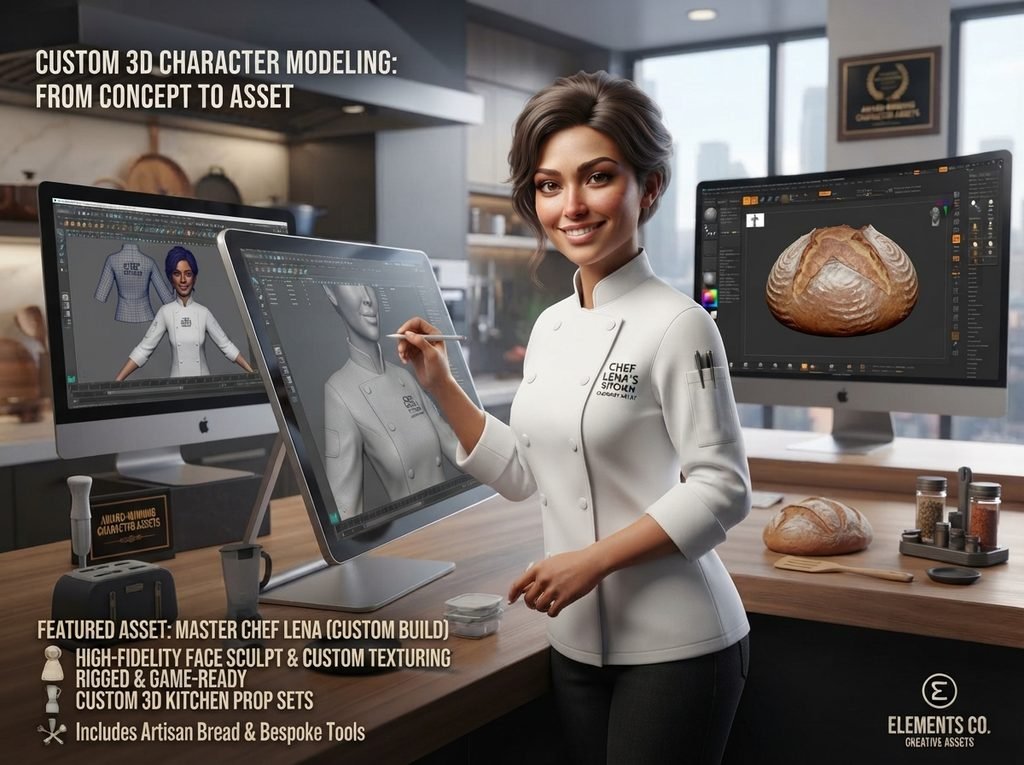
Custom 3D character modeling allows creators to turn concepts, sketches, illustrations, or written descriptions into three-dimensional digital characters. The model can be developed according to the required appearance, proportions, style, and project specifications.
A custom character may be designed for a video game, animated film, marketing campaign, social media project, virtual environment, or personal creative project. The modeling process can focus on realistic details or use a stylized artistic approach.
Creating a unique character from the beginning also provides greater flexibility for future animation, rendering, and digital applications.
Character Design and Concept Development
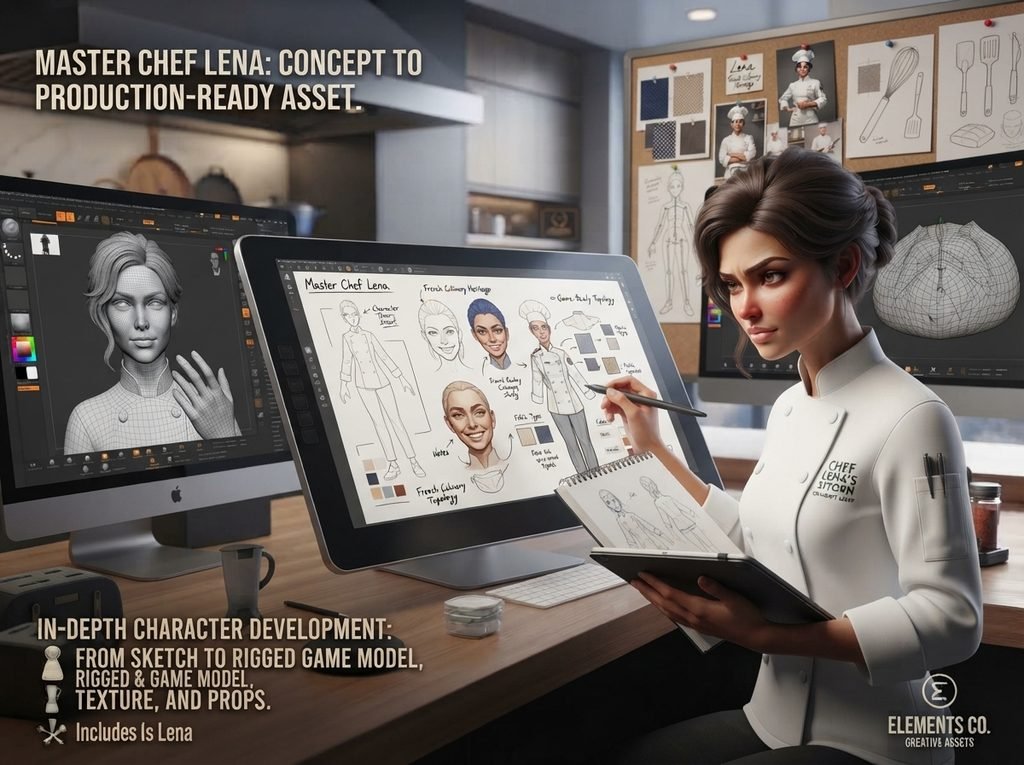
Before creating a 3D model, it is important to understand the character’s visual identity. Character design can include appearance, personality, clothing, hairstyle, accessories, body proportions, and other distinctive features.
Reference images and concept artwork can help establish the desired direction. Front, side, and back views may also be used to provide a clearer understanding of the character.
A strong concept makes the modeling process more organized and helps ensure that the final 3D character remains consistent with the original creative idea.
3D Character Modeling for Games
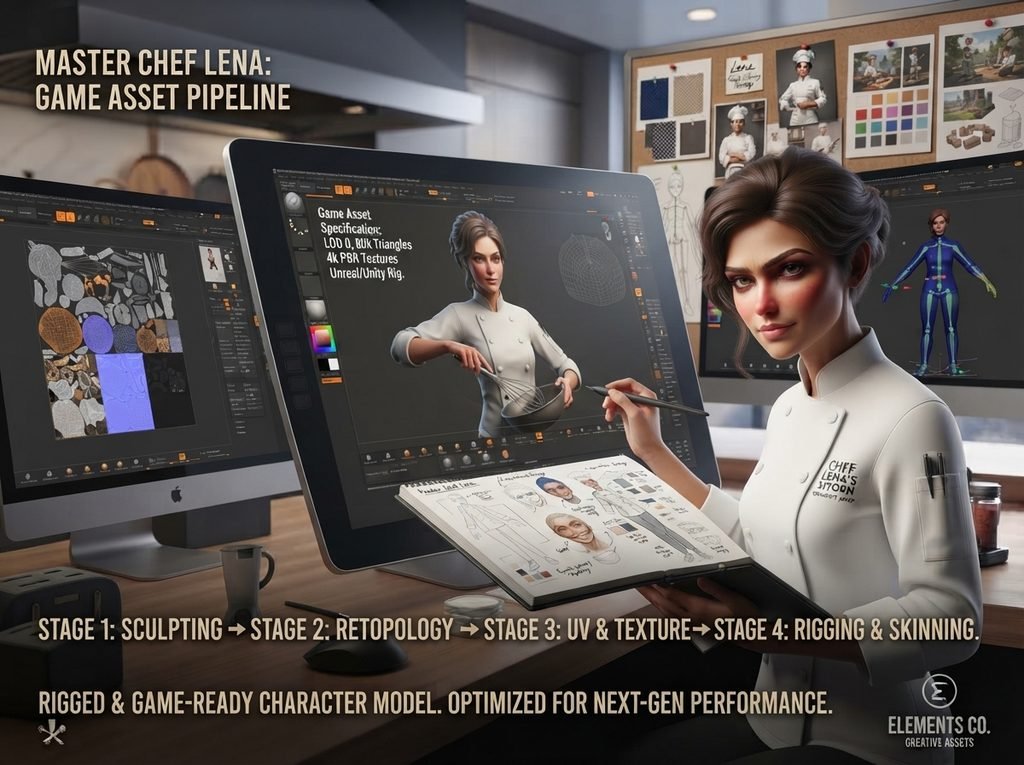
Video games require characters that look appealing while also meeting technical requirements. Game character models need appropriate geometry, optimized details, suitable textures, and efficient topology.
Depending on the game, characters may need to be prepared for animation, facial expressions, clothing movement, and different gameplay environments.
Game-ready character modeling often involves balancing visual quality with performance requirements. An optimized model can provide detailed visuals while remaining suitable for real-time applications.
Character Modeling for Animation
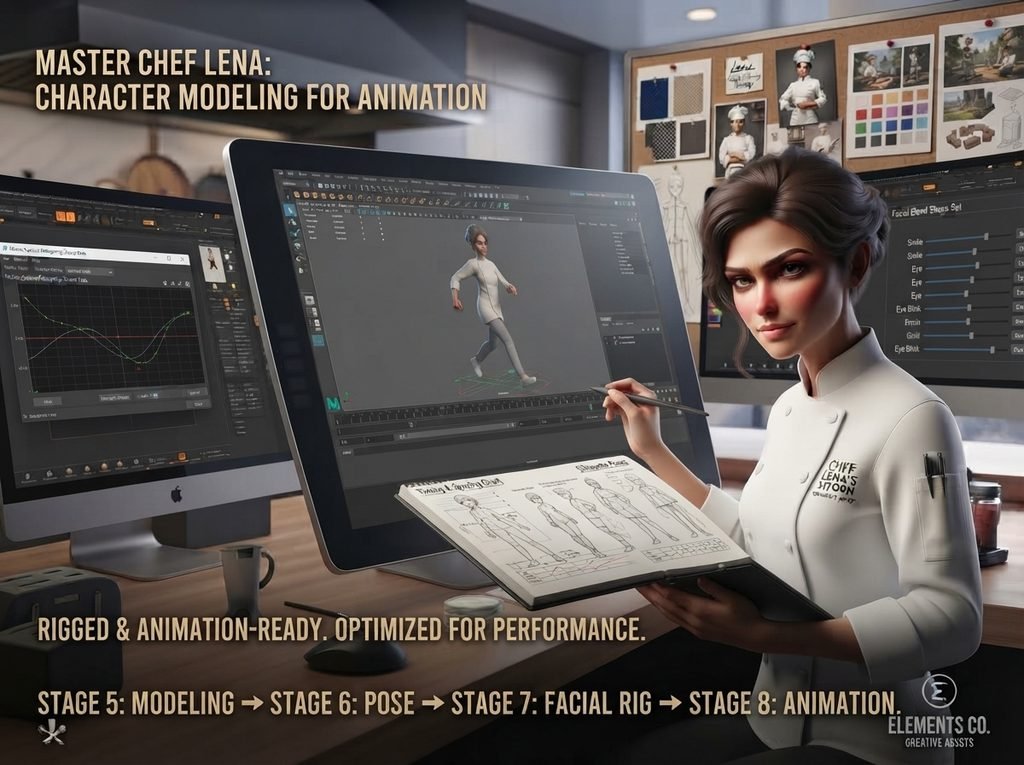
Animated characters need to move naturally, which makes proper modeling and topology especially important. A character model should be designed with future movement and deformation in mind.
Areas such as the face, shoulders, elbows, knees, hands, and other joints require careful consideration. Proper geometry can help reduce unwanted deformation during animation.
Character modeling for animation can be used in films, television projects, advertisements, short films, online videos, educational content, and digital entertainment.
Realistic Character Modeling
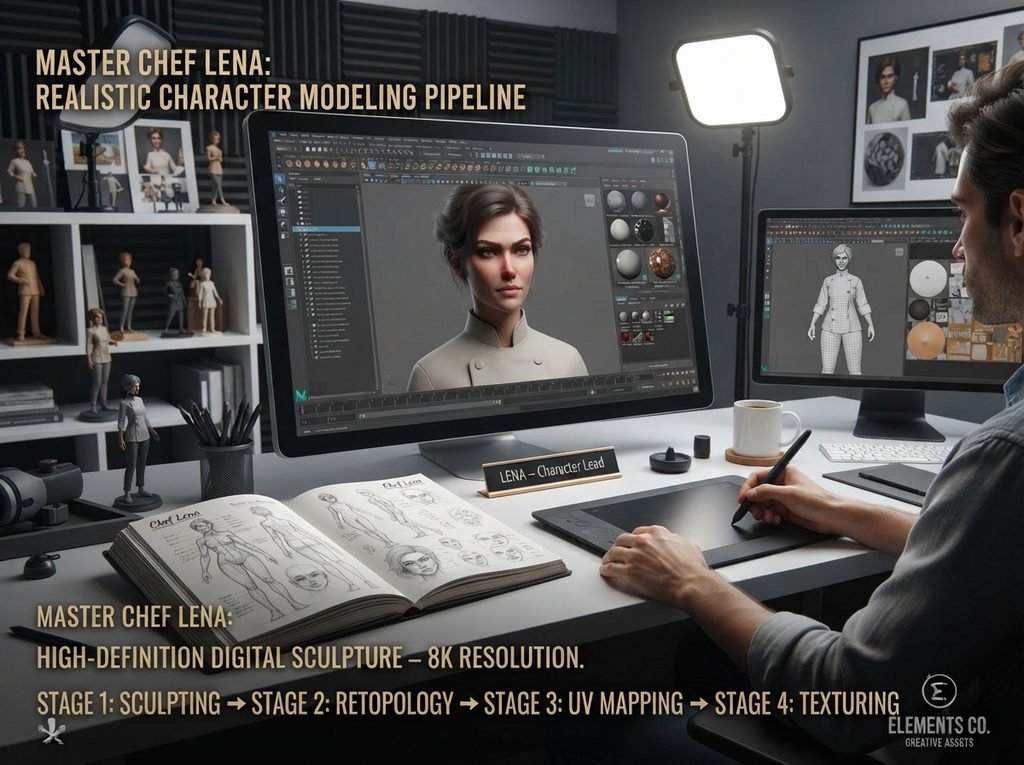
Realistic character modeling focuses on creating human or creature models with natural proportions and detailed features. Realistic models may include carefully developed facial structures, skin details, hair, clothing, and accessories.
Realistic character design is often used for films, games, advertisements, simulations, digital art, and visualization projects.
The level of detail can be adjusted according to the intended viewing distance, rendering requirements, and final platform.
Stylized and Cartoon Character Modeling
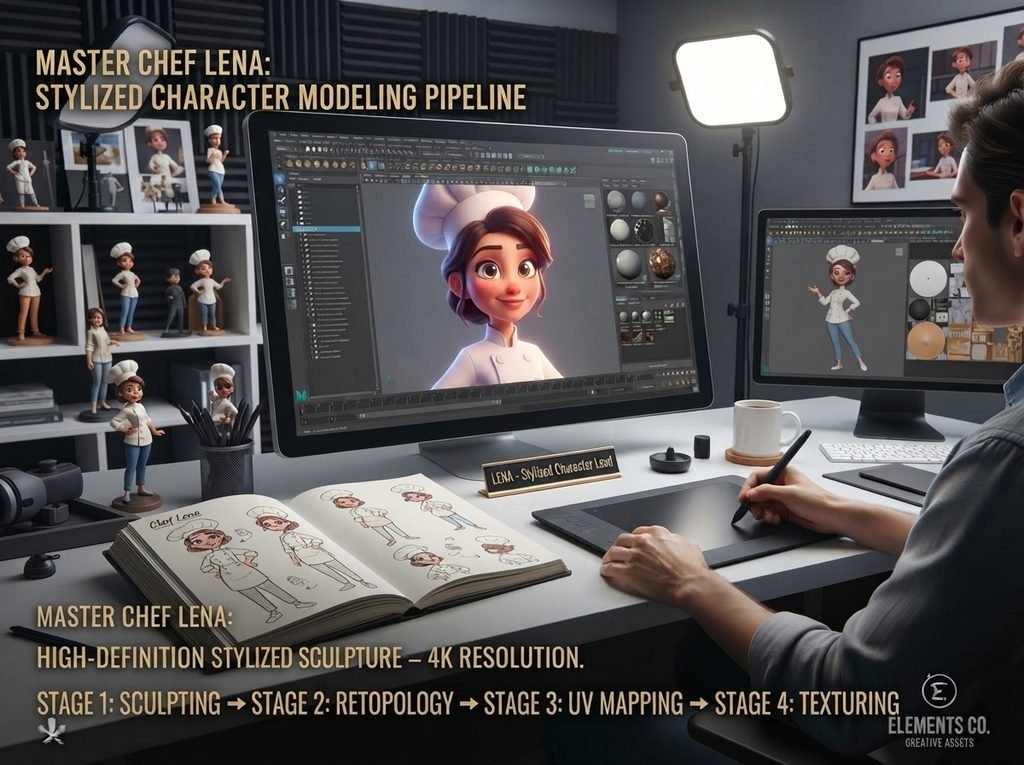
Not every character needs to look realistic. Stylized character modeling allows artists to create exaggerated proportions, simplified shapes, expressive faces, and imaginative designs.
Cartoon characters can be created with large eyes, unusual body proportions, creative hairstyles, colorful clothing, and distinctive visual features.
Stylized 3D characters are popular for animation, games, children’s content, advertising, social media, and entertainment projects.
Character Modeling for Film and Animation
Film and animation projects often require detailed characters that can be viewed from multiple angles and distances. Character models may need to support close-up shots, facial expressions, body movement, and detailed lighting.
A production-ready character can also include additional elements such as clothing, props, accessories, hair, and other visual components.
The modeling process should follow the artistic direction of the production while maintaining technical consistency across the project.
Texturing and Materials
Character modeling is more than creating the basic shape. Texturing and materials add visual detail and help define the character’s appearance.
Textures can be used for skin, clothing, hair, metal, leather, fabric, shoes, accessories, and other surfaces. Material properties can also control how different surfaces respond to light.
A carefully textured character can appear more detailed and visually convincing when rendered.
Character Modeling for 3D Printing
Some character models can also be prepared for physical 3D printing. This requires additional attention to geometry, thickness, proportions, and model structure.
Characters designed for 3D printing may be used as collectibles, toys, prototypes, display pieces, miniatures, or custom figures.
The digital model needs to be prepared according to the requirements of the selected printing method and final physical size.
Low-Poly and High-Poly Character Modeling
Different projects require different levels of polygon detail. High-poly character models can contain extensive geometry and detailed features for close-up rendering and high-quality visual production.
Low-poly character models use fewer polygons and are often useful for real-time applications, mobile games, web experiences, and projects where performance is important.
The appropriate modeling approach depends on the project’s visual requirements, platform, and technical specifications.
Why Professional Character Modeling Matters
A professionally created character can provide a strong visual foundation for an entire digital project. Good modeling helps establish consistent proportions, recognizable features, and an appealing overall appearance.
Technical quality is equally important. Proper topology, optimized geometry, suitable textures, and organized model construction can make a character easier to animate, render, edit, or adapt for different applications.
Whether the goal is entertainment, branding, gaming, animation, or digital art, a well-planned character model can support many creative possibilities.
Bring Your Character Ideas to Life
Every memorable 3D character starts with an idea. It may begin as a sketch, concept image, written description, or simple creative thought. Through professional Character Modeling, that concept can become a complete three-dimensional digital character.
From realistic humans and creatures to stylized cartoon figures and game-ready characters, 3D modeling offers a flexible way to develop unique visual assets for modern digital projects.
Conclusion
Character Modeling plays an important role in games, animation, films, advertising, digital art, virtual environments, and 3D production. A high-quality character combines creative design, detailed modeling, appropriate topology, textures, materials, and technical preparation.
Whether you need a realistic character, stylized cartoon model, game-ready asset, animated character, or 3D-printable figure, professional character modeling can transform your concept into a detailed digital asset. With the right combination of creativity and technical expertise, your characters can become an important part of engaging and visually compelling digital experiences.
Leave a Comment