


Professional Visual Effects Services
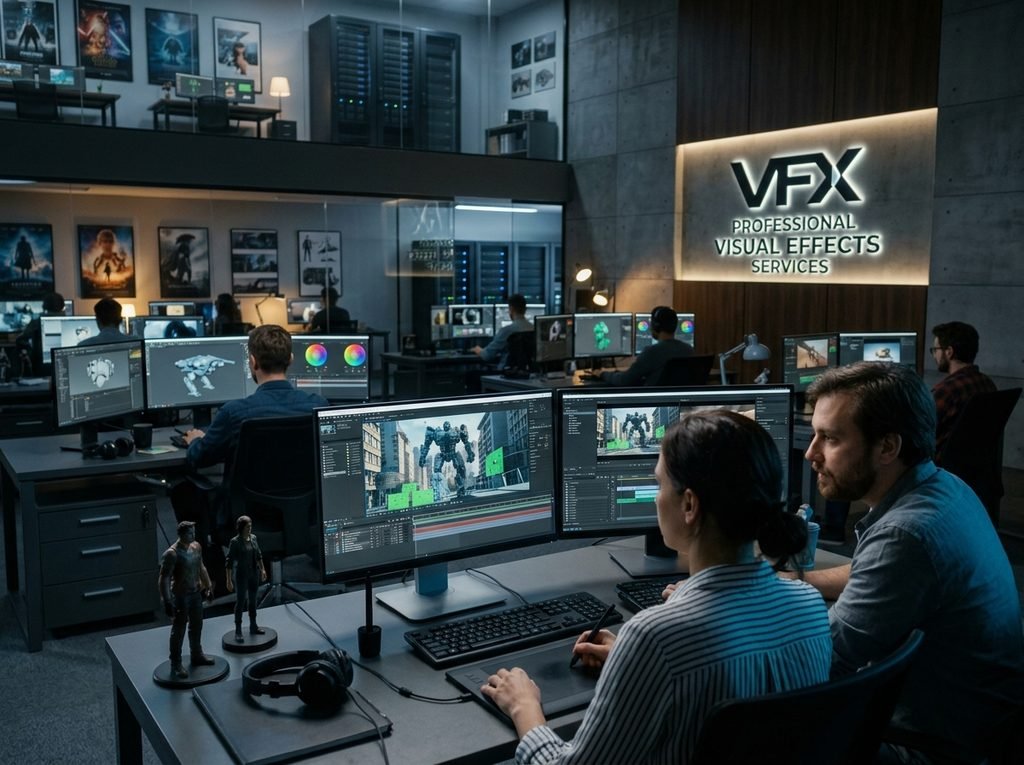
Visual effects (VFX) play an important role in modern filmmaking, video production, advertising, and digital content creation. They help transform ordinary footage into extraordinary visual experiences through computer-generated imagery, digital compositing, motion tracking, and creative enhancements.
Whether you are producing a short film, creating a promotional video, developing a commercial, or making content for social media, professional visual effects can help bring your creative vision to life. High-quality VFX makes videos more engaging, improves storytelling, and helps businesses present their products and services in memorable ways.
At Postlistd, users can explore online listings and discover services for different creative and business needs. Finding the right visual effects professional can help you produce polished content that matches your goals, style, and budget.
What Are Visual Effects?
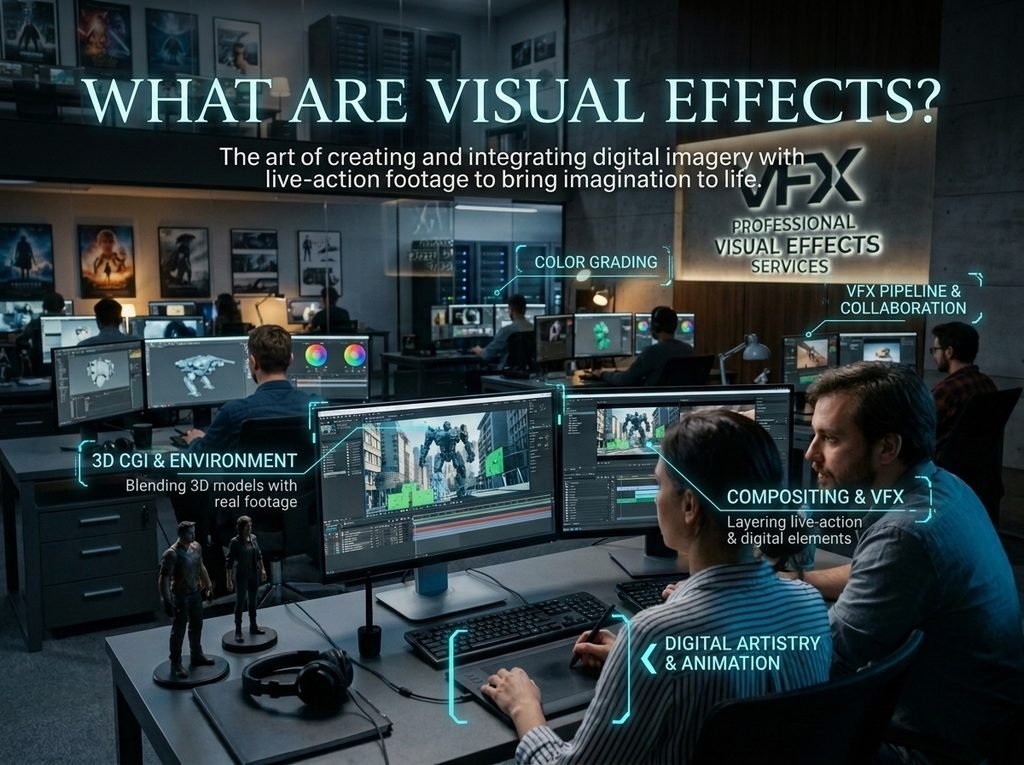
Visual effects are digital techniques used to create, enhance, or modify images and video footage. They allow creators to add elements that were not captured during filming or improve existing footage during post-production.
For example, visual effects can replace a background, create a digital environment add realistic weather, remove unwanted objects, or generate spectacular cinematic scenes.
VFX artists combine technical expertise with creativity to make digital elements appear natural within the original footage. Depending on the project, they may use specialized software for compositing, animation, 3D modeling, rendering, and color correction.
Visual effects are widely used in films, television, music videos, advertisements, video games, educational content, and online marketing campaigns.
Types of Visual Effects Services
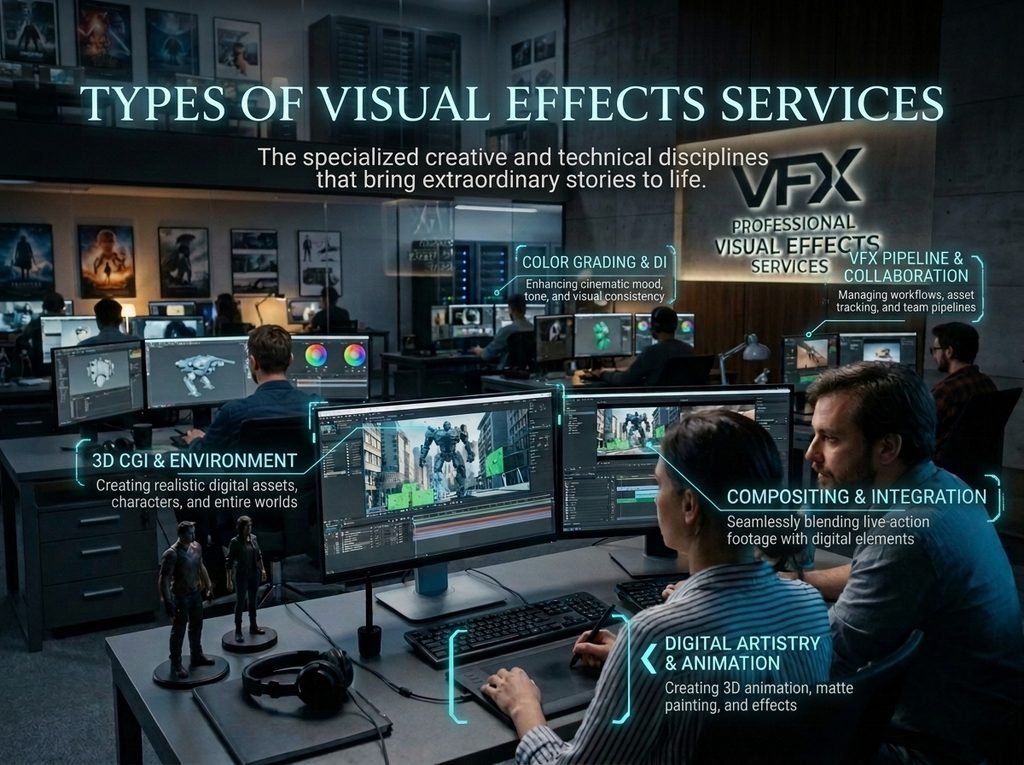
1. CGI and 3D Visual Effects
Computer-generated imagery (CGI) creates digital objects, characters, environments, and other visual elements. CGI is commonly used in movies, product advertisements, architectural presentations, and promotional videos.
Businesses can use 3D visual effects to showcase products from different angles or demonstrate features that are difficult to film in real life. Filmmakers can create fantasy environments, futuristic cities, and realistic digital objects without constructing expensive physical sets.
2. Green Screen and Background Replacement
Green-screen effects allow artists to replace a colored background with a different image or video. This technique is useful for interviews, advertisements, educational videos, weather presentations, and cinematic productions.
Professional background replacement involves careful subject isolation, edge refinement, lighting adjustments, and color matching. These details help the subject blend naturally into the new environment.
3. Video Compositing
Video compositing combines multiple visual elements into one final scene. Artists may combine live-action footage, computer-generated objects, animated graphics, and digital backgrounds.
Effective compositing requires attention to perspective, shadows, lighting, color, and movement. When these elements are matched correctly, the final scene looks consistent and believable.
Motion graphics combine text, shapes, illustrations, and animation to communicate information visually. They are popular in advertisements, YouTube videos, business presentations, title sequences, and social media campaigns.
Combining motion graphics with visual effects can create dynamic transitions, animated titles, product highlights, and engaging promotional content.
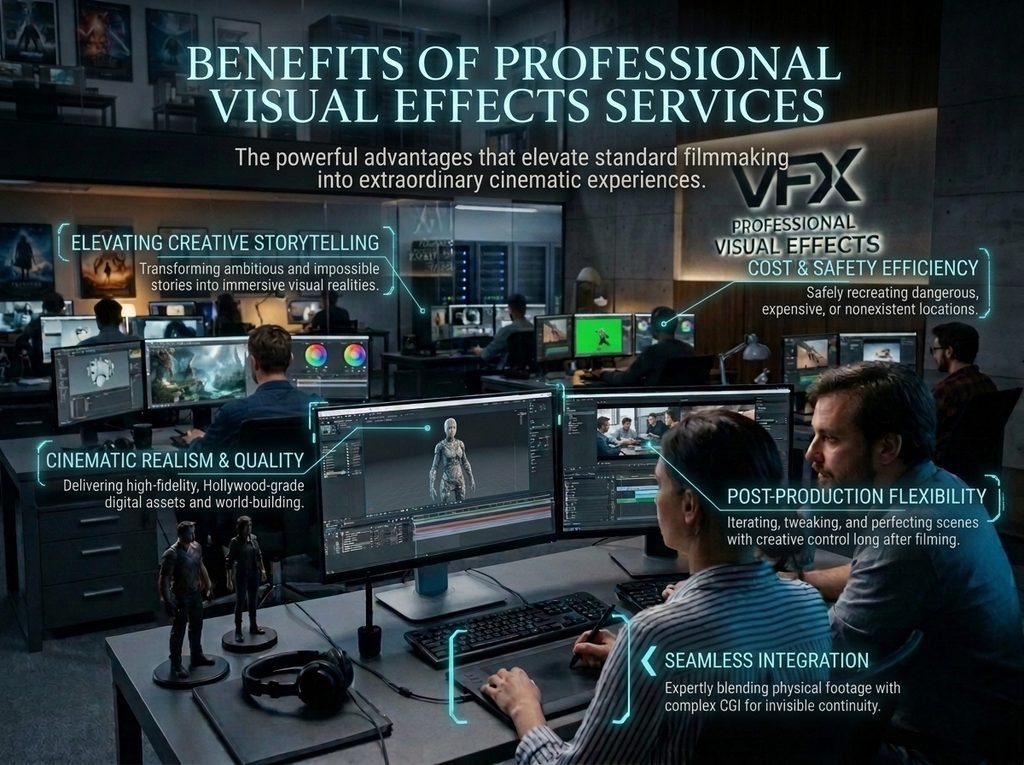
Benefits of Professional Visual Effects Services
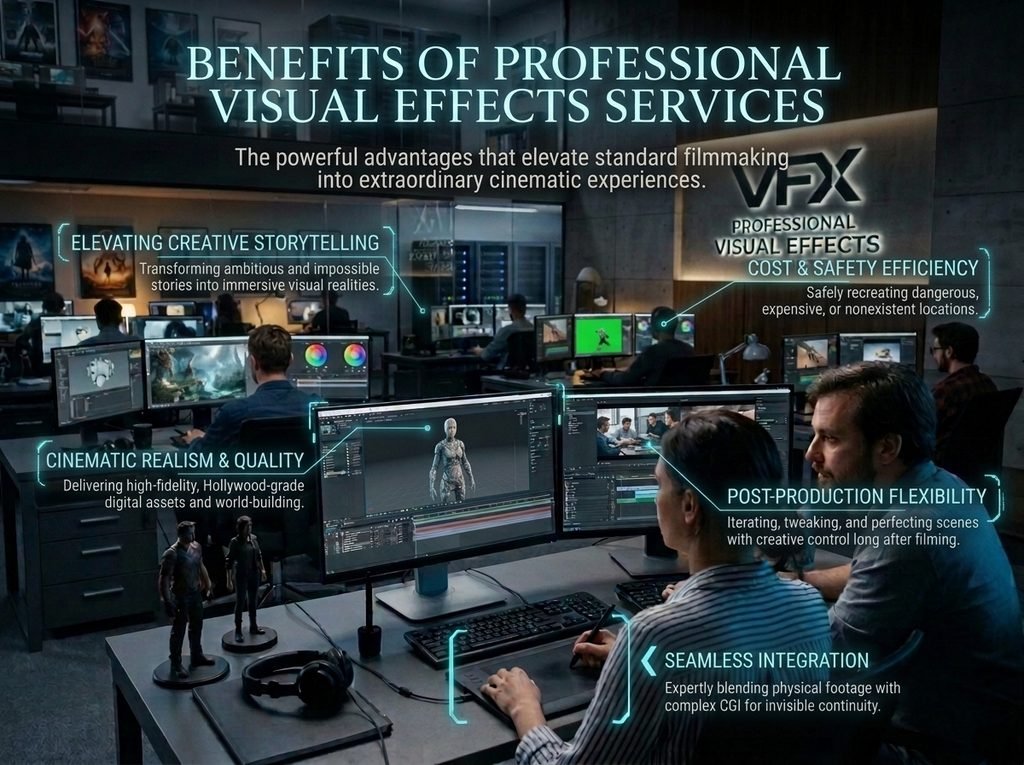
Professional visual effects can improve your digital content in several ways.
- Better storytelling: Create scenes and environments that support your message.
- Increased engagement: Make videos more visually interesting and memorable.
- Creative flexibility: Develop visuals that are difficult to capture with a camera alone.
- Professional presentation: Improve footage through compositing, cleanup, and digital enhancements.
- Marketing opportunities: Create distinctive promotional videos and product demonstrations.
- Visual consistency: Match lighting, colors, and digital elements across different scenes.
The best visual effects do not always need to be dramatic. Even subtle improvements, such as removing unwanted objects or correcting compositing issues, can significantly improve the finished video.
Visual Effects for Film and Entertainment
Movies and television productions often use visual effects to create realistic environments, imaginary worlds, and complex action sequences.
VFX artists may combine live-action footage with digital characters, animated objects, environmental effects, and computer-generated backgrounds. These techniques support a wide range of genres, including science fiction, fantasy, adventure, drama, and action.
Successful film VFX requires planning and coordination between directors, cinematographers, editors, and visual effects artists. Camera angles, lighting conditions, movement, and scene composition must be considered to achieve convincing results.
Visual Effects for Advertising and Business
Businesses use visual effects to make their marketing content more engaging and distinctive. CGI product demonstrations, animated promotional videos, digital environments, and creative transitions can help communicate product benefits effectively.
For example, a technology company may use CGI to show a product’s internal components, while a cosmetics brand might create a polished digital environment for a promotional campaign.
Visual effects are also useful for online advertisements, social media videos, product launches, corporate presentations, and brand storytelling.
For the best results, VFX should support the marketing message rather than distract viewers from the product or service.
How to Choose the Right Visual Effects Artist
Choosing a suitable VFX artist or studio can help you achieve the desired outcome efficiently.
Consider these factors before hiring:
- Portfolio: Review previous projects that match your preferred style.
- Technical expertise: Confirm experience with CGI, compositing, motion tracking, and other required techniques.
- Communication: Choose a provider who understands your creative requirements.
- Project timeline: Discuss deadlines and the expected delivery schedule.
- Budget: Request a clear quotation based on project complexity.
- File requirements: Confirm the final format, resolution, frame rate, and availability of editable source files.
Provide a clear project brief and relevant references before production begins. This helps the artist understand your expectations and reduces unnecessary revisions.
Modern Trends in Visual Effects
Visual effects production continues to evolve with real-time rendering, virtual production, advanced motion capture, procedural workflows, and AI-assisted tools.
Real-time rendering can help creative teams preview changes quickly. Virtual production combines physical environments with digital backgrounds, while motion capture can support realistic character movement.
These technologies create new opportunities for filmmakers, advertisers, and digital creators. However, successful results still depend on artistic judgment, technical accuracy, and careful integration of visual elements.