
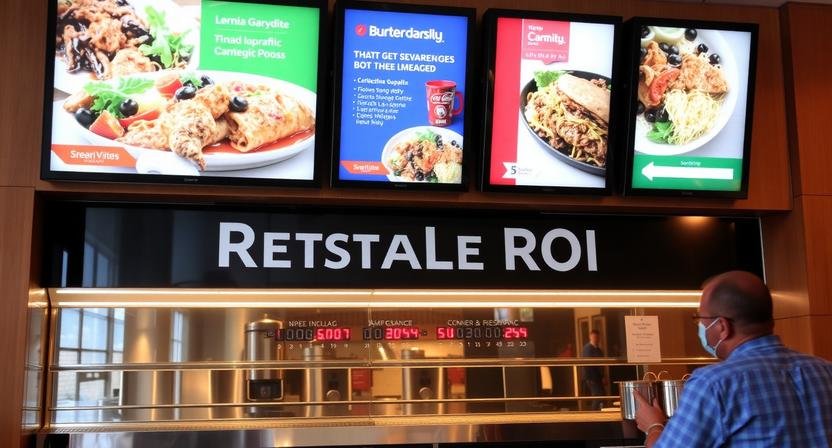
Menu boards are among the most important communication tools for food trucks and cafes. They shape first impressions, influence purchasing decisions, and can directly affect sales.
Whether you operate a mobile food truck or a local cafe, choosing the right menu board and designing it carefully can make a significant difference.
This article explains what food truck menu boards and cafe menu boards are, their advantages, important design considerations, and how to choose the most suitable solution for your business.
What Are Food Truck Menu Boards?
A food truck menu board is a display placed on or near a food truck to show menu items, prices, and promotions to customers and passersby.
Because food trucks frequently move between locations and have limited space, their menu boards should be compact, highly visible, and easy to read from a distance.
Food truck operators can choose from printed boards, chalkboard-style signs, and digital displays.
Digital food truck menu boards allow vendors to update prices, mark items as sold out, and highlight daily specials in real time. This flexibility is particularly useful when menus change according to location, season, or ingredient availability.
What Are Cafe Menu Boards?
Cafe menu boards are displays positioned above counters, behind service areas, or near entrances to showcase coffee, food, and promotional offers.
Traditional chalkboards remain popular because they provide a warm, vintage appearance. However, digital cafe menu boards are becoming increasingly common because they allow real-time updates, attractive food photography, and automated content scheduling.
For example, a digital board can switch from a breakfast menu to lunchtime offerings at a predetermined time.
Digital displays can also promote loyalty programs, highlight seasonal beverages, and show order status information, helping make the waiting experience more convenient for customers.
Advantages of Digital Menu Boards for Food Trucks
Digital menu boards offer several practical advantages for food truck operators.
When an item sells out or its price changes, the board can be updated within seconds without needing to reprint or rewrite the menu.
High-brightness screens with strong contrast can improve visibility outdoors and attract the attention of people passing by.
Vendors can also emphasize high-margin products and daily specials, helping guide customers toward featured items.
Because many food trucks use electronic payment and point-of-sale systems, compatible digital menu boards can be connected to POS data to support automatic pricing and availability updates.
Power consumption and portability are important considerations. Depending on their setup, food trucks may benefit from energy-efficient displays, compact media players, or battery-powered solutions, particularly when access to electricity is limited.
Advantages of Digital Menu Boards in Cafes
Digital menu boards are equally beneficial for cafes.
Instant updates make it easy to adjust prices, introduce seasonal beverages, or remove pastries that have sold out.
High-quality photographs of coffee, pastries, and other products can make the offerings more appealing and encourage impulse purchases.
Scheduled content allows cafes to switch between morning and afternoon menus automatically without requiring employees to make manual changes.
Centralized management is another advantage for cafe owners operating multiple locations. It helps maintain consistent branding, pricing information, and promotional messages across connected screens.
Well-organized digital menu boards can also improve ordering speed during the busy morning rush. When customers can easily understand the available options, they can make decisions more quickly and confidently.
Creating Successful Menu Board Content
Good design can make a significant difference to the effectiveness of a menu board.
Menus should be clean, readable, and arranged logically so customers can find information quickly.
Photographs of food and drinks can make the display more attractive, but the images should have a consistent style and should not overcrowd the screen.
Text must be large enough to read from the expected viewing distance, particularly for food truck menu boards that customers may view while standing on the sidewalk.
Strong contrast between text and background is also essential. A clear visual hierarchy should guide attention toward featured products, specials, and important pricing information.
Subtle animations can make digital displays more engaging, but excessive movement can distract customers and slow down ordering.
Content should also be refreshed regularly to keep promotions relevant and give returning customers something new to explore.
Selecting the Appropriate Hardware
Food trucks and cafes have different hardware requirements.
Food trucks generally need compact, durable, and often portable displays. Equipment used outdoors should withstand changing weather conditions, vibration, and potentially irregular power availability.
High-brightness screens are particularly important when menus need to remain readable in direct sunlight.
Cafes, on the other hand, may benefit from commercial-grade displays designed for extended operating hours. Depending on their placement, these screens may also need protection from heat, moisture, and grease associated with coffee machines and food preparation areas.
Ordinary consumer televisions may not be the best option for either environment, especially when screens operate for long periods or face demanding conditions.
Mounting systems should be sturdy, with displays positioned at comfortable viewing heights. Power supply and connectivity requirements should also be considered before installation.
Choosing the Correct Software
Every digital café menu board relies on software to manage its content.
A reliable platform should allow operators to create playlists, schedule menus according to the time of day, manage multiple screens from one dashboard, and make updates remotely.
Templates can help employees create professional-looking content without requiring advanced graphic design skills.
Point-of-sale integration can also automate pricing and availability updates, saving time and reducing manual errors.
Proof-of-play reporting helps confirm whether scheduled content has been displayed as intended, while role-based permissions allow employees to access the functions relevant to their responsibilities.
Cloud-based software is particularly useful for businesses operating across multiple locations.
For food trucks, where internet connectivity may be unreliable, on-premises or hybrid solutions with offline playback capabilities can provide additional operational reliability.
Measuring Impact
Food truck and cafe owners can evaluate the effectiveness of their menu boards by tracking key business indicators.
These may include which promotions generate the most sales, how menu performance changes after a redesign, and whether updates influence average order value.
For food trucks, upselling rates and service speed can provide useful insights into whether the menu board is helping customers make quicker decisions.
For cafes, operators may monitor customer throughput during the morning rush and sales of seasonal drinks or featured products.
Customer feedback and employee observations are also important. They provide additional context that numerical data alone may not reveal.
Combining these insights can help owners determine which menu designs and promotions work best for their businesses.
Common Pitfalls to Avoid
One of the most common mistakes is installing a menu board and failing to update it regularly. Outdated content can make the display less useful and cause customers to lose interest.
Overcrowded menus are another frequent problem, particularly outdoors, where customers may need to read the board quickly.
Using consumer-grade screens in hot, greasy, or outdoor environments can lead to early equipment failures.
Poor scheduling may also cause breakfast items to remain visible in the afternoon, while promoting unavailable products can frustrate customers.
Another mistake is expanding a digital menu board system without testing it first. Skipping the pilot phase may result in unnecessary costs and problems with content quality or system performance.
Careful planning and regular maintenance can help prevent these issues.
Future Trends
Food truck menu boards and cafe menu boards are becoming more intelligent and customizable.
Some AI-enabled systems can adjust content according to the time of day, weather conditions, or customer traffic.
Portable digital displays, including battery-powered and solar-assisted options, are also being explored for mobile food businesses where power availability is an important consideration.
Cafes are increasingly using digital signage alongside loyalty programs to offer personalized promotions to returning customers.
Cloud-based management is making it easier to maintain consistency across multiple locations, while touchscreen kiosks are providing additional self-service options in suitable food service environments.
As these technologies develop, businesses will have more ways to improve convenience and create engaging customer experiences.
Conclusion
Food truck menu boards and cafe menu boards are essential tools for modern food businesses. They can reduce recurring expenses, improve service speed, strengthen branding, and support sales through attractive menu presentations and targeted promotions.
The key to success lies in thoughtful content design, durable hardware suited to the operating environment, and software that allows easy updates.
Businesses that treat menu boards as ongoing communication tools rather than one-time purchases are more likely to gain lasting value from their investment and provide a better experience for every customer.
Location
Related Ads










Leave feedback about this