

Concrete vs. Plastic Underground Rainwater Tanks: Which Is Best Under Driveways?
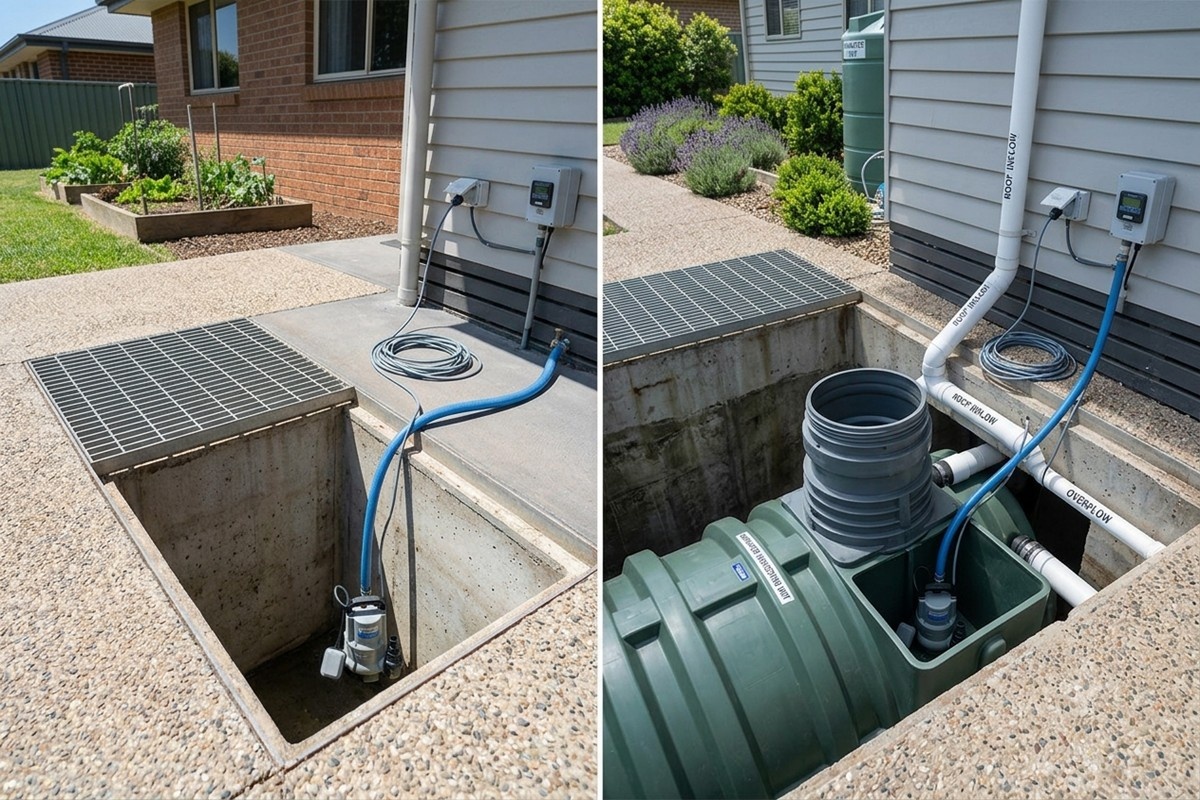
Choosing the right underground rainwater tanks for installation beneath your driveway isn’t just about picking a material and hoping for the best. It’s a decision that affects everything from your property’s structural integrity to your long-term maintenance costs. With Australian water prices climbing and environmental awareness growing, more homeowners are looking underground to maximise their rainwater harvesting potential.
We will break down the key differences between concrete and plastic underground rainwater tanks. You’ll discover which material handles heavy vehicle loads better, what installation involves for each option, and how to make the smartest choice for your specific situation. Whether you’re planning a new driveway or retrofitting an existing one, this information will help you make a confident decision.
Understanding Underground Rainwater Tanks
What Is an Underground Rainwater Tanks?
An underground rainwater tanks is exactly what it sounds like a storage vessel buried beneath the ground to collect and store rainwater from your roof. Unlike above-ground tanks that take up valuable garden space, these systems remain completely hidden from view.
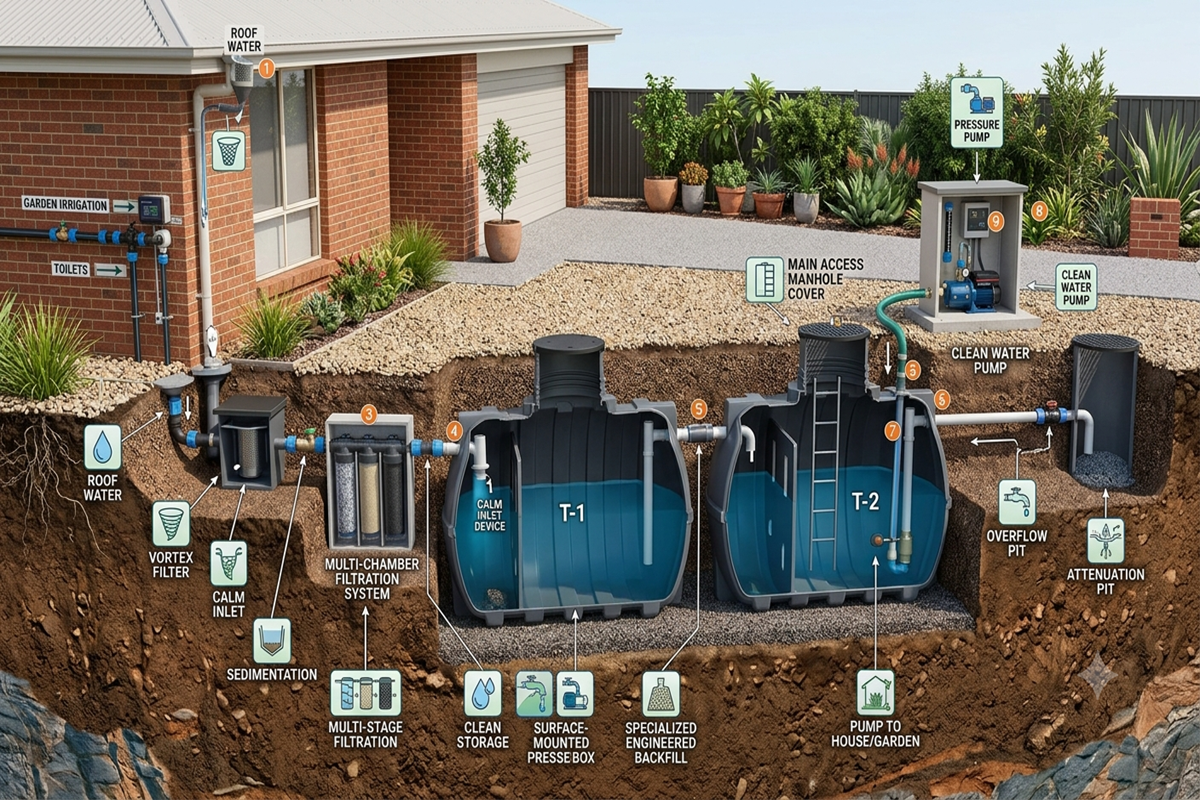
These tanks connect to your home’s downpipes and gutter system, channelling rainwater into the underground rainwater tanks storage. A pump system then brings the water back up when you need it for garden irrigation, toilet flushing, or laundry use.
Underground rainwater tanks come in various sizes, shapes, and materials. The two most popular choices in Australia are concrete and plastic, each bringing distinct advantages to the table.
Why Install a Rainwater Tank Under Your Driveway?
Driveways represent prime real estate for tank installation. Think about it that flat, unused space beneath your car parking area can become a massive water storage facility without sacrificing any usable garden or outdoor living space.
Plus, the driveway’s concrete or paver surface provides natural protection from UV damage and temperature fluctuations. This placement also keeps the water cooler, which reduces algae growth and maintains better water quality. For properties with limited yard space, under-driveway installation is often the only practical option.
Concrete Underground Rainwater Tanks: Pros and Cons
Strength and Load-Bearing Capacity
Concrete tanks are the heavyweights of the underground rainwater tanks world. Their solid construction handles extreme loads without flexing or deforming, making them ideal for driveways that see regular vehicle traffic.
A properly installed concrete tank can support cars, utes, and even heavy delivery trucks without concern. The material’s inherent rigidity means it won’t compress or shift under pressure, providing peace of mind for homeowners who park multiple vehicles.
Longevity and Durability
When it comes to lifespan, concrete tanks are genuine long-term performers. Quality concrete tanks can last 50 years or more with minimal maintenance. The material resists corrosion, won’t degrade from UV exposure, and maintains structural integrity decade after decade.
Concrete also naturally neutralises acidic rainwater, which can improve water quality over time. This alkaline effect helps balance pH levels, making stored water safer for various household uses.
Installation Requirements and Costs
Here’s where concrete tanks become more challenging. Their substantial weight requires heavy machinery for delivery and installation think cranes and excavators. This adds significantly to installation costs.
You’ll typically pay more upfront for a concrete tank compared to plastic alternatives. Installation often takes longer and requires more site preparation. However, many homeowners consider this a worthwhile investment given concrete’s superior longevity.
Can Concrete Tanks Crack Under Driveways?
While concrete is incredibly strong, it’s not completely immune to cracking. Poor installation, inadequate ground preparation, or soil movement can cause stress fractures over time. Ground conditions in Australia vary dramatically, and expansive clay soils pose particular challenges.
That said, quality installation by experienced professionals dramatically reduces cracking risks. Proper bedding, backfilling, and compaction are essential for long-term performance.
Plastic Underground Rainwater Tanks: Pros and Cons
Lightweight Design and Flexibility
Plastic tanks offer a completely different approach to underground rainwater tanks storage. Their lightweight construction makes handling and installation far simpler often achievable without heavy machinery.
Modern plastic tanks feature ribbed or corrugated designs that provide surprising strength while maintaining flexibility. This flexibility actually works in their favour, allowing them to accommodate minor ground movement without cracking.
Lifespan and Maintenance Needs
Quality polyethylene tanks typically last 20-25 years, sometimes longer with proper care. While this falls short of concrete’s lifespan, it still represents excellent value given the lower initial investment.
Maintenance requirements are minimal. Occasional inspection of inlet screens, pumps, and overflow systems keeps everything running smoothly. Plastic surfaces are easy to clean if sediment builds up.
Installation Process and Overall Costs
Installation costs for plastic tanks are generally 30-50% lower than concrete alternatives. The lighter weight means smaller excavation equipment, fewer labour hours, and simpler logistics overall.
Many suppliers offer complete installation packages that include delivery, excavation, tank placement, and backfilling. The entire process can often be completed in a single day for standard residential installations.
Are Plastic Tanks Strong Enough for Driveways?
This is the million-dollar question. Not all plastic tanks are suitable for under-driveway installation. You’ll need tanks specifically rated for trafficable applications these feature reinforced walls and specialised designs to handle vehicle loads.
When properly installed with correct backfill materials and compaction, trafficable plastic tanks handle regular car traffic without issues. However, they may not suit driveways expecting heavy truck traffic.
Head-to-Head Comparison: Concrete vs. Plastic
Which Tank Material Handles Heavy Vehicles Better?
Concrete wins this category hands down. For properties expecting regular heavy vehicle access delivery trucks, caravans, or commercial vehicles concrete provides unmatched load-bearing capacity.
Plastic tanks rated for light vehicle traffic perform well under standard cars and small SUVs. Just be honest about your actual usage patterns when making this decision.
Cost Comparison: Upfront and Long-Term
Plastic tanks cost less upfront, making them attractive for budget-conscious homeowners. However, concrete’s extended lifespan means lower replacement costs over time.
When calculated over 50 years, concrete often proves more economical despite higher initial outlay. Consider your long-term property plans when weighing this decision.
Water Quality and Taste Differences
Both materials store water safely when properly maintained. Concrete’s alkaline properties can actually improve water taste by neutralising acidity. Food-grade polyethylene is completely safe and imparts no taste to stored water.
What Size Underground Rainwater Tanks Do I Need Under My Driveway?
Tank sizing depends on your roof catchment area, local rainfall patterns, and intended water usage. A typical Australian household benefits from tanks between 5,000 and 20,000 litres.
Calculate your roof area in square metres, multiply by average annual rainfall in millimetres, then factor in a collection efficiency of around 80%. This gives your potential annual harvest. Match your tank size to capture meaningful rainfall while fitting your available driveway space.
How Deep Should an Underground Rainwater Tanks Be Installed?
Most underground tanks require minimum cover of 300-500mm between the tank top and finished surface level. Deeper installation may be necessary depending on tank design, expected traffic loads, and local conditions.
Always follow manufacturer specifications and consider engaging a structural engineer for installations under high-traffic areas.
Do Underground Rainwater Tanks Require Council Approval in Australia?
Requirements vary between councils and states. Many jurisdictions allow rainwater tanks up to certain sizes without formal approval, while others require development applications regardless of size.
Check with your local council before commencing any installation. Some areas also offer rebates for rainwater tank installations worth investigating before you commit.
Common Problems with Underground Rainwater Tanks and How to Avoid Them
Proper installation prevents most issues. Common problems include flotation in high water table areas, cracking from inadequate ground preparation, and pump failures from sediment buildup.
Work with experienced installers, specify appropriate tank designs for your conditions, and maintain regular inspection schedules to avoid nasty surprises.
Which Tank Is Best for Australian Conditions?
Australian conditions vary enormously from tropical Queensland to temperate Victoria. Concrete performs exceptionally well in stable soil conditions and handles extreme heat without degradation. Plastic tanks suit areas with reactive soils where some flexibility proves beneficial.
Consider your specific location, soil type, and climate when making your final decision.
Conclusion
Both concrete and plastic underground rainwater tanks offer genuine benefits for under-driveway installation in Australia. Your ideal choice depends on budget, expected vehicle loads, and how long you plan to remain in your property.
Concrete delivers unmatched strength and longevity, making it perfect for heavy traffic areas and homeowners seeking a permanent solution. Plastic offers excellent value, simpler installation, and adequate performance for most residential applications.

Leave a Comment