
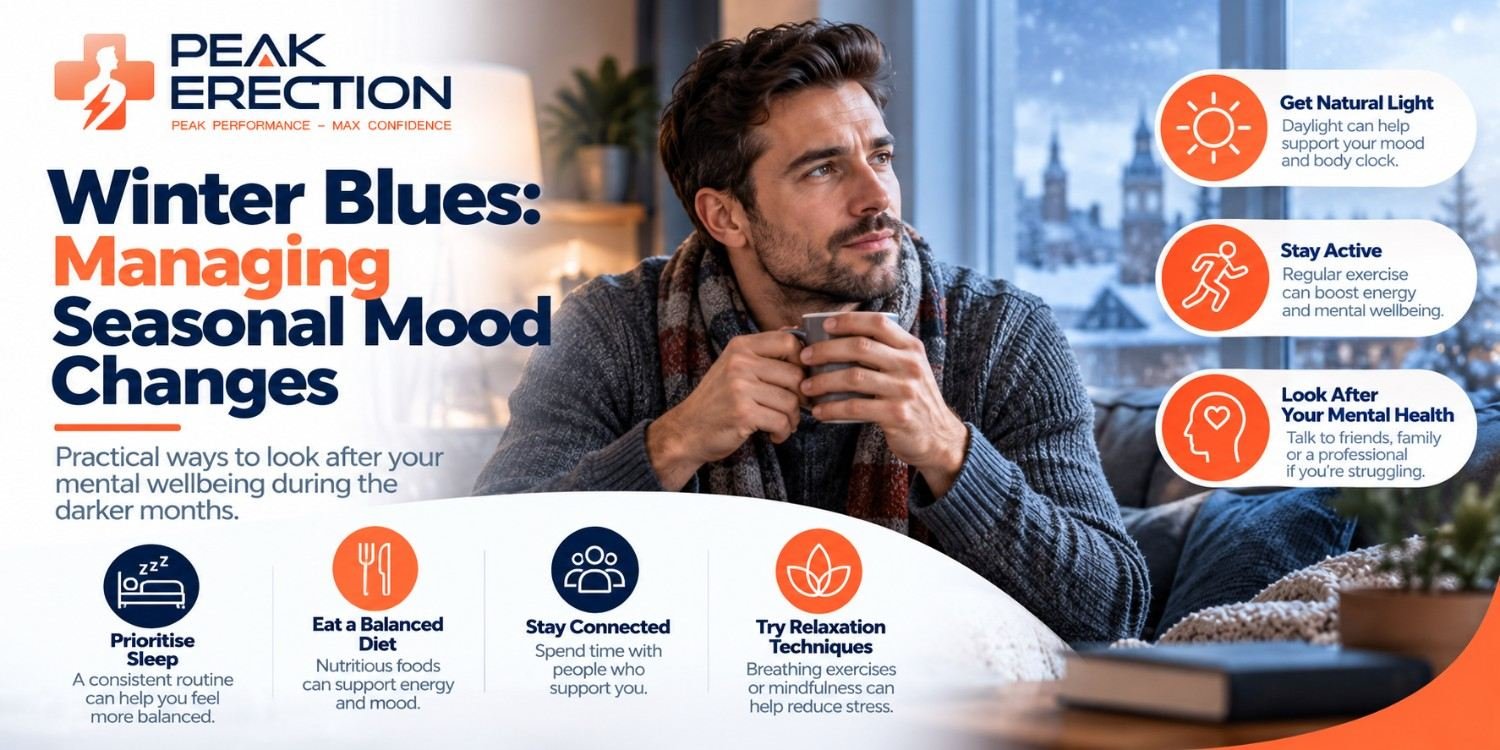
Shorter days and darker mornings can change how some people feel during the winter months. For men, seasonal mood changes may affect motivation, energy, sleep, social activity and overall wellbeing. Recognising these changes can be an important part of looking after your wider men’s health.
Understanding Seasonal Mood Changes
Feeling less energetic or motivated during winter does not necessarily mean you have a mental health condition. However, persistent changes in mood should not simply be ignored.
Seasonal affective disorder (SAD) is a type of depression that follows a seasonal pattern and is usually more noticeable during winter. Symptoms can include low mood, reduced interest in everyday activities, tiredness, difficulty concentrating and changes in sleep or appetite. The NHS advises speaking to a GP if you think you may have SAD.
Simple Ways to Support Winter Wellbeing
There are practical habits that can support winter wellbeing. Getting natural daylight where possible, exercising regularly, maintaining social connections and keeping a consistent sleep routine can all form part of a healthier approach to winter.
Getting outside during daylight hours also provides an opportunity to stay active. Regular physical activity can support general wellbeing, particularly when colder weather makes it tempting to become less active.
Staying connected matters too. Talking to friends, family or colleagues can help prevent isolation, particularly when lower motivation makes socialising feel more difficult.
Mood, Sexual Health and Erectile Function
Mental wellbeing and sexual wellbeing can overlap. Stress, low mood and tiredness may influence relationships, confidence and interest in intimacy. This does not mean seasonal mood changes automatically cause problems with erectile function, but changes in emotional wellbeing can be relevant when considering overall erectile health.
Good sexual health education means looking at the wider picture rather than assuming there is one explanation for an erection problem.
If erection difficulties keep happening, professional assessment can help identify whether there may be an underlying health or psychological factor requiring attention. For men who feel uncomfortable discussing sensitive concerns, accessing confidential healthcare through a GP or sexual health service can provide a private setting to talk about symptoms and available support.
Take Winter Changes Seriously
Looking after UK men’s health means paying attention to both physical and mental wellbeing. Small routines involving daylight, movement, sleep and social connection can help support healthier winter habits.
If seasonal changes in mood are persistent, severe or affecting everyday life, consider speaking with a qualified healthcare professional.
Responsible health disclaimer: This article is for general educational purposes only. It does not diagnose or treat seasonal mood changes, depression, erectile difficulties or any other health condition. Seek professional healthcare advice if you have ongoing or concerning symptoms.
🌐 Website : https://peakerection.com
Email : info@peakerection.com










Leave feedback about this